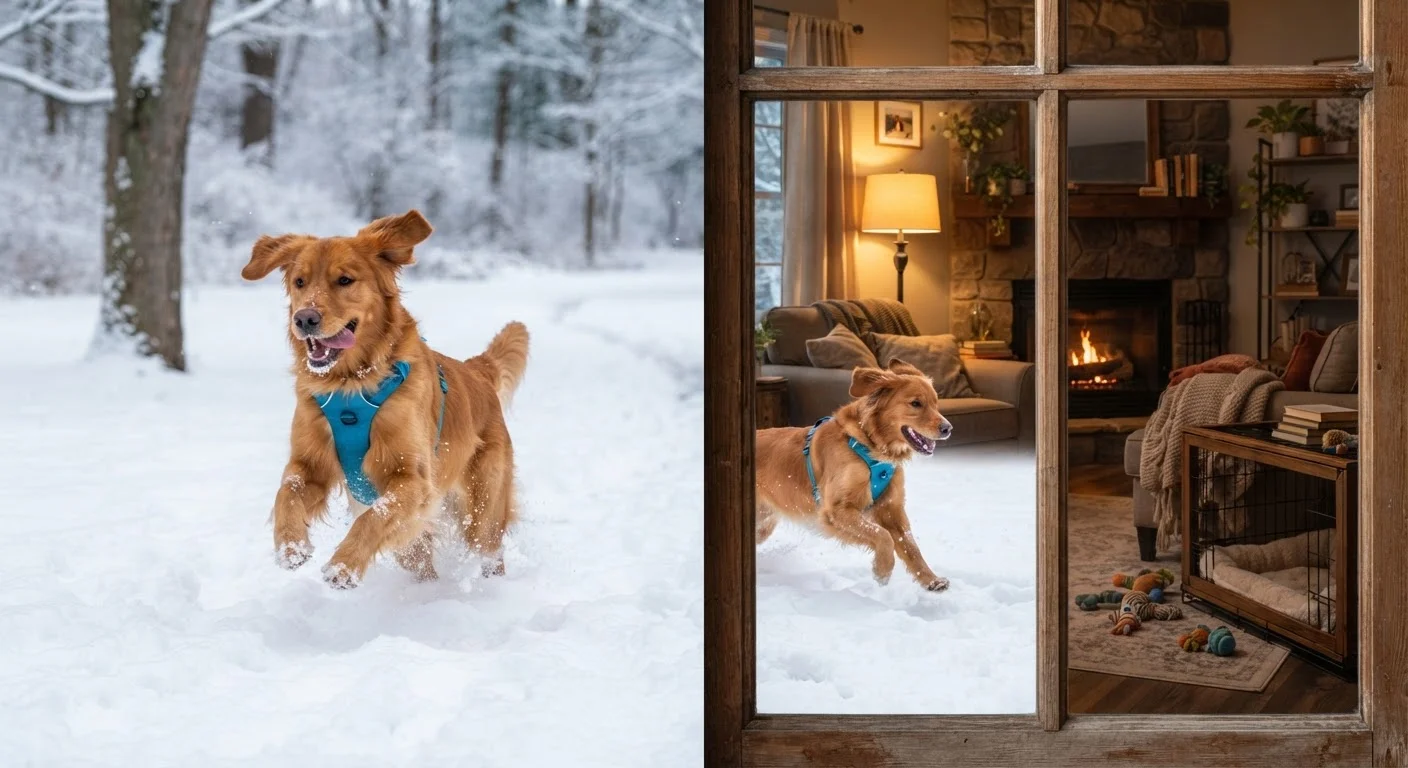
Why Exercise Type Matters as Much as Exercise Amount
Most dog owners track minutes walked or miles run, but the type of activity matters just as much as the quantity. Dogs are multisensory animals - a 20-minute outdoor walk delivers not just physical exertion but a flood of olfactory information, novel stimuli, and environmental variety that a treadmill session simply cannot replicate. At the same time, a well-structured indoor session can tire a working-breed dog more efficiently than a passive backyard wander.
Understanding what each environment actually offers - and where each falls short - allows you to build a smarter, more flexible exercise plan. This is especially relevant for owners juggling unpredictable weather, limited outdoor access, or a dog with specific health needs. See our senior dog care guide if your dog is over seven, as exercise needs shift meaningfully with age.
| Outdoor Exercise | Indoor Exercise | |
|---|---|---|
| Physical intensity ceiling | High - running, fetch, hiking possible | Moderate - limited by space |
| Sensory / olfactory enrichment | Excellent - natural scent variety | Limited - requires deliberate setup |
| Socialization opportunity | High - other dogs, people, environments | Low - typically same household members |
| Weather dependency | High - heat, cold, rain are real limits | None - fully weather-independent |
| Mental stimulation potential | Moderate - varies by activity structure | High - training and puzzle work excel |
| Accessibility for apartment dogs | Requires travel to suitable spaces | Immediately available at home |
| Safety for recovering/senior dogs | Requires careful surface and distance control | Easier to control intensity and footing |
What Outdoor Exercise Does Well
Outdoor activity remains the benchmark for canine physical fitness. Running, fetch, hiking, and off-leash play engage large muscle groups at intensities that are genuinely difficult to achieve indoors. Beyond the body, the outdoors provides olfactory enrichment - the chance to sniff, track, and interpret scent trails - which engages a dog's brain in ways no indoor toy can fully match.
Outdoor environments also support natural socialization. Encountering other dogs, unfamiliar people, and changing environments builds the behavioral confidence that keeps dogs adaptable and calm. This is closely tied to long-term temperament; dogs that regularly experience varied outdoor settings tend to show fewer anxiety-driven behaviors at home. For more on this, see socializing an adult dog.
Seasonal outdoor exercise also carries genuine risks. Summer heat can cause heatstroke rapidly, particularly in brachycephalic (flat-faced) breeds like bulldogs and pugs. Frozen sidewalks, road salt, and sub-zero windchills create real hazards in winter. Always check pavement temperature in summer - if it's too hot for your hand after seven seconds, it's too hot for paw pads.
Extreme Temperatures Are a Real Health Risk
Pavement can exceed 150°F on a hot summer day, causing paw pad burns in minutes. In winter, road salt and de-icing chemicals can irritate or damage paw tissue and are toxic if ingested during grooming. Brachycephalic breeds - bulldogs, French bulldogs, pugs, and similar - are at elevated risk of heatstroke even in moderate temperatures. Consult your veterinarian about safe exercise parameters for your specific dog during seasonal extremes.
What Indoor Exercise Does Well
Indoor exercise is often underestimated. When done with intention, it can meet a significant portion of a dog's daily activity requirements and, critically, provides mental engagement that many outdoor routines skip entirely. Structured training sessions - even 10 to 15 minutes of heel work, recall practice, or trick training - can exhaust a dog more thoroughly than a 30-minute leashed walk, because they demand sustained cognitive effort.
Puzzle feeders, sniff mats, and hide-and-seek games tap into dogs' natural scavenging instincts. Stair repetitions and hallway fetch provide cardiovascular output in small spaces. Indoor agility - using household items to create low jump-and-weave sequences - challenges coordination and focus. These tools are particularly valuable during post-surgical recovery, extreme weather, or for apartment-dwelling owners with limited outdoor access.
Combining indoor mental work with positive reinforcement training is one of the most effective ways to address boredom-related behaviors like chewing, barking, and destructive digging - all of which typically signal unmet stimulation needs rather than a personality problem.
~80%
Of behavioral issues linked to insufficient exercise
Veterinary behaviorists commonly estimate that the large majority of common behavioral complaints - destruction, excessive barking, hyperactivity - are rooted in unmet physical or mental activity needs.
300M+
Scent receptors in an average dog's nose
According to comparative anatomy research, dogs possess roughly 300 million olfactory receptors versus approximately 6 million in humans, underscoring why scent-based indoor enrichment is genuinely stimulating.
Building a Year-Round Exercise Plan
A practical year-round plan treats outdoor and indoor exercise as complementary tools, not competing options. During moderate weather, prioritize outdoor sessions for physical exertion and sensory enrichment - aim for at least one substantial outdoor outing daily for most breeds. On extreme weather days, shift intensity indoors while preserving structure: keep feeding times tied to puzzle work, hold a brief training session, and give the dog a high-value chew to occupy jaw muscles.
Breed and age should anchor your baseline expectations. High-drive working breeds - herding dogs, sporting breeds, terriers - typically need significantly more daily output than companion breeds. A border collie and a basset hound may both need daily exercise, but the type, intensity, and duration differ considerably. Puppies require shorter, more frequent sessions to protect developing joints; older dogs often benefit from shorter, gentler outings spread across the day.
Monitoring your dog's body language after exercise is a useful calibration tool. A dog that settles calmly and sleeps after activity is typically well-exercised. Persistent restlessness, destructive behavior, or hyperactivity at home often signals that the current routine isn't meeting their needs. See what your dog's body language is telling you for a deeper look at reading those signals accurately.
If you're navigating home boundaries and structure alongside exercise routines, the guidance on crate training vs. free roaming may also help you design a daily rhythm that supports both rest and activity.