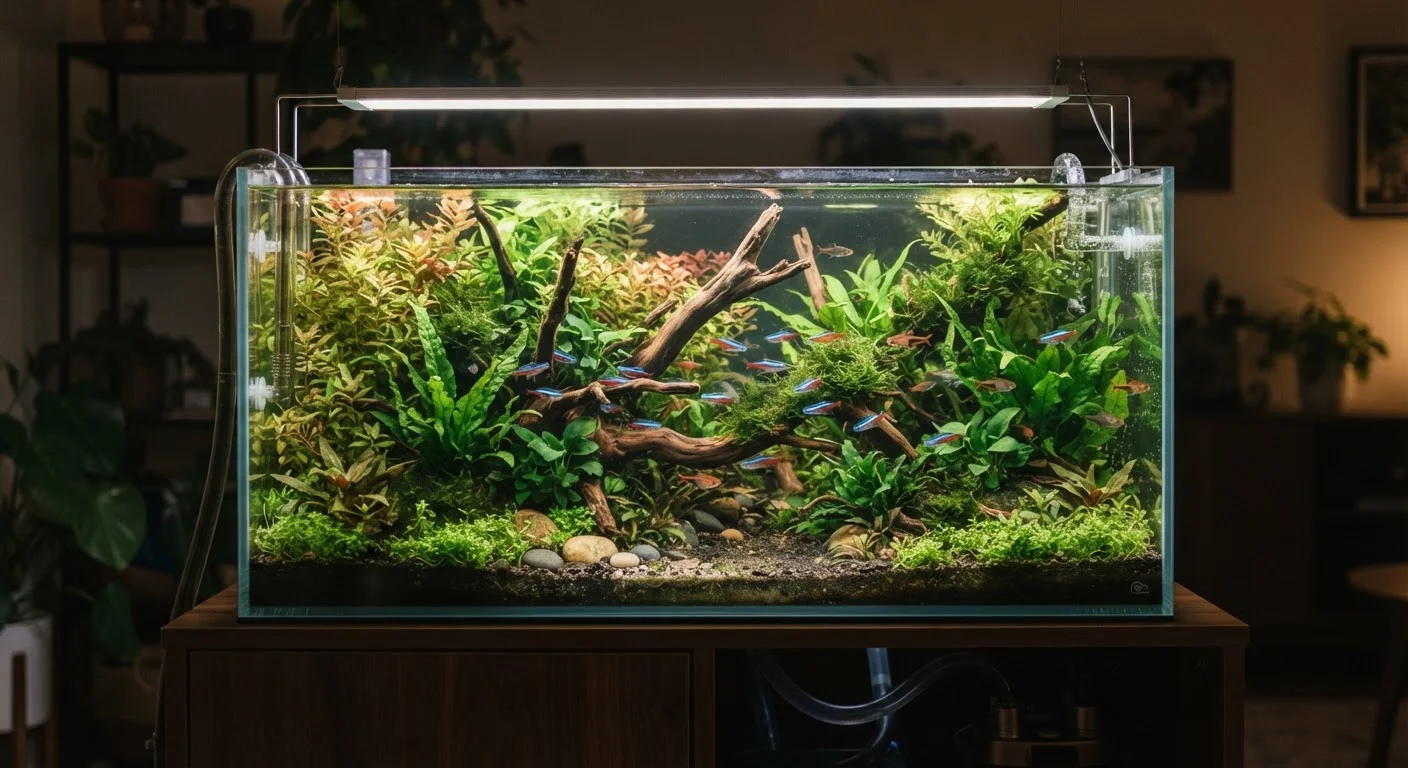
Choosing the Right Tank Size and Equipment
Counterintuitively, smaller tanks are harder to manage than larger ones. Water parameters in a 5-gallon tank swing rapidly with any disturbance - a single uneaten piece of food can spike ammonia to dangerous levels. A 20-gallon tank gives you enough water volume to buffer those changes, making it a practical starting point for most beginners.
Beyond the tank itself, you'll need four core pieces of equipment before anything else:
- Filtration: A hang-on-back or canister filter rated for your tank size removes waste and, critically, houses the beneficial bacteria your aquarium depends on.
- Heater: Most tropical freshwater fish require water between 72°F and 80°F. A submersible heater with a built-in thermostat keeps temperatures stable.
- Thermometer: Heaters can malfunction. A separate thermometer lets you verify the actual temperature independently.
- Water test kit: A liquid reagent kit (not strips) that measures ammonia, nitrite, nitrate, and pH is essential - not optional - for any new aquarium owner.
Nitrogen cycle
The biological process by which beneficial bacteria in your filter convert toxic fish waste (ammonia) into less harmful compounds (nitrate). It must complete before fish are added.
Fishless cycling
The practice of establishing beneficial bacteria in a new tank using an ammonia source before any fish are introduced, preventing toxic conditions for livestock.
Ammonia
A toxic compound produced by fish waste and uneaten food. High ammonia levels are the most common cause of fish death in new aquariums.
Nitrite
An intermediate compound produced when bacteria break down ammonia. Also toxic to fish, and an indicator that the nitrogen cycle is still in progress.
Nitrate
The end product of the nitrogen cycle. Far less toxic than ammonia or nitrite, but it accumulates over time and is managed primarily through regular water changes.
pH
A measure of how acidic or alkaline your water is, on a scale of 0-14. Most freshwater community fish thrive between pH 6.5 and 7.5.
Understanding the Nitrogen Cycle
The nitrogen cycle is the single most important concept for any aquarium keeper to understand. Fish produce ammonia through waste and respiration. Left unchecked, ammonia is toxic at very low concentrations. The cycle describes how two types of beneficial bacteria - Nitrosomonas and Nitrobacter - colonize your filter media and convert ammonia first into nitrite (also toxic) and then into nitrate, which is far less harmful and removed through water changes.
Establishing this bacterial colony takes approximately 4-6 weeks in a new tank. During this period - called fishless cycling - you add a small ammonia source (pure ammonia drops or fish food) to feed the developing bacteria without risking any livestock. Test your water every few days. The cycle is complete when ammonia and nitrite both read zero and nitrate has begun to accumulate.
Skipping or rushing this step is among the most preventable reasons new fish die. For a detailed look at what goes wrong when setup is rushed, see common beginner setup mistakes that lead to early fish loss.
Speed Up Cycling With Filter Seeding
You can significantly reduce cycling time by adding established filter media from an already-cycled aquarium to your new filter. Even a small piece of sponge or some gravel from a healthy, disease-free tank carries enough beneficial bacteria to jumpstart the process. Ask a knowledgeable local fish store if they can provide some cycled media - many will.
Setting Up Your Tank Before Adding Fish
Once you have your equipment, follow this sequence before introducing any livestock:
- Rinse substrate and décor with plain water - no soap. Gravel, sand, and decorations carry dust and debris that will cloud your water.
- Fill the tank with dechlorinated water at the correct temperature. Use a water conditioner to neutralize chlorine and chloramine from tap water.
- Install and run all equipment - filter, heater, and any air pumps - to confirm everything functions before cycling begins.
- Begin fishless cycling and monitor parameters with your test kit every 2-3 days.
- Add live plants (optional but recommended). Hardy species like java fern, anubias, and java moss establish quickly and help absorb ammonia during cycling, speeding the process.
Resist the urge to add fish the day you set up. Patience at this stage directly determines whether your fish survive their first month.
Choosing Compatible Fish for a Beginner Tank
Fish selection should be driven by two questions: What water parameters does this species need? and Will it coexist peacefully with my other fish? Mixing aggressive species with timid ones, or fish that prefer cold water with tropical species, creates chronic stress that shortens lifespans.
Reliable beginner choices for a 20-gallon community tank include:
- Zebra danios: Active, hardy, and tolerant of a range of temperatures.
- Neon or ember tetras: Small schooling fish that do best in groups of six or more.
- Platies: Hardy livebearers available in many color forms; peaceful and easy to feed.
- Corydoras catfish: Bottom-dwelling scavengers that help keep substrate clean and thrive in groups.
A practical rule of thumb is one inch of adult fish per gallon of water, though this is a rough guide rather than a formula - body shape, activity level, and territorial behavior all matter. Overstocking strains your filter and degrades water quality faster than it can recover.
If you're interested in how aquarium fish care compares to outdoor setups, aquarium versus pond fish care covers how their needs diverge significantly.
Avoid Impulse Purchases at the Fish Store
Pet store displays often group fish by visual appeal rather than compatibility. A fish labeled 'community safe' may still outgrow your tank, require specific water chemistry, or become aggressive as it matures. Always research a species' adult size, temperament, and water parameter requirements before purchasing - not after.
Ongoing Maintenance to Keep Fish Healthy
A healthy aquarium is maintained, not set up once and forgotten. Build these habits into your routine:
- Weekly water changes (25-30%): Remove water with a gravel vacuum to siphon waste from the substrate, then refill with dechlorinated, temperature-matched water.
- Regular water testing: During the first month, test weekly. Once the tank is established and stable, testing every two weeks is generally sufficient unless fish show signs of stress.
- Filter maintenance: Rinse filter media in removed tank water (never tap water, which kills beneficial bacteria) every four to six weeks, or when flow noticeably decreases.
- Feed sparingly: Overfeeding is a top cause of poor water quality. Feed only what fish consume within two minutes, once or twice daily.
Watch your fish daily - changes in behavior, color, or appetite are often the first signs that something is wrong with water quality or fish health. Catching problems early dramatically improves outcomes.
This article is for general informational and educational purposes only. For concerns about fish health or disease, consult a veterinarian with aquatic animal experience.