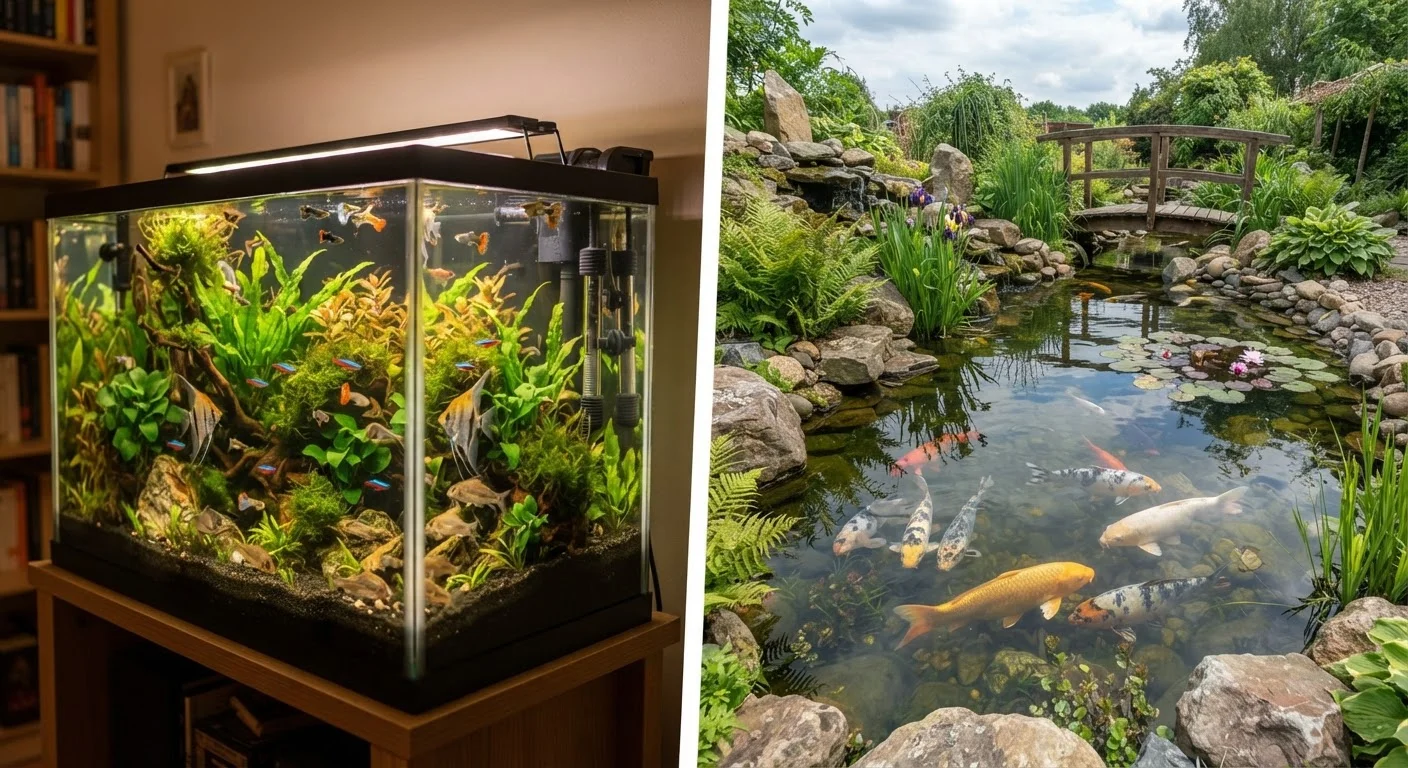
Species Compatibility: Not All Fish Belong in Both Worlds
The most important distinction between aquarium and pond fish is species suitability. Tropical fish - including bettas, tetras, gouramis, and cichlids - require stable, warm water temperatures typically between 72°F and 82°F. These species cannot tolerate the temperature fluctuations of an outdoor pond in most U.S. climates, let alone survive winter.
Pond fish, by contrast, are predominantly cold-hardy species. Koi (Cyprinus rubrofuscus) and common or comet goldfish are the most widely kept, and both can tolerate water temperatures approaching freezing during winter dormancy. Attempting to house koi in a standard aquarium is impractical - adult koi routinely exceed 24 inches and produce substantial waste loads that overwhelm all but the largest indoor systems.
It's worth dispelling a persistent myth here: goldfish are often sold as aquarium fish, but fancy varieties are particularly sensitive to water quality, while single-tailed types like comets genuinely thrive in pond conditions. See our breakdown of common small-pet myths for more on misconceptions like these.
| Aquarium Fish | Pond Fish | |
|---|---|---|
| Typical species | Tropical fish (bettas, tetras, cichlids) | Koi, goldfish, orfe, sterlet |
| Water temperature needs | Stable 72-82°F (heated) | Variable; cold-hardy down to near freezing |
| Space requirements | 10-200+ gallons indoors | 500-10,000+ gallons outdoors |
| Seasonal care | Consistent year-round routine | Major adjustments spring, summer, winter |
| Filtration complexity | High - small volume, no natural buffer | Moderate - large volume, plant assistance |
| Predator risk | Minimal (cats, jumping) | Significant (herons, raccoons, cats) |
| Typical lifespan of fish | 3-15 years depending on species | 20-35 years (koi); 10-15 (goldfish) |
| Upfront cost | Moderate ($200-$1,000+) | Higher ($500-$5,000+ for pond build) |
Water Quality and Filtration: Different Challenges at Different Scales
Water quality management is where aquarium and pond care diverge most sharply in practice. Indoor aquariums operate as closed systems with limited water volume - a 55-gallon tank has almost no buffer against ammonia spikes from uneaten food or fish waste. This makes the nitrogen cycle (the biological process by which beneficial bacteria convert ammonia to less toxic compounds) a critical and ongoing concern. New aquarium keepers frequently lose fish to ammonia toxicity before their tank is properly cycled. Our guide on why new fish keep dying covers this in depth.
Outdoor ponds benefit from vastly greater water volume, which provides a natural buffer against parameter swings. A well-established 2,000-gallon pond with aquatic plants and a mature biological filter is considerably more stable than any home aquarium. However, ponds face their own challenges: rainfall can dilute water chemistry, debris accumulation accelerates, algae blooms are harder to manage, and predator pressure from herons, raccoons, and cats is a real risk.
Filtration requirements also scale differently. Aquariums need mechanical, biological, and often chemical filtration running continuously. Ponds typically require purpose-built pond filters, often supplemented by UV clarifiers to manage algae, and may benefit from aquatic plants like water hyacinth or marginal species that absorb excess nutrients naturally.
Test Water Parameters Weekly in New Setups
Whether you're establishing a new aquarium or a newly built pond, weekly water testing during the first several months is critical. Ammonia, nitrite, nitrate, and pH levels should all be monitored until the system demonstrates consistent biological stability. Test kits designed for either freshwater aquariums or ponds are widely available at fish specialty retailers and provide reliable readings.
Seasonal Care: The Pond Keeper's Extra Dimension
Aquarium maintenance follows a relatively consistent weekly routine year-round: partial water changes, filter cleaning, water parameter testing, and feeding. Pond care, by contrast, is distinctly seasonal - particularly in regions that experience cold winters.
As water temperatures drop below 50°F, koi and goldfish enter a state of torpor, their metabolism slowing dramatically. Feeding must stop entirely below this threshold because their digestive systems essentially shut down - feeding cold fish can cause food to rot in the gut and prove fatal. A pond heater or de-icer is often necessary to keep a small area of the surface ice-free, allowing toxic gases produced by decomposing matter to escape.
Spring brings its own demands: restarting filtration, gradually resuming feeding with easily digestible foods, and monitoring for parasites and bacterial infections that exploit fish with weakened immune systems post-winter. Summer requires vigilance against low dissolved oxygen levels during heat waves, as warm water holds less oxygen - a risk that rarely affects temperature-controlled indoor aquariums.
For anyone new to indoor fish keeping, understanding the setup fundamentals first is essential. Our freshwater aquarium setup guide is a practical starting point before considering the added complexity of outdoor pond management.
Cost, Space, and Long-Term Commitment
Initial and ongoing costs differ considerably between the two setups. A quality freshwater aquarium system - including tank, stand, filtration, heater, lighting, and cycling supplies - can range from a few hundred to over a thousand dollars depending on size and species requirements. Running costs include electricity (heaters and filters run continuously), water conditioner, and replacement equipment.
Outdoor ponds represent a larger upfront investment, particularly for in-ground construction. Above-ground pre-formed or liner ponds are more affordable to install but may require additional insulation in cold climates. Ongoing costs include pond filtration, water treatments, fish food calibrated to seasonal temperatures, and potential veterinary care - koi can live 20 to 35 years with proper husbandry, making them a significant long-term commitment.
Space is the other decisive factor. Apartments and smaller homes suit aquariums of almost any size. Ponds require sufficient outdoor space, appropriate sun/shade balance, and ideally proximity to a power source for filtration and water features. Those comparing indoor versus outdoor environments for pets will recognize a familiar trade-off - much like the indoor versus outdoor cat debate, each setting has genuine advantages and genuine constraints.
20-35 years
Typical lifespan of a well-kept koi
Koi longevity is well-documented in aquaculture literature, underscoring the long-term commitment pond keeping requires.
50°F
Temperature threshold to stop feeding pond fish
Below 50°F, koi and goldfish digestive systems slow to the point where feeding causes more harm than good.