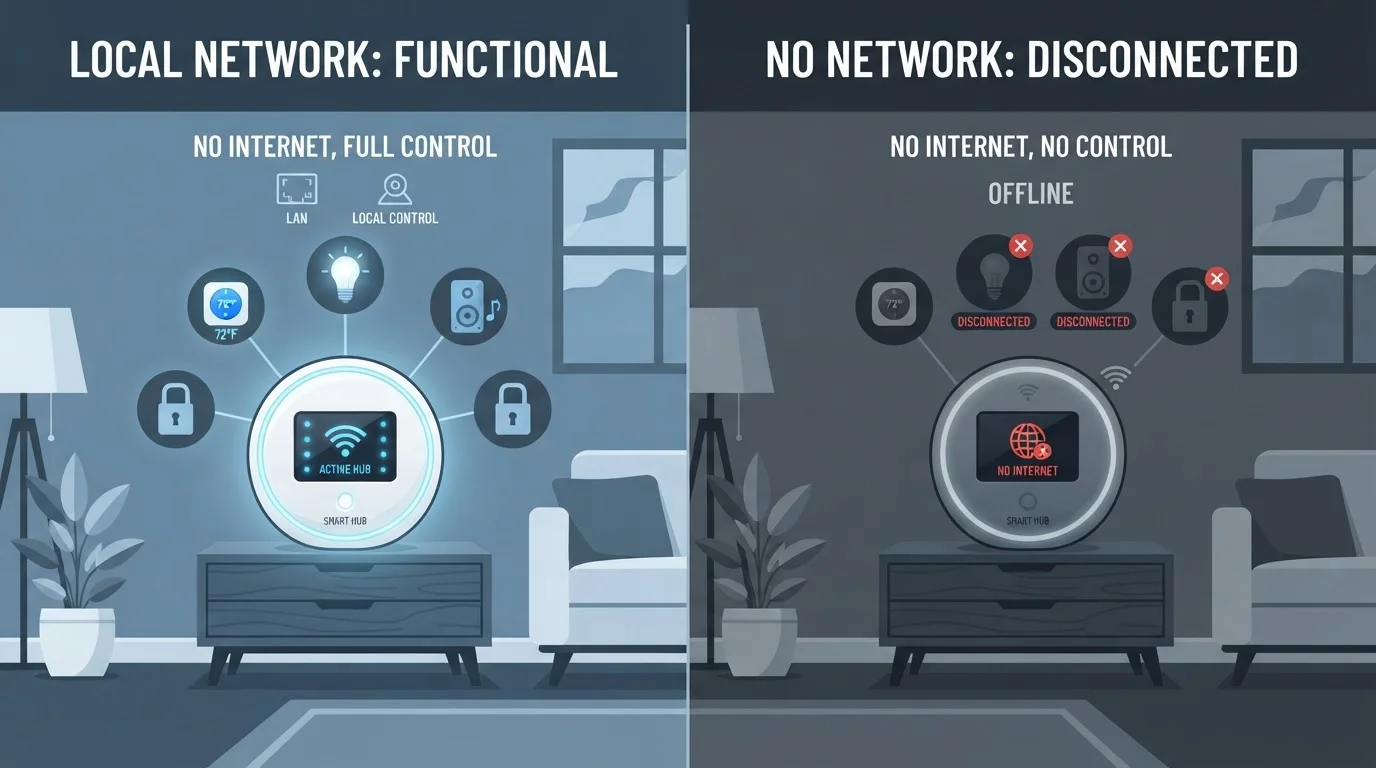
What These Terms Actually Mean
When a smart device is described as locally controlled, it means the device processes your commands on your home network - through a local hub, a dedicated app talking directly to the device, or a protocol like Zigbee or Z-Wave - without any information traveling to an outside server. When you tap a button in the app, the signal stays inside your home.
A cloud-dependent device takes a different path. Even when you're sitting in the same room as the device, your command typically travels from your phone to a company's remote server, gets processed there, and is then sent back to the device. This round trip happens in milliseconds under normal conditions - but it means the device's core function depends on infrastructure you don't own or control.
Understanding your home network is foundational here. See our home network fundamentals guide for the baseline knowledge that makes these distinctions make sense.
How Reliability Differs Between the Two
The most immediately obvious difference shows up when your internet connection drops. A locally controlled smart lock, thermostat, or lighting system keeps working - your app can still reach the device directly on your Wi-Fi or through a local hub. A cloud-dependent device, by contrast, may become completely unresponsive, even if the device itself is physically fine and your local network is running perfectly.
There's a longer-term reliability concern as well. Cloud-dependent devices are tied to a company's server infrastructure and business decisions. If the company discontinues a product line, gets acquired, or simply shuts its servers down, previously functional hardware can stop working - sometimes with little notice. This has happened with multiple smart home platforms in recent years. A locally controlled device, particularly one using an open protocol, is far less exposed to this risk.
Server Shutdowns Are a Real Risk
When a smart home company discontinues its cloud platform, devices that depend on it can stop responding permanently - even if the hardware itself is undamaged. Before investing in a cloud-dependent ecosystem, it's worth researching whether the manufacturer has a track record of long-term support and whether local-control options exist as a fallback.
If you experience recurring disconnection issues, our guide on why smart bulbs keep disconnecting covers the most common causes and how to address them.
Privacy: Where Your Data Actually Goes
Every cloud-dependent device represents a data pipeline from your home to a server you don't operate. What gets sent varies by device and manufacturer - some transmit usage patterns, schedules, and behavioral data; others collect voice recordings or video clips. Even when companies have legitimate privacy policies, data breaches, policy changes, or acquisitions can affect how that data is ultimately handled.
Locally controlled devices keep your usage data on your own network. There's nothing being transmitted to an external server during normal operation, so there's nothing to breach or repurpose from the outside. This doesn't mean local devices are risk-free - they still need to be kept updated and secured - but the data exposure surface is fundamentally smaller. For practical habits that reduce security risk regardless of device type, see keeping your home devices secure.
Comparing Local and Cloud-Dependent Devices Side by Side
The table below distills the key differences across the dimensions most relevant to everyday use:
| Local-Control Devices | Cloud-Dependent Devices | |
|---|---|---|
| Works without internet | Yes, operates on local network | No, requires active internet connection |
| Affected by server outages | No | Yes, can become unresponsive |
| Longevity risk | Low - not tied to company servers | Higher - depends on company staying active |
| Privacy exposure | Minimal - data stays on your network | Higher - data sent to external servers |
| Setup complexity | Often requires more configuration | Typically easier out of the box |
| Common protocols | Matter, Zigbee, Z-Wave, local API | Proprietary Wi-Fi, manufacturer app |
| Subscription risk | Generally none | Features may require ongoing payment |
Practical Tips for Evaluating Devices Before You Buy
Most product listings don't clearly advertise whether a device is locally controlled or cloud-dependent - you often have to dig for it. Here are practical signals to look for:
- Protocol support: Devices using Matter, Zigbee, or Z-Wave generally support local control. Wi-Fi-only devices from consumer brands more often depend on cloud infrastructure.
- App behavior: If the manufacturer's app requires account creation and an internet connection even during setup, that's a strong indicator of cloud dependency.
- Community or open-source support: Devices that integrate with platforms like Home Assistant typically offer robust local-control options.
- Subscription requirements: If full functionality requires an ongoing subscription, some or all processing is likely cloud-based.
It's also worth checking our checklist for keeping smart home devices running reliably - some of those tips apply differently depending on which type of device you own.