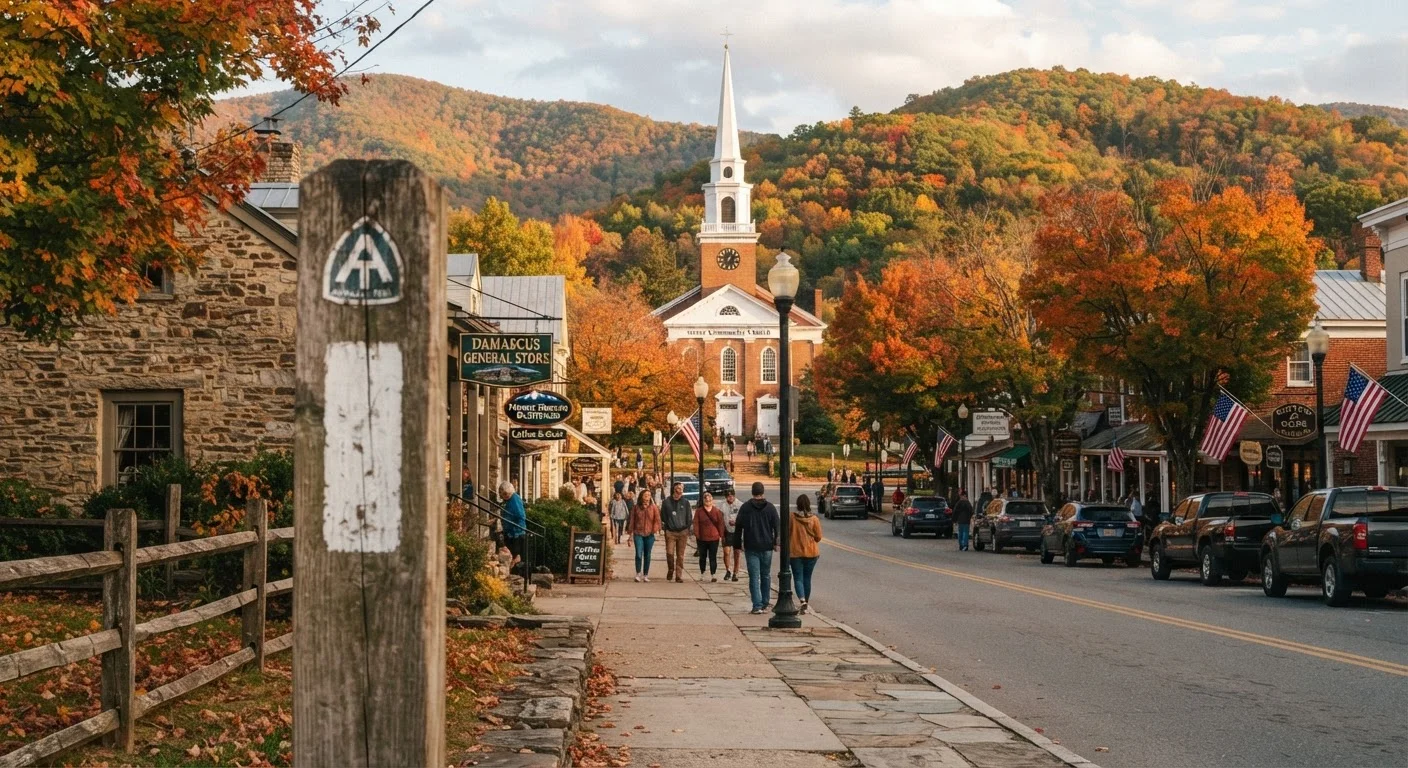
What Makes an AT Town Different From a Typical Tourist Destination
The Appalachian Trail stretches roughly 2,190 miles from Springer Mountain, Georgia, to Mount Katahdin, Maine, passing through or near communities in 14 states. Towns along the route range from small crossroads with a single outfitter to established tourist hubs with full hospitality infrastructure. What they share is a relationship with the trail itself - one that shapes everything from local culture to business hours.
Unlike destinations built around resorts or theme parks, most AT towns developed their trail-friendliness organically, often driven by through-hiker demand. That means services are utilitarian by design. Expect laundromats, hostels, and gear-repair services alongside restaurants. Don't expect concierge services or late-night dining.
| Total trail length | Approximately 2,190 miles (Appalachian Trail Conservancy) |
| States the trail passes through | 14 states, Georgia to Maine (Appalachian Trail Conservancy) |
| Peak northbound hiker season | March through October (General hiker community consensus) |
| Average through-hike duration | 5 to 7 months (Appalachian Trail Conservancy) |
| Typical trail town services | Lodging, laundry, outfitters, post office, food |
| Primary trail marker color | White (2×6 inch painted blaze) (Appalachian Trail Conservancy) |
Day-trippers and through-hikers use these towns very differently. A through-hiker arriving after weeks on trail is resupplying, resting, and recovering. A day-tripper is typically looking for a trailhead, a meal, and a scenic stop. Understanding which profile you fit - and which the town primarily caters to - will set your expectations correctly before you arrive.
Types of AT Towns and What Each Offers
Trail Towns With Full Resupply Infrastructure
A handful of communities have developed robust infrastructure specifically for hikers doing multi-day or long-distance sections. These typically include outfitters with fuel canisters and gear, hostels or hiker-friendly lodging, post offices that accept mail drops, and cafes accustomed to large appetites. Damascus, Virginia - sometimes called "The Friendliest Town on the Trail" - is a widely cited example of this type. Towns in this category tend to welcome hikers visibly, with gear-drying racks, trail registers, and staff who understand hiker logistics.
Gateway Towns Near Major Trailheads
Some towns sit near popular entry points but don't sit directly on the AT. These communities benefit from day-tripper traffic and weekend hikers. Amenities lean toward tourism rather than long-distance logistics: bed-and-breakfasts, restaurants, and retail shops. The Smoky Mountains region includes several gateway communities that illustrate this balance well - visitor numbers are high, but the infrastructure is oriented toward comfort rather than resupply.
Small Crossroads Communities
Many sections of the AT pass through or very near tiny communities with minimal services. These may offer a general store, a hostel in a converted building, or simply a road crossing. Hikers often rely on rideshares or shuttles to reach more substantial services. Day-trippers should not plan on finding restaurants or lodging at these stops without researching ahead.
Through-hiker
A person attempting to hike the entire length of the Appalachian Trail in a single continuous journey, typically over five to seven months. Through-hikers are the primary long-distance users of trail towns and drive much of the resupply economy.
Mail drop
A pre-packed resupply box that a hiker mails ahead to a post office or business along the trail. Trail towns with reliable mail-drop acceptance are especially valuable to long-distance hikers.
White blaze
A two-by-six-inch white painted rectangle used as the official trail marker for the Appalachian Trail. Following white blazes keeps hikers on the main route; blue blazes typically indicate side trails.
Slack-packing
A hiking technique where a hiker carries minimal gear for a day section while their full pack is shuttled ahead. Common among through-hikers near towns with shuttle services.
Hostel (trail hostel)
Budget lodging specifically designed for hikers, often featuring bunk beds, laundry access, and kitchen facilities. Trail hostels are a defining feature of well-developed AT towns.
Fuel canister
A pressurized container of isobutane or propane used to power backpacking stoves. A key resupply item that hiker-focused outfitters in AT towns typically stock.
Practical Considerations Before You Visit
Seasonality Matters Significantly
Most through-hikers travel northbound, beginning in Georgia in late winter or early spring and reaching Maine by late summer. This means trail town services follow a seasonal rhythm. Businesses that depend on hiker traffic may reduce hours or close entirely in the off-season. If you're visiting outside the peak March-through-October window, contact businesses directly to confirm availability.
Parking, Crowding, and Trail Access
Popular trailheads near towns can fill parking areas by mid-morning on weekends. Some towns have implemented shuttle systems or designated hiker parking lots to manage volume. Check with local trail clubs or municipal websites for current guidance - this varies widely by location and changes year to year.
Altitude and Terrain Vary Along the Route
The trail's character shifts dramatically by region. The southern Appalachians involve sustained elevation and rugged terrain, while sections through Pennsylvania are comparatively flatter but notoriously rocky. If you're planning a day hike near an AT town, research the specific section's difficulty - don't assume proximity to a town means easy walking. For comparison, high-elevation destinations like Colorado's mountain towns present similar planning considerations around physical exertion and terrain.
Respect the Community Relationship With the Trail
Trail towns depend on a working relationship between locals and hikers. Respect posted rules at trailheads, leave no trace on approaches through town, and support local businesses when you can. Many of these communities have invested significantly in hiker-friendly infrastructure with little outside funding.