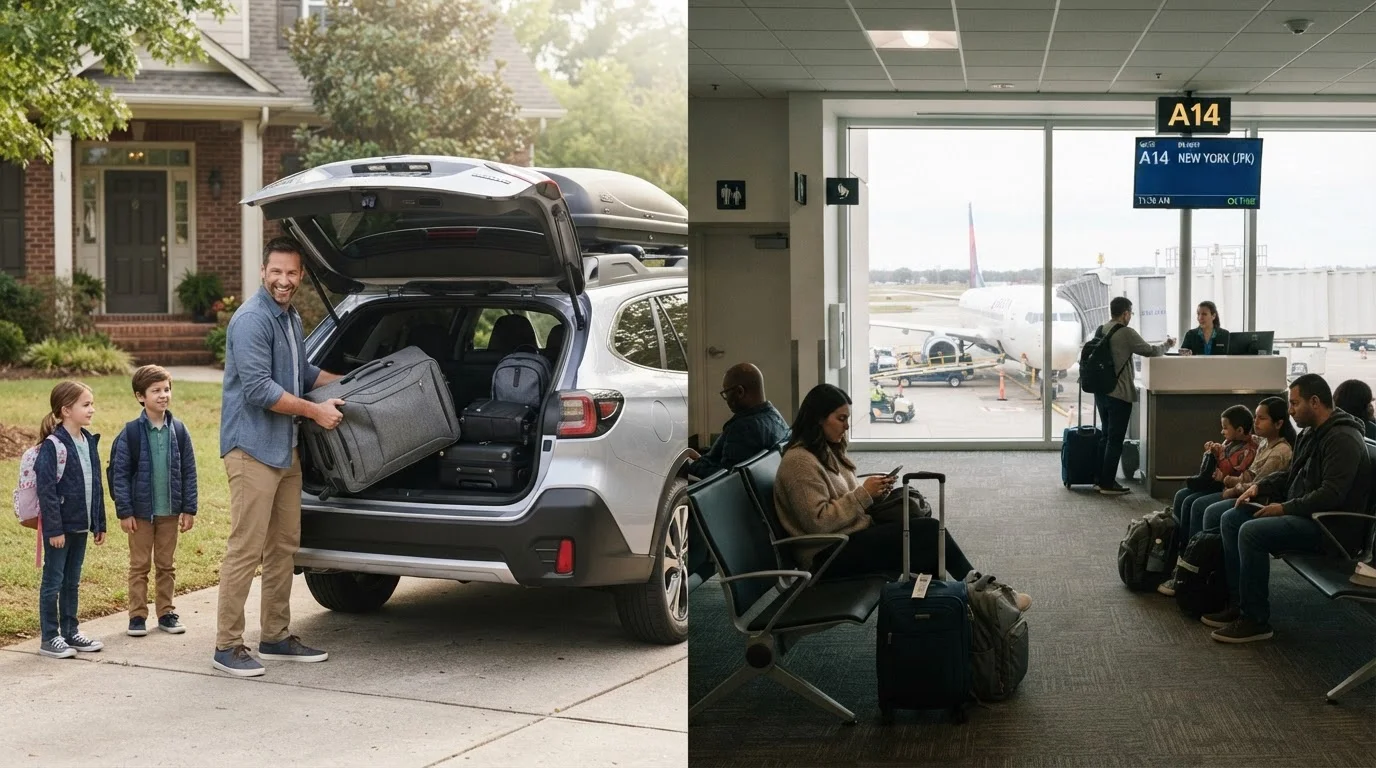
Start With Distance: The 300-Mile Rule of Thumb
Distance is the most reliable starting point when comparing driving and flying. For most domestic trips, the breakeven point - where flying stops saving meaningful time - falls somewhere between 250 and 400 miles, depending on your specific route and origin airport.
Here's why: flying isn't just the time in the air. Factor in arriving at the airport 90 minutes early, security screening, boarding, taxi, and then ground transportation at your destination. A 90-minute flight can easily consume five or six hours of your day from door to door. A four-hour drive, by contrast, puts you in control of every minute.
Trips under 300 miles almost always favor the car. Beyond 600 miles, flying typically wins on time. The middle range - 300 to 600 miles - requires a closer look at the other factors below. For guidance on managing airport time when you do fly, see our comparison of short connections vs. long layovers to plan your buffer wisely.
| Driving | Flying | |
|---|---|---|
| Best distance range | Under 400 miles | Over 500 miles |
| Cost for large groups | One fuel bill, shared | Multiple fares plus baggage |
| Schedule flexibility | High - depart and stop as needed | Low - fixed schedules |
| Luggage freedom | No limits or fees | Weight and size restrictions apply |
| Door-to-door speed | Competitive under 4 hours | Faster beyond 6 driving hours |
| Ground transport at destination | Car already with you | Rental or rideshare needed |
| Stress factors | Traffic, fatigue on long drives | Security lines, delays, connections |
Calculate the Real Cost - Not Just the Ticket Price
Comparing a car's gas cost to an airfare number is an apples-to-oranges mistake. To get an honest cost picture, build out each option completely.
For driving: estimate fuel cost using current gas prices and your vehicle's highway MPG, then add tolls, any overnight stops if the drive is very long, and meals on the road. If your car is older or high-mileage, factor in wear-and-tear costs, which the IRS pegs at a standard mileage rate that reflects real operating expenses.
For flying: start with the base fare, then add checked baggage fees (which can run $30-$40 per bag each way on many carriers), parking at your home airport or a rideshare to get there, and a rental car or rideshares at your destination if you'll need one.
Group size changes the math significantly. A family of four flying will pay four fares plus baggage; the same family driving pays one fuel bill split four ways. As party size grows, driving almost always pulls ahead on cost. Packing carry-on only can eliminate baggage fees entirely and is worth considering if flying is otherwise the better fit.
Use a Full-Cost Spreadsheet Before Deciding
Before booking anything, list every line item for both options side by side: fuel or fare, airport parking or tolls, baggage fees, ground transport, and any overnight stops. Many travelers are surprised to find flying costs nearly as much as driving when all fees are counted - or that driving is far cheaper for a group of four. A ten-minute calculation prevents post-trip regret.
Weigh Flexibility, Luggage, and What You Need at Your Destination
Cost and time aren't the only variables. Three practical factors often settle close decisions.
Flexibility: Driving lets you stop when you want, adjust your route, and leave without a fixed departure window. If your travel style leans toward open itineraries, the car is a natural fit. Flying locks you into schedules and makes spontaneous detours impossible.
Luggage and gear: Traveling with sports equipment, a week's worth of luggage for multiple people, camping gear, or a pet changes the calculation. Airlines charge extra for oversized or heavy items, and some gear simply can't fly. A car trunk has no baggage fee.
Your destination's logistics: If you're headed into a dense city with limited parking and good public transit, flying in and using transit or rideshares may be simpler than navigating and parking a car for several days. If your destination is rural, a resort area, or spread out across multiple stops, having your car with you eliminates the rental car question entirely. Think through what you'll actually do once you arrive - this often tips close decisions one way.
For more on matching your logistics to your travel style, see our look at solo travel vs. group tours and our packing trade-offs guide.