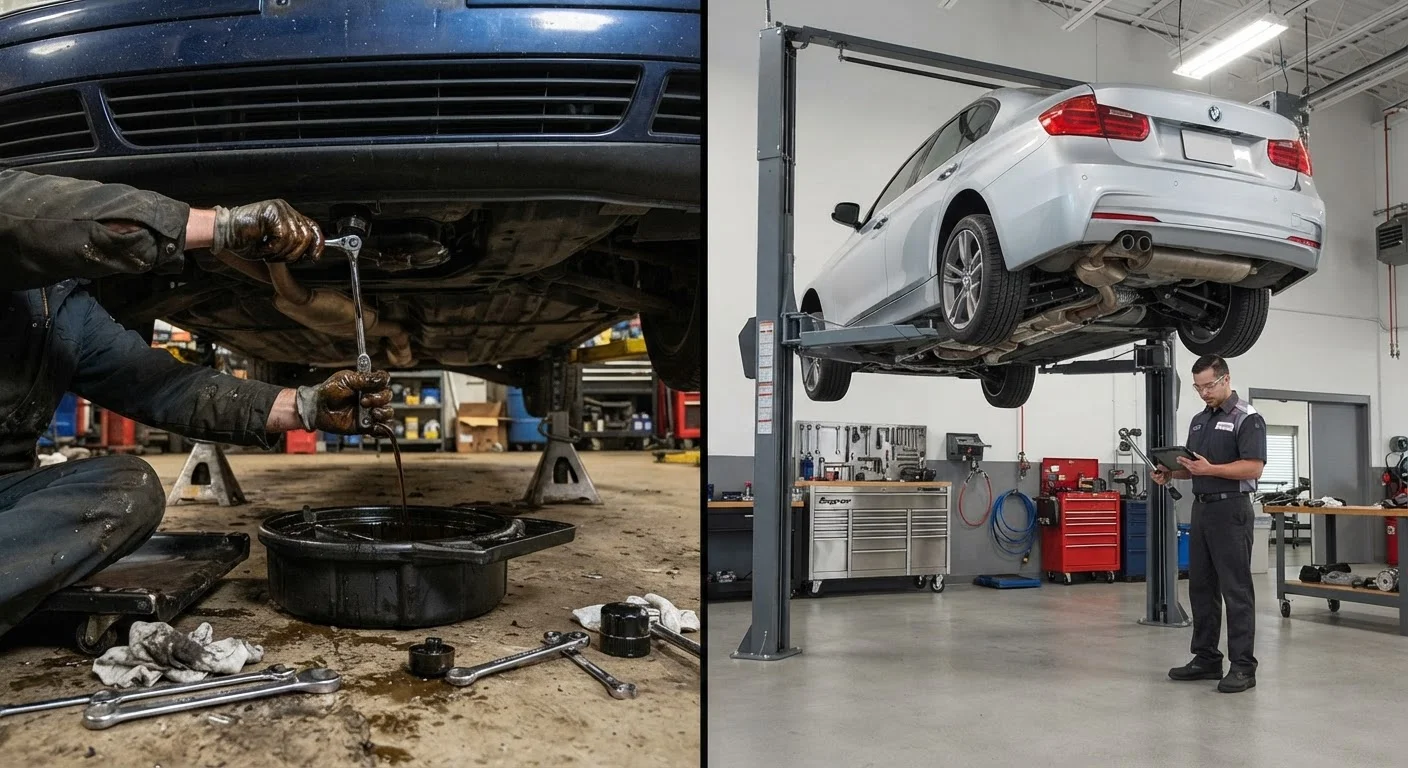
What the Job Actually Involves
An oil change has a few moving parts: draining the old oil, replacing the oil filter, and refilling with fresh oil that matches your vehicle manufacturer's specification. On a straightforward vehicle - say, a common pickup truck or sedan with an accessible drain plug and spin-on filter - the job takes an experienced DIYer about 30 minutes. On some newer vehicles, particularly those with undertray panels, cartridge-style filters buried in tight spaces, or low ground clearance, it takes considerably longer.
Before deciding, look up your specific vehicle's service manual or a reliable forum for your make and model. Pay attention to the oil grade and capacity required, filter location, and whether any panels need removal. Understanding what you're walking into is half the decision.
For a deeper look at which oil type your engine actually needs, see our guide to synthetic vs. conventional motor oil.
The Case for Doing It Yourself
Saves money on labor costs over time
Paying only for oil and a filter rather than shop labor can reduce per-change costs noticeably, particularly if you use full-synthetic oil that extends change intervals.
You control the oil type and quality
You choose exactly which oil and filter go into your engine - no substitutions or upsells from a service advisor.
Builds mechanical familiarity with your vehicle
Getting under the car regularly gives you a chance to spot developing issues - leaks, wear, or damage - before they become expensive failures.
Flexible scheduling on your own timeline
No waiting room, no appointment needed - you can do the job when it's convenient, whether that's early Saturday morning or a weekday afternoon.
The most commonly cited reason to DIY is cost. Labor charges at a shop can add $20-$50 or more on top of materials, and quick-lube chains often push additional services during the visit. Doing it yourself means you pay only for the oil and filter - and you know exactly what went into your engine.
There's also a knowledge benefit. Drivers who change their own oil tend to notice other issues early: a fraying belt, a leaking gasket, worn brake hardware. Getting under your car regularly, even for routine maintenance, builds situational awareness about its condition.
The Case for Using a Shop
Startup tool costs reduce early savings
A jack, jack stands, drain pan, and filter wrench can cost $50-$150 upfront, meaning the first few DIY changes may not actually be cheaper than a shop.
Used oil disposal requires extra effort
Used motor oil is a regulated hazardous material. You must transport it to an approved recycling point - typically an auto parts retailer - which adds a step most shop customers never think about.
Mistakes carry no liability safety net
A stripped drain plug, double gasket, or incorrect oil grade is entirely your responsibility. Repairs from DIY errors can far exceed what a shop would have charged.
Some vehicles are genuinely difficult to work on at home
Certain engines have filters in awkward locations, require undertray removal, or use cartridge-style filters that demand specific tools - making DIY disproportionately time-consuming.
Not feasible without proper workspace
Drivers without a driveway, garage, or safe level surface may be prohibited from performing maintenance on the vehicle where it's parked.
The most significant advantage of professional service is convenience paired with accountability. A licensed shop is responsible for the work performed. If a technician leaves the drain plug loose and you lose oil pressure on the highway, that's a liability they carry. A mistake you make yourself is one you bear alone.
Shops also handle used oil disposal, which is a genuine logistical hurdle for home mechanics. Used motor oil is a regulated hazardous material - you can't pour it down a drain or put it in household recycling. Many auto parts retailers accept used oil for recycling, but it's one more step in the DIY process that's easy to overlook.
Understanding a shop's service invoice before you hand over your keys can help you avoid paying for services you don't need.
Tools, Space, and Disposal: The Hidden Costs of DIY
If you don't already own them, the startup costs for DIY oil changes include a floor jack and jack stands (or ramps), a drain pan, an oil filter wrench, and the correct socket for your drain plug. That initial investment can range from under $50 to over $150 depending on quality, and it doesn't pay off until you've done several changes.
No Driveway? DIY May Not Be an Option
Apartment complexes, condominiums, and many municipal areas explicitly prohibit vehicle maintenance in shared parking areas. Even where it isn't prohibited, working on a car in an uneven or trafficked lot creates safety hazards. If your living situation doesn't include a private driveway or garage, a professional shop is almost certainly the more practical choice - and that's a completely reasonable conclusion to reach.
Apartment dwellers and anyone without a driveway or garage face a harder path. Most apartment complexes and many municipalities prohibit vehicle maintenance in parking lots. If you don't have a safe, level surface with clearance to work under the vehicle, the DIY route may not be realistic regardless of your mechanical ability.
Common Mistakes and How to Avoid Them
The errors that cause the most damage are consistent across first-time and experienced DIYers alike:
- Over-tightening the drain plug: This strips the threads in the oil pan - a repair that can cost hundreds of dollars. Tighten to your manufacturer's torque specification using a torque wrench, not by feel.
- Forgetting to remove the old oil filter gasket: If the old rubber gasket sticks to the engine block and you thread on a new filter over it, you'll have a double gasket that leaks immediately. Always visually confirm the old gasket comes off with the filter.
- Using the wrong oil grade: Modern engines are engineered to tight tolerances and often specify a particular viscosity (e.g., 0W-20 vs. 5W-30). Using the wrong grade can affect fuel economy and, over time, engine wear. Check your owner's manual, not the oil cap.
For a broader look at oil change decisions that cost drivers money unnecessarily, see our breakdown of common oil change myths.
~5 qts
Typical passenger car oil capacity
Most passenger cars require between 4.5 and 6 quarts per change; using the exact amount specified in your owner's manual matters more than rounding up.
5,000-10,000 mi
Common synthetic oil change interval
Many modern vehicles using full-synthetic oil have manufacturer-recommended intervals of 5,000 to 10,000 miles or more - check your specific manual rather than defaulting to older rules.