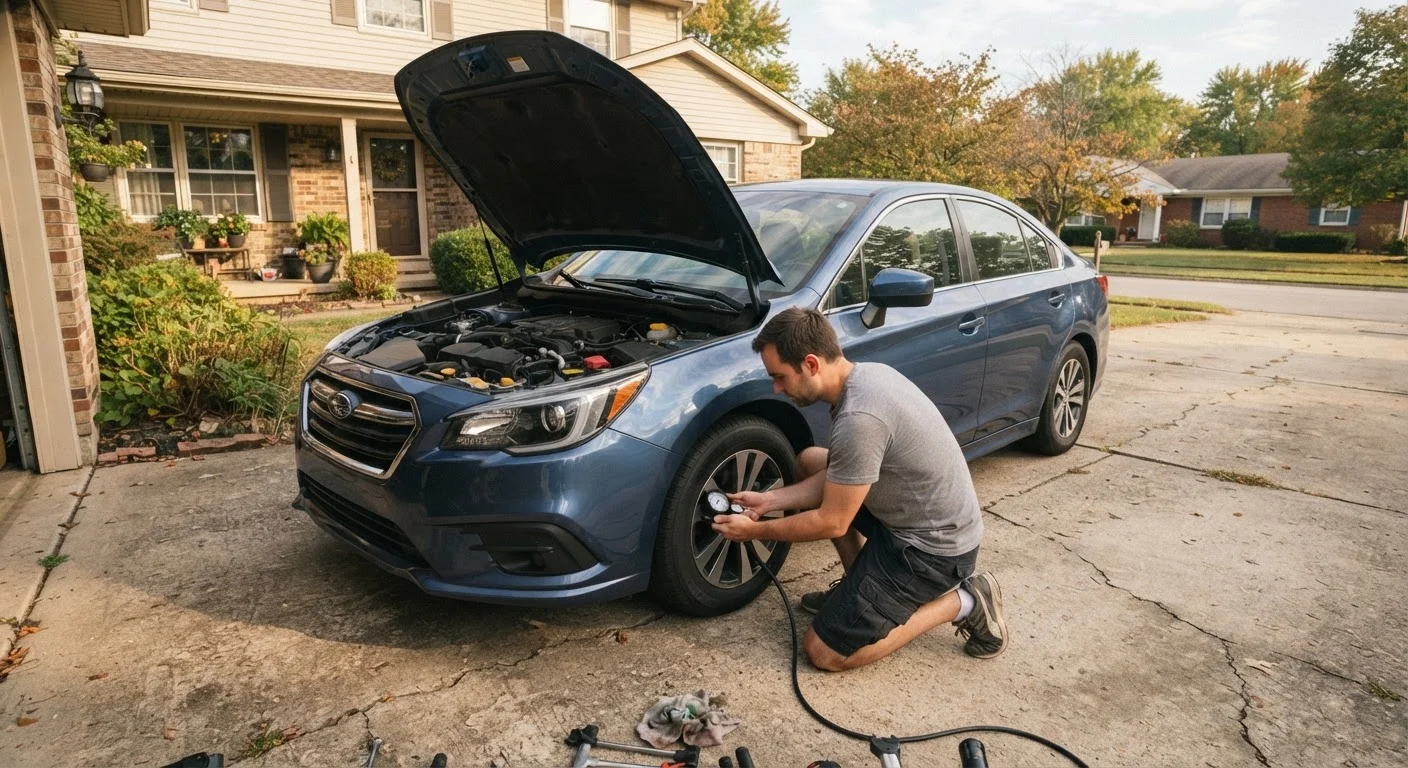
Why This Inspection Matters More Than a Routine Oil Change
A highway mile is harder on your car than ten miles of city driving. Sustained high speeds, heavy loads from luggage and passengers, and hours without a rest stress every major system simultaneously. Problems that were minor annoyances around town - a slow tire leak, low coolant, a belt starting to crack - can escalate quickly when you're 300 miles from home.
This checklist is built around that reality. It's organized by system so you can move through your vehicle methodically, and it flags which items genuinely need a mechanic versus what any careful driver can verify at home. For the broader picture of how vehicle care fits into your year, see the year-round maintenance schedule most drivers overlook.
Work through this list at least five to seven days before departure. That buffer gives you time to book a shop appointment if something needs professional attention without scrambling at the last minute.
Tire Pressure Gauge
Accurately measure PSI in all four tires and the spare before departure.
Vehicle Owner's Manual
Reference correct fluid specifications, belt inspection intervals, and dashboard warning light definitions for your specific model.
Flashlight or Headlamp
Illuminate the engine bay, undercarriage, and tire sidewalls for a thorough visual inspection.
Battery Terminal Brush
Clean corrosion from battery terminals to ensure a reliable electrical connection.
Tread Depth Coin (Quarter)
Perform a quick field test to estimate remaining tire tread depth without a dedicated gauge.
The Full Pre-Trip Checklist
Use the groups below to audit your vehicle from front to back. Check off each item and note anything that needs follow-up. If your vehicle has a maintenance log, pull it out first - it will tell you when key services were last performed. If you don't keep one yet, a vehicle maintenance log makes future inspections much faster.
Tires
Fluids
Belts, Hoses, and Battery
Brakes and Lights
Emergency and Safety Gear
Never Ignore a Check Engine Light Before a Long Drive
A check engine light can signal anything from a loose gas cap to a failing catalytic converter or a misfiring engine. Driving hundreds of highway miles with an undiagnosed fault can turn a minor fix into significant engine damage. Have the code read - many auto parts stores do this at no charge - and understand what it means before you commit to a long trip. Do not assume the light is 'probably nothing.'
When to Call a Mechanic Instead of Proceeding
Several items on this checklist are straightforward visual or gauge checks. Others signal that professional eyes are needed before you leave. As a rule: if you find anything you're uncertain about, a pre-trip diagnostic appointment is far cheaper than a roadside tow and repair. Consider a full inspection if your vehicle has more than 75,000 miles, if it's been more than a year since a comprehensive service, or if any warning light is illuminated. For help decoding dashboard alerts, see what your check engine light is actually telling you.
Once you've confirmed the car is road-ready, the next step is building solid pre-drive habits for every trip - short and long. The pre-drive safety walkthrough is a quick routine you can run in two minutes each time you get behind the wheel.
Don't Skip the Spare Tire Check
Spare tires - especially compact 'donut' spares - lose pressure slowly over months and years sitting unused. A flat spare is useless when you're on the side of a highway at night. Check the spare's pressure every time you check the other four tires, and confirm your jack is in working order and your lug wrench fits your wheel bolts.
This article provides general vehicle maintenance information for educational purposes. It is not a substitute for advice from a qualified mechanic. When in doubt about your vehicle's condition, consult a certified automotive professional before traveling.