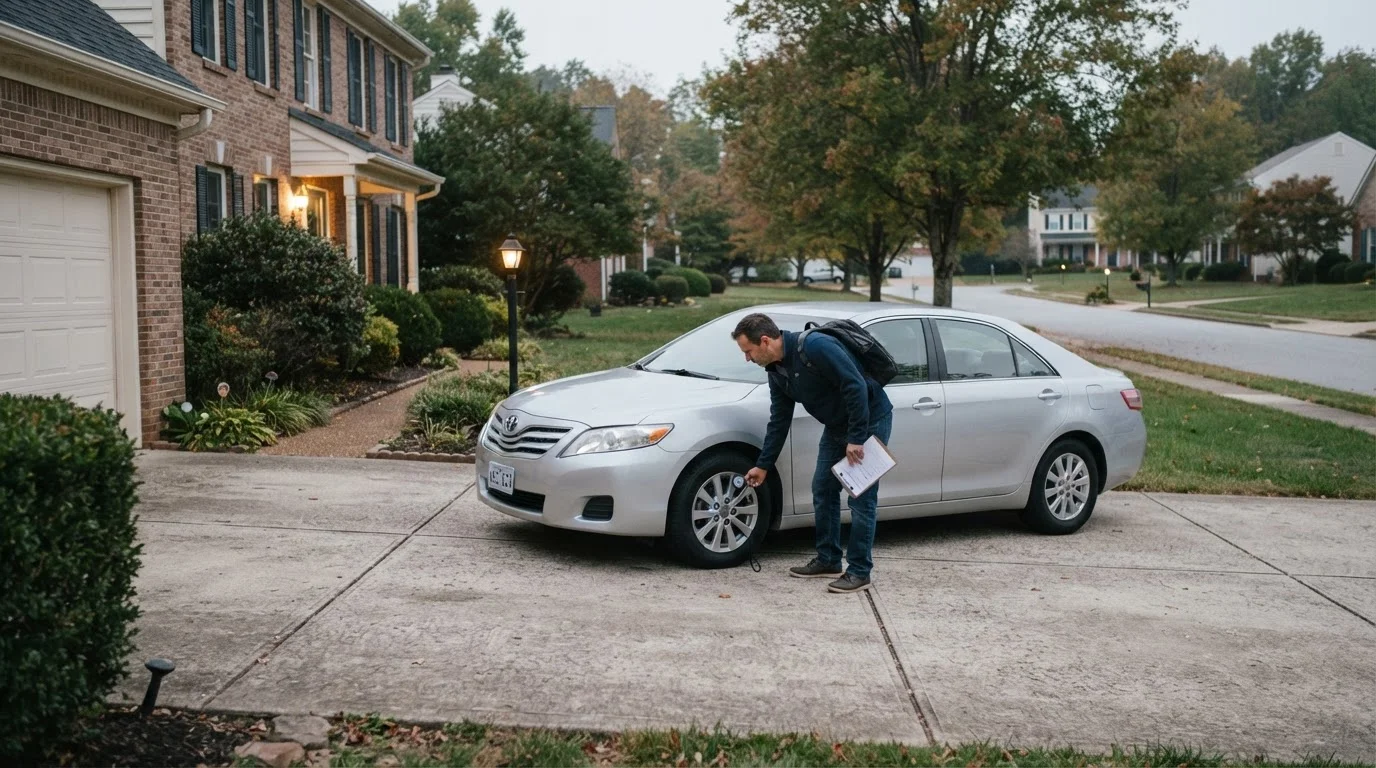
Why a Two-Minute Check Pays Off Every Time
Most drivers climb in, buckle up, and back out without a second thought. That habit works fine - until the morning a bicycle is leaning against the rear bumper, a tire has lost significant pressure overnight, or a wiper blade has finally given up. The goal of a pre-drive walkthrough isn't to turn every errand into a maintenance ritual. It's to catch the small things that become big problems once you're moving.
For longer trips, a pre-drive check complements the broader planning that goes into route selection, rest stops, and supplies. See how every layer of road trip planning fits together for that bigger picture. For daily driving, this walkthrough is a standalone habit - something you can complete before the engine warms up.
Dashboard Warning Lights Are Not Optional
A warning light that appeared this morning and then went out is still worth investigating. Intermittent signals from systems like the ABS, tire pressure monitoring, or check engine can indicate early-stage faults that become serious under driving conditions. If a light appears and you don't know what it means, consult your owner's manual or have the vehicle scanned before committing to a long drive. Visit our car maintenance hub for guidance on common dashboard warnings.
What You'll Need
This checklist requires no special equipment for a basic check. A few items are worth keeping in your vehicle so you're always ready to act on what you find.
Tire pressure gauge
Confirms actual tire inflation against the manufacturer's recommended PSI, found on the driver's door jamb sticker - visual inspection alone is unreliable for moderate underinflation.
Portable phone mount
Keeps navigation visible without requiring you to hold or glance down at your phone while driving.
Ice scraper or snow brush
Clears glass, mirrors, and lights in cold weather so visibility is not compromised before you pull out.
Small flashlight
Useful for inspecting tires, checking under the vehicle, or reading dashboard symbols in low-light conditions.
The Walkthrough: All 18 Items
Work through these groups in order. The exterior checks happen before you get in; the interior and personal-readiness checks happen once you're seated. This sequence keeps you from backtracking.
Exterior - Tires and Wheels
Exterior - Lights and Visibility
Exterior - Around the Vehicle
Interior - Controls and Visibility
Interior - Safety Systems
Personal Readiness
Reversing Cameras Don't Replace a Physical Check
Backup cameras are valuable tools, but they have fixed angles that cannot cover every blind spot - particularly close to the bumper directly behind the vehicle. A child, small animal, or low object like a bicycle lying on the ground may not appear on screen until you are already moving. Always walk behind the vehicle and verify the path is clear before you back out, regardless of what your camera shows.
Adjusting the Checklist for Conditions
Certain conditions call for extra attention to specific items. If you're driving in rain, focus additional time on wipers, tire tread depth, and headlight function - wet roads shorten stopping distances significantly. Our guide on how rain affects stopping distance and vehicle control goes deeper on that topic.
Night driving demands fully functional headlights and clean exterior glass - a thin film of road grime that's barely noticeable in daylight scatters oncoming light badly after dark. For habits that reduce risk specifically on nighttime roads, see night driving habits that actually reduce risk.
Before backing out, always verify the path directly behind the vehicle. Children, pets, and low-profile objects like sports equipment are the most common hidden hazards in residential driveways. Reversing cameras help but do not replace a physical check - camera angles leave blind spots, and objects can move between the time you last checked and the time you shift into reverse.
Finally, personal readiness matters as much as the vehicle. Fatigue impairs reaction time and judgment in ways that parallel alcohol impairment. If you're unsure whether you're fit to drive, review the warning signs of drowsy driving before pulling out. This walkthrough covers the vehicle - you still have to clear yourself for duty.