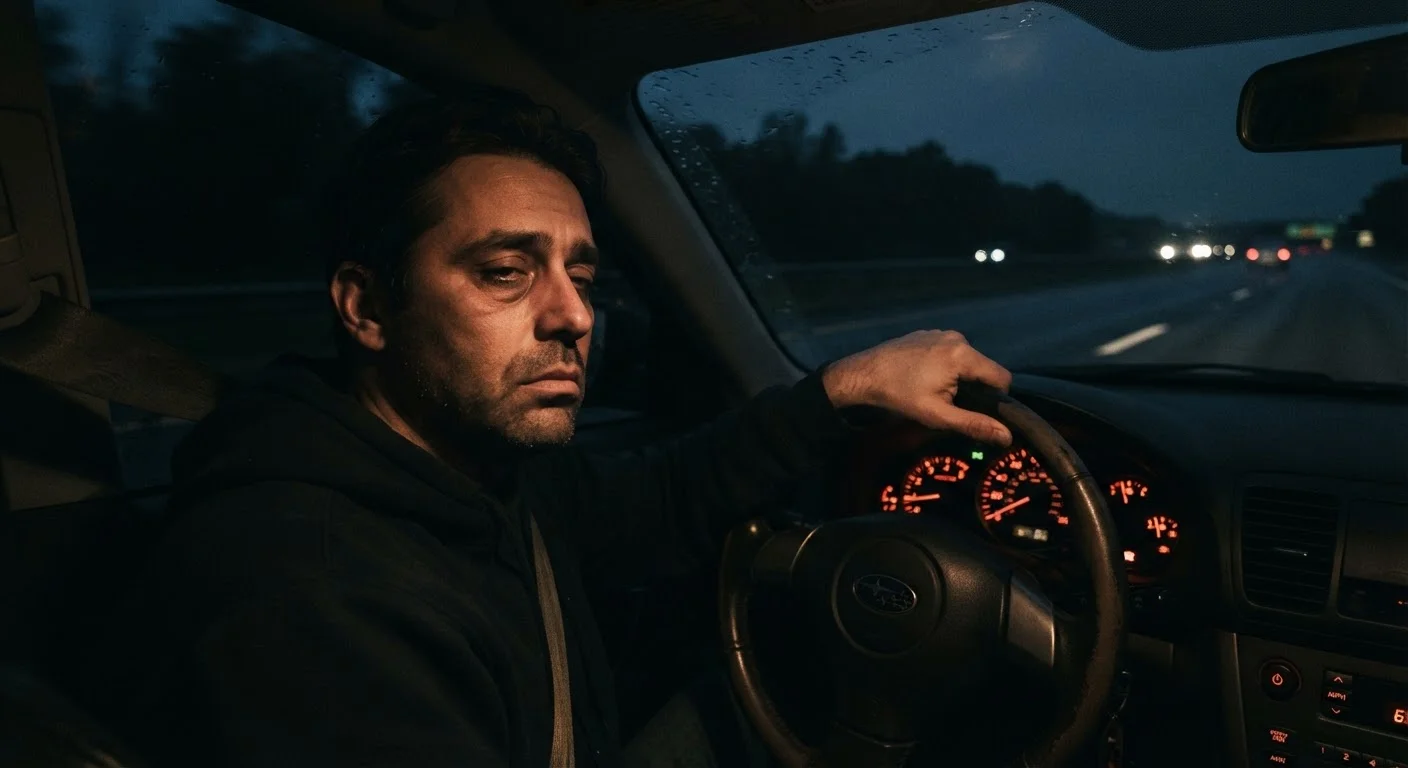
Why Drowsy Driving Is Underestimated
Most drivers are quick to recognize that drunk driving is dangerous, but far fewer treat fatigue with the same seriousness. Part of the problem is self-awareness: drowsiness progressively impairs your ability to judge how impaired you are. By the time you recognize you're struggling, your reaction time has already degraded - sometimes significantly.
According to the National Highway Traffic Safety Administration (NHTSA), drowsy driving contributes to tens of thousands of reported crashes each year in the United States. Because fatigue is difficult to detect after the fact - there's no roadside test for it - those figures are widely considered underestimates.
Unlike distracted driving, which is often a conscious choice, drowsiness can develop without a driver's full awareness. That makes recognizing the warning signs before impairment takes hold the most important skill a fatigued driver can develop.
~100,000
Police-reported drowsy driving crashes annually (U.S.)
NHTSA estimates approximately 100,000 police-reported crashes per year are directly attributed to drowsy driving, with actual numbers likely higher due to underreporting.
4-5 sec
Typical microsleep episode duration
A microsleep episode lasting just four to five seconds at 65 mph means a vehicle travels roughly the length of a football field with no driver awareness or input.
18-20 hrs
Wakefulness linked to alcohol-comparable impairment
Research has associated 18-20 consecutive hours without sleep with driving impairment similar to a blood alcohol concentration in the range of 0.05-0.08%.
The Warning Signs You Should Never Ignore
Fatigue follows a predictable progression. The earlier you catch it, the more options you have. Watch for these signals:
- Frequent yawning or heavy blinking - your body is pushing for rest even while you resist it.
- Drifting within your lane - lane-keeping requires sustained attention; lapses show up as subtle swerving first.
- Missing your exit or forgetting recent miles - this is a sign your brain has already experienced brief episodes of inattention.
- Difficulty maintaining a consistent speed - cruise control aside, speed variation often reflects reduced cognitive engagement.
- Head nodding or eyes closing momentarily - at this stage, microsleep is already occurring. Pull off immediately.
One of the most dangerous aspects of drowsiness is overconfidence. Drivers who are significantly sleep-deprived often report feeling capable of continuing - a judgment error caused by the same fatigue impairing their driving. This is not a willpower problem; it's a neurological one.
For more on managing risk in low-alertness conditions, see our guide to night driving habits that reduce risk.
High-Risk Scenarios and Who Is Most Vulnerable
Drowsy driving risk spikes in specific situations. Long highway stretches are particularly dangerous because monotonous driving - steady speed, few lane changes, little visual stimulation - accelerates mental fatigue. The circadian low points between midnight and 6 a.m. and the early afternoon (roughly 1-3 p.m.) are when drowsiness-related crashes cluster most heavily.
Certain drivers face elevated baseline risk:
- Shift workers, especially those rotating between day and night schedules
- Commercial truck drivers logging long hours
- Young drivers, who tend to both sleep less and overestimate their alertness
- Anyone with untreated obstructive sleep apnea, which fragments sleep even when hours in bed appear adequate
It's worth noting that drowsy driving compounds other risks on the road. Fatigued drivers have longer reaction times - a problem that becomes critical when following distance is already too short. Our article on why following distance matters more than reaction time explains exactly how that gap keeps you safe.
Plan Rest Stops Before Long Trips
On drives longer than two hours, build in scheduled stops every 90-120 minutes. Getting out of the vehicle, walking briefly, and reassessing your alertness level is far more effective than trying to power through. If you know you'll be driving during overnight hours, prioritize a full night of sleep the evening before.
What to Do When You Feel It Coming On
The moment you recognize warning signs, your priority is to get off the road safely - not to push through. Here's what the evidence actually supports:
- Pull over in a safe, well-lit location and take a short nap (20-30 minutes is often cited as effective for restoring short-term alertness). Set an alarm so you don't oversleep into grogginess.
- Drink a caffeinated beverage before napping - caffeine takes about 20-30 minutes to take effect, so the timing can align with waking up. This approach, sometimes called a "caffeine nap," has been studied as a short-term countermeasure, though it does not replace adequate sleep.
- If you can't stop immediately, turn on your hazard lights briefly, reduce speed, and find the nearest safe exit or rest area. Do not rely on opening windows or turning up music - research does not support these as effective.
Before a long trip, your pre-drive preparation matters too. A consistent pre-drive safety walkthrough includes checking your own alertness - not just your vehicle.
The bottom line: no destination, no schedule, and no social obligation justifies driving when you are genuinely impaired by fatigue. Recognizing that moment honestly - and acting on it - is one of the most important safety decisions a driver can make.