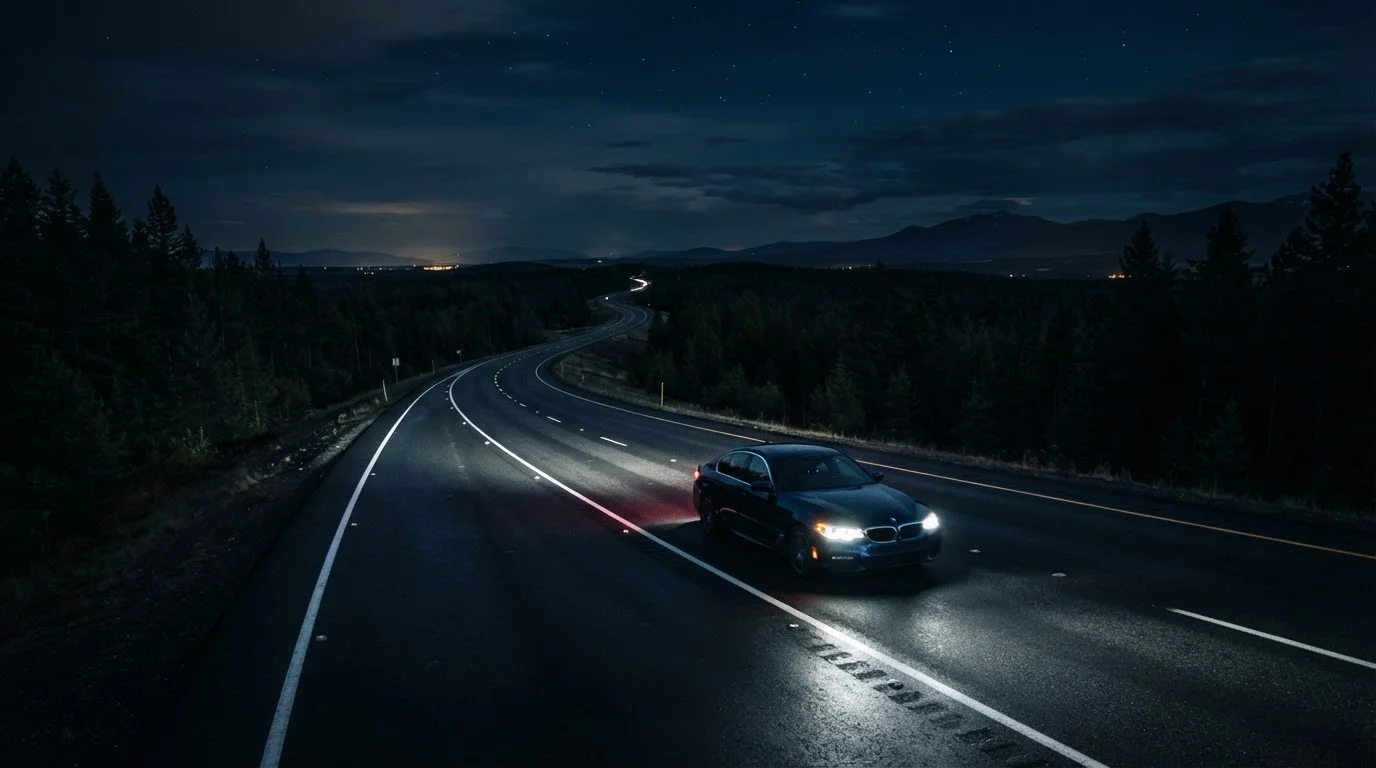
Why Night Driving Is Genuinely More Dangerous
Darkness doesn't just make it harder to see - it changes nearly every variable that determines crash risk. According to the National Safety Council, traffic fatality rates at night are roughly three times higher per mile traveled than during daylight hours. Yet most roads carry far less traffic after dark, which means the risk per driver is disproportionately high.
The core problem is the mismatch between how far your headlights illuminate the road and how far you actually need to see to stop safely. At 60 mph, a standard vehicle traveling on low beams may need more than 200 feet to stop - yet low beams typically light only 160 to 200 feet ahead. High beams help close that gap significantly, which is why using them appropriately matters so much. Add reduced peripheral vision, impaired depth perception, and the possibility of oncoming glare, and you have a driving environment that demands deliberate habits rather than default ones.
Understanding these physics - not fear - is what should prompt you to adjust your approach. See also how experienced drivers train their eyes to scan further ahead, which applies directly to low-visibility conditions.
Proven Habits That Lower Your Risk After Dark
The following practices are grounded in road safety research and standard driver education. None require special equipment - just consistent behavior.
Use your high beams on unlit roads whenever oncoming traffic permits.
High beams roughly double the distance you can see ahead, dramatically reducing the sight-distance gap at highway speeds. Many drivers leave them off out of habit or inertia, missing their primary benefit. The rule is simple: use them when no vehicles are within 500 feet ahead or behind you.
Slow down to match your actual stopping distance to your sight distance.
On low beams, many drivers are effectively outrunning their headlights - traveling fast enough that they couldn't stop in time if an obstacle appeared at the edge of their light. Reducing speed by even 5-10 mph meaningfully closes that gap. This isn't over-caution; it's basic physics.
Increase your following distance to at least four seconds after dark.
The standard three-second following rule assumes ideal visibility. At night, your reaction time to a lead vehicle's brake lights is effectively the same, but your ability to anticipate problems further ahead is reduced - making extra buffer essential. Common tailgating myths explain why drivers often underestimate how quickly close following becomes dangerous.
Keep your headlight lenses clean and properly aimed.
Oxidized or dirty headlight lenses can reduce light output by 50% or more compared to new ones, according to AAA research. Misaimed headlights either blind oncoming drivers or illuminate the wrong section of road. Both problems are common and easily overlooked. Maintenance oversights like these quietly degrade safety long before drivers notice.
Look toward the right edge of the road when facing oncoming headlights.
Staring into approaching headlights triggers temporary loss of vision - a phenomenon called glare recovery lag. It takes several seconds for your eyes to readjust after exposure. Redirecting your gaze to the right lane line gives you a reference point to hold your lane while your eyes recover.
Have your vision checked regularly, especially if night driving feels harder than it used to.
Night vision declines with age due to changes in pupil size and lens clarity. Uncorrected or outdated prescriptions are a common hidden factor in nighttime discomfort and slower reaction times. A standard eye exam can catch issues that a driver may have adapted to without realizing.
Quick Actions You Can Take Before Your Next Night Trip
Several of the most effective risk-reduction steps happen before you even turn the key. Build these into your routine and they become automatic.
For a broader pre-departure checklist, this pre-drive safety walkthrough covers the habit in full detail.
The Drowsiness Factor: Night Driving's Hidden Multiplier
Fatigue and darkness amplify each other's effects in ways that catch drivers off guard. Your body's circadian rhythm naturally promotes sleepiness in the late evening and early morning hours - the same windows when traffic is thinnest and drivers feel least accountable. Reaction time slows, lane tracking degrades, and micro-sleeps (brief losses of consciousness lasting a few seconds) can occur without the driver noticing.
Microsleeps: The Risk You Won't Notice
A microsleep is an involuntary lapse in consciousness lasting anywhere from one to several seconds. At 60 mph, a three-second microsleep means your vehicle travels nearly 300 feet completely unguided. Drivers rarely remember these episodes, which makes them particularly dangerous on nighttime roads when alertness is already reduced. If you feel drowsy, the only reliable countermeasure is stopping to rest - stimulants like caffeine can temporarily mask the feeling but do not restore full reaction time.
If you're planning a long drive after dark, understanding drowsy driving warning signs before you leave is one of the most practical things you can do. Recognizing the early signals - drifting lanes, difficulty remembering the last few miles, heavy eyelids - gives you the window to pull off safely rather than push through.
Night driving habits also intersect with age-related changes in vision and reaction time. How risk profiles shift across a lifetime behind the wheel is worth reading if you're concerned about how your own driving has changed over the years.