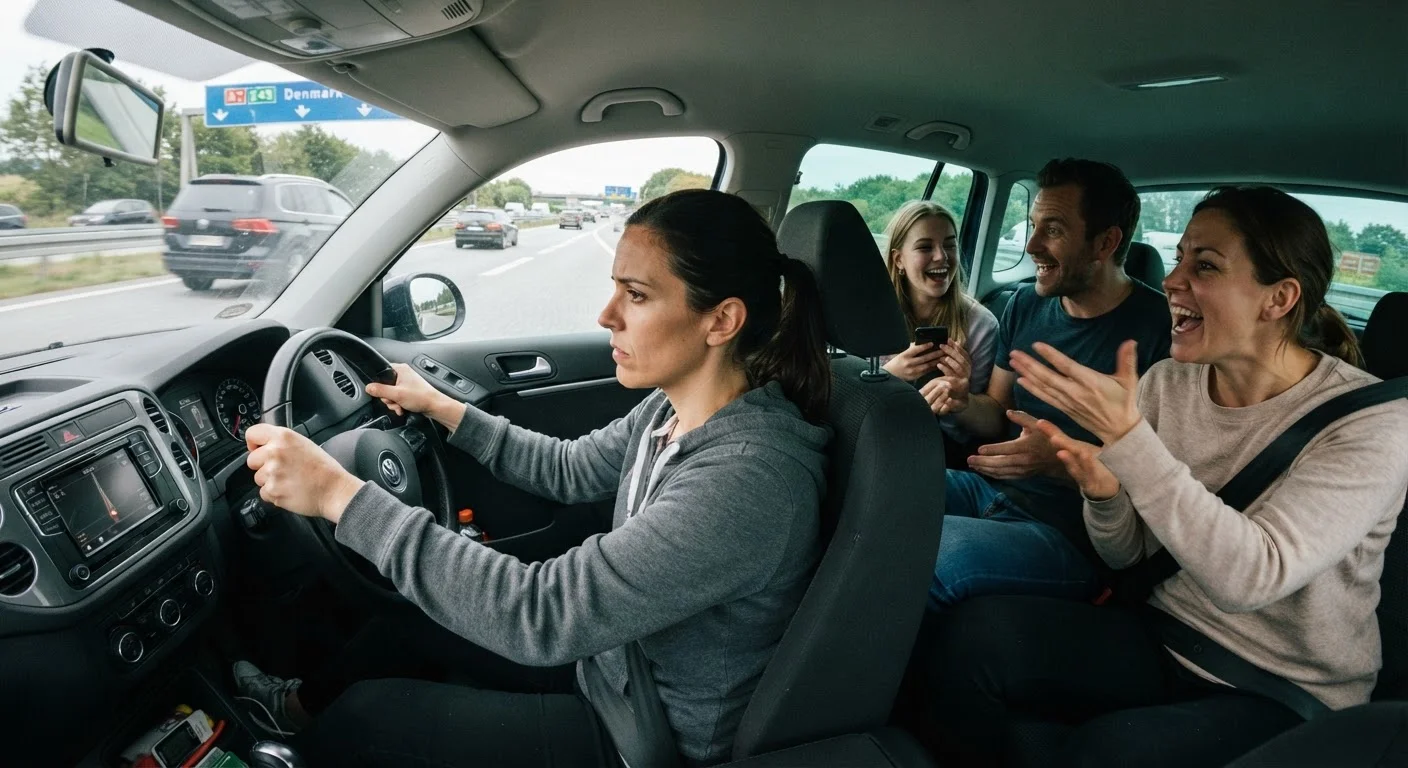
Why Passengers Change the Equation
Driving alone is mentally demanding enough - adding passengers introduces a layer of social dynamics that many drivers underestimate. The vehicle becomes a social space, and that shift in environment competes directly with the attention driving requires.
The core issue isn't just distraction from noise or conversation. It's that passengers can influence how a driver chooses to behave. A driver who would never speed on their own might push 10 mph over the limit because a passenger laughs at caution or implicitly rewards recklessness. This is social pressure, and behind the wheel, it's measurably dangerous.
This dynamic isn't limited to teenagers, though the data on young drivers is the starkest. Adults experience it too - the urge to seem confident, avoid appearing overly cautious, or simply keep a conversation going rather than interrupt it to react to a hazard.
Passengers Aren't Always a Liability
In some circumstances, a passenger can actually improve safety - a calm, alert co-pilot who monitors navigation, watches blind spots during lane changes, or speaks up when the driver seems fatigued provides real value. The risk dynamic is tied to the nature of the interaction, not the mere presence of another person. A passenger who respects the driver's need to focus is an asset, not a distraction.
The Teen Driver Data Is Stark
The most well-documented passenger effect involves teen drivers. The AAA Foundation for Traffic Safety and the National Highway Traffic Safety Administration (NHTSA) have both documented that crash risk rises sharply as teen drivers add passengers. With one peer passenger, fatal crash risk approximately doubles compared to driving solo. With two or more passengers, the risk climbs higher still.
2x
Teen fatal crash risk with one peer passenger
AAA Foundation for Traffic Safety research shows teen driver fatal crash risk approximately doubles with a single peer passenger compared to driving alone.
4x
Risk increase with three or more teen passengers
NHTSA data indicates that teen drivers with three or more passengers face a crash risk roughly four times higher than when driving solo.
~100 ft
Distance covered in one second at highway speed
At 65 mph, a vehicle travels approximately 95 feet per second - the distance covered during a single glance away from the road during conversation.
This isn't primarily about distraction from noise - it's about the social context. Teens are developmentally more sensitive to peer evaluation and approval. A carload of friends creates an audience, and some drivers (consciously or not) perform for that audience by driving more aggressively, running yellow lights, or closing gaps they should maintain.
Graduated Driver Licensing (GDL) laws exist in every U.S. state partly because of this evidence. Passenger restrictions during the early license phase are a direct policy response to crash data, not a precaution based on guesswork. See how this fits into broader age-related risk patterns in our overview of how risk shifts across a driver's lifetime.
How Pressure Manifests in Real Driving
Passenger pressure rarely looks like someone directly saying 'drive faster.' It's usually more subtle than that - and that subtlety is part of what makes it effective.
- Speed creep: A passenger expresses impatience about arrival time. The driver unconsciously speeds up to reduce friction.
- Riskier lane changes: Joking comments about 'slow drivers' prompt tighter cuts between vehicles.
- Delayed braking: A driver pushes through a yellow light rather than stop because slowing abruptly feels awkward with passengers.
- Divided attention: Turning to make eye contact during a conversation - even for one second - at highway speed covers roughly 100 feet of road.
These behaviors compound. Each small concession to passenger dynamics slightly degrades the margin of safety. Most of the time, nothing goes wrong. But the probability of a close call or collision climbs with each compromise.
External conditions add to this. A driver already managing passenger dynamics while navigating rain or low visibility faces a significantly larger cognitive load - something to keep in mind when conditions change, as explored in how rain changes driving demands.
Holding Your Ground as the Driver
The driver controls the vehicle - and that authority is legitimate and worth defending. Holding your ground doesn't require being confrontational; it requires being clear and consistent.
Set the Tone Before You Start Driving
The easiest time to establish expectations with passengers is before the car moves. A quick, matter-of-fact statement about keeping noise manageable or needing focus during complex driving is far easier to enforce than asking for quiet mid-route. Make it a consistent habit with any group of passengers, and it quickly stops feeling like a big deal.
A few practical approaches that work across different passenger situations:
- Set expectations before departure. A brief statement before the car moves - about music volume, navigation preferences, or needing quiet in heavy traffic - normalizes limits without creating conflict mid-drive.
- Treat focused driving as non-negotiable. When a situation requires your full attention (merging onto a highway, navigating a complex intersection, driving at night), it's appropriate to say 'give me a second' and pause conversation.
- Don't negotiate on safety. If a passenger is physically distracting - reaching forward, creating noise that prevents you from hearing traffic - pull over safely and address it directly. This applies to children, pets, and adults equally.
- Acknowledge the pressure without giving in to it. If passengers are making comments about your driving pace, a calm 'I drive at my own speed' is a complete response.
None of these strategies require the driver to be aggressive or humorless - just clear about who is responsible for the vehicle. That clarity, maintained consistently, is a genuine safety behavior. For a related look at how fatigue can similarly compromise your judgment, see the real risks of drowsy driving.