Why Oil Myths Are So Expensive
Motor oil advice has been recycled for decades, and much of it hasn't kept pace with engine and oil technology. As a result, many drivers are spending more money than necessary - or making choices that don't actually benefit their engine. Understanding what's true and what's outdated puts you in control at the service counter.
For a broader look at how oil fits alongside your other vehicle fluids, see our guide to vehicle fluids every driver should know about. The myths below are among the most costly and persistent.
Myth
You need to change your oil every 3,000 miles, no matter what.
Fact
Most modern vehicles can safely go 5,000 to 10,000 miles or more between changes, depending on the oil type and driving conditions.
The 3,000-mile rule dates to an era of older engine designs and conventional motor oils. Today's synthetic and synthetic-blend oils are formulated to last significantly longer, and modern engines are manufactured to tighter tolerances that reduce contamination. The 3,000-mile figure was never a universal engineering standard - it was a conservative guideline that became a marketing staple for quick-lube businesses. Check your owner's manual: the manufacturer's specified interval is the number to follow, and it's usually much higher than 3,000 miles.
Myth
Switching from conventional to synthetic oil will cause leaks in an older engine.
Fact
Synthetic oil does not cause seals to shrink or crack. Properly formulated synthetic oils are compatible with the seals used in most older engines.
This myth likely stems from early synthetic oil formulations in the 1970s and 1980s, which did contain certain esters that could affect some older seal materials. Modern synthetic oils are specifically engineered to be seal-compatible. If an older engine develops a leak after an oil change, the seals were already deteriorated - the synthetic oil didn't cause the failure, it may have simply revealed an existing problem by flowing more readily through compromised seals. When in doubt, consult a trusted mechanic before switching oil types in a high-mileage vehicle.
Myth
If the oil looks dark, it needs to be changed immediately.
Fact
Darkening oil is a sign it's doing its job - suspending combustion byproducts - not necessarily a sign it's failed.
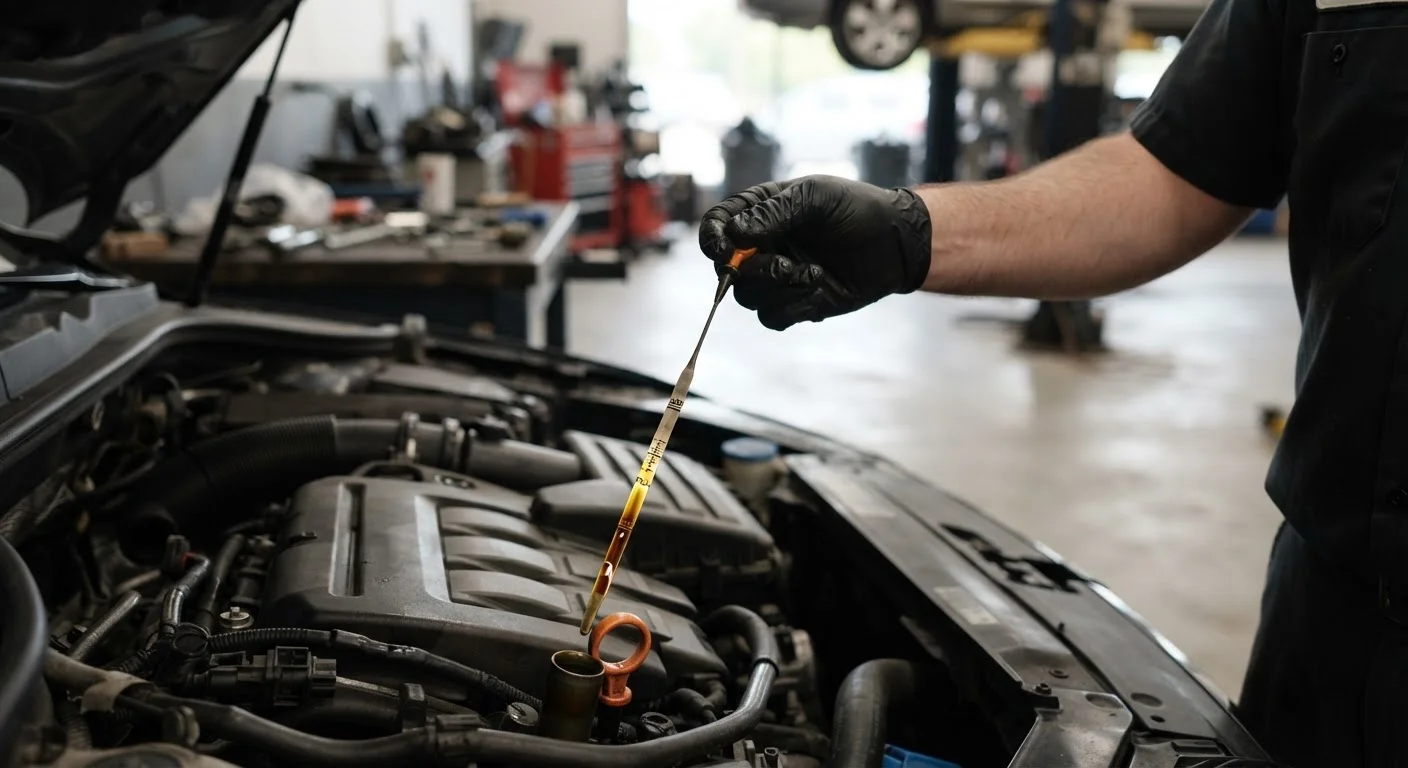
Fresh oil is amber-colored. As it circulates through the engine, it picks up microscopic combustion particles, which darken its color. This is normal and expected. Color alone is not a reliable indicator of oil condition. What actually degrades is the oil's additive package - the detergents, anti-wear agents, and viscosity modifiers - and that breakdown happens over time and mileage, not simply because the oil looks darker. If color is your only guide, you may be changing perfectly good oil and wasting money in the process.
Myth
You should use the thickest oil available for maximum engine protection.
Fact
Using oil that's too thick for your engine can actually reduce protection, especially at cold start.
Viscosity ratings like 5W-30 are carefully matched to an engine's internal clearances and operating temperatures. The first number (5W) describes cold-temperature flow; the second (30) describes high-temperature viscosity. Using a heavier oil than specified - say, 10W-40 when 5W-20 is called for - can slow oil circulation at startup, which is when most engine wear occurs. Your manufacturer's viscosity recommendation already accounts for protection across expected temperature ranges. Thicker is not inherently better; matched is better.
Myth
As long as the oil level is full, you don't need to worry about changing it.
Fact
Oil level and oil condition are two separate things. Full oil can still be degraded and unable to protect your engine properly.
Motor oil loses its effectiveness gradually as its additive package breaks down under heat and oxidation cycles. It can also accumulate moisture, fuel dilution, and combustion acids that diminish its protective properties - none of which affect the level on the dipstick. Topping off a low engine is important, but it doesn't reset the change interval. Ignoring a scheduled oil change because the level looks fine is a common and costly mistake.
What Actually Guides a Smart Oil Decision
Once the myths are out of the way, the practical question becomes: how do you make the right call for your specific vehicle?
5,000-10,000+
Miles between changes for many modern vehicles
Manufacturer-specified intervals have increased significantly as engine design and oil technology have improved over recent decades.
~40%
Of engine wear occurs at cold start
Industry engineering data consistently shows the first seconds after ignition - before oil fully circulates - are when most mechanical wear takes place, making correct oil viscosity critical.
The single most reliable source is your owner's manual. It specifies the correct oil viscosity (such as 5W-30), whether synthetic is required or recommended, and the manufacturer-approved change interval - sometimes expressed in miles, sometimes in months, and sometimes both. Many newer vehicles also have an oil life monitoring system that calculates remaining oil life based on actual driving conditions rather than a fixed mileage count.
If you're weighing the difference between synthetic and conventional at your next change, our synthetic vs. conventional motor oil breakdown covers the practical tradeoffs clearly. And if you're considering doing the job yourself, our DIY vs. shop comparison lays out the real costs and effort involved.
Your Owner's Manual Is the Final Word
No quick-lube coupon, no mechanic's habit, and no general rule of thumb overrides what your vehicle's manufacturer specifies for oil type and change interval. Following the manual's guidance is the single most effective thing you can do to protect your engine long-term. If you've lost your manual, the manufacturer's website typically provides digital versions, and a dealership service department can confirm specifications for your vehicle's year and trim.
Following manufacturer guidance rather than marketing myths is how you protect your engine and your wallet at the same time. For more routine maintenance context, the car maintenance hub covers the full range of upkeep your vehicle needs.