Why Sunlight Labels Matter More Than Most Gardeners Realize
Walk through any nursery and you'll see small plastic tags on every plant - and almost all of them include a light requirement like "full sun," "part shade," or "low light." These aren't vague suggestions. They reflect what a plant genuinely needs to grow, flower, and stay healthy. Ignore them and you're setting yourself up for frustration: a sun-loving vegetable planted in shadow will struggle to produce; a shade-preferring fern placed in harsh afternoon light will scorch and wilt.
The good news is that understanding these categories doesn't require any special tools or expertise. It mainly requires observing your outdoor space honestly. Once you know which light conditions your yard actually offers, matching plants to the right spots becomes straightforward. See our guide to reading plant tags to learn how light labels fit into everything else on a nursery label.
| Full Sun | 6+ hours of direct sunlight daily |
| Part Sun / Part Shade | 3-6 hours of direct sunlight daily |
| Full Shade | Fewer than 3 hours of direct sun daily |
| Best measurement method | Hourly observation on a clear day |
| Reassess light conditions | At least twice yearly (spring and midsummer) |
The Standard Sunlight Categories - Defined Plainly
The gardening industry uses a handful of standard terms, and knowing exactly what each one means eliminates a lot of guesswork.
Full Sun
At least 6 hours of direct, unobstructed sunlight per day. Many vegetables, herbs, and flowering perennials fall into this category. Morning and afternoon sun both count, though intense afternoon sun is hotter and more stressful for sensitive plants.
Part Sun / Part Shade
Between 3 and 6 hours of direct sun per day. The distinction between "part sun" and "part shade" is subtle: part sun plants can tolerate more direct exposure, while part shade plants prefer the lower end of that range with protection from harsh afternoon rays.
Full Shade
Fewer than 3 hours of direct sun per day. Full shade does not mean complete darkness - reflected light and ambient brightness still support plant growth. True deep shade (under dense evergreens, for example) supports only a narrow range of plants.
Dappled Light
Filtered sunlight that passes through a tree canopy, creating shifting patterns of sun and shadow throughout the day. Dappled light generally falls in the part shade category and suits many woodland plants well.
Direct Sun
Sunlight that strikes a surface without obstruction from trees, structures, or cloud cover. Direct sun hours are what most plant labels measure when specifying light requirements.
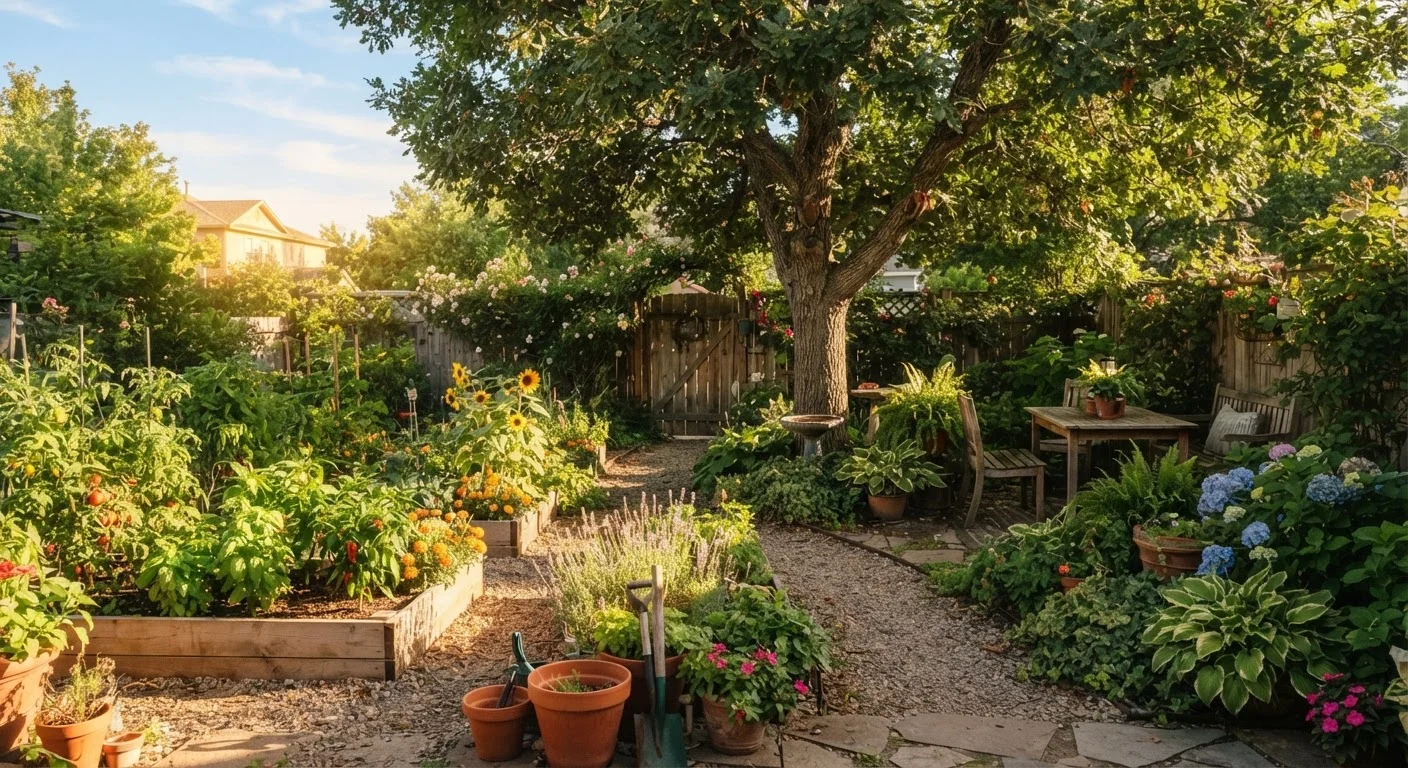
Most yard spaces don't fall neatly into a single category - you may have a full-sun strip along a south-facing fence and a deeply shaded corner under a large tree, all within the same small yard. That variation is normal and actually gives you more planting options, not fewer.
Keep in mind that light conditions change with the seasons. A spot that receives full sun in July may be part shade in April when the sun angle is lower and deciduous trees still have leaves returning. Seasonal gardening planning benefits from re-evaluating your light conditions a couple of times per year.
How to Actually Measure the Light in Your Yard
The most reliable method is simple observation. On a clear day, check each area of your yard every hour or two - from around 8 a.m. to 6 p.m. - and note whether direct sunlight is hitting the ground there. Count the total hours of direct sun. Do this once in spring and again in midsummer for a complete picture.
A few practical notes:
- South- and west-facing areas tend to receive the most intense light and the longest daily exposure in the Northern Hemisphere.
- North-facing spots and areas blocked by structures or mature trees are most likely to qualify as part shade or full shade.
- Reflected light from light-colored walls or fences can meaningfully increase effective brightness without adding direct sun hours.
- Overhead canopy creates dappled light rather than true shade - moving patterns of sun and shadow throughout the day.
You don't need a light meter. Careful observation over one full day gives you enough information to categorize most spots in your yard. If you're starting a new garden bed, also consider your soil type - light and soil conditions together determine what will thrive.
Matching Plants to Your Light Conditions
Once you've mapped your yard's light zones, use that information to guide every planting decision. A few general principles:
- Full sun plants (roses, most vegetables, lavender, coneflower) need that 6+ hour minimum to bloom, fruit, or hold strong structure. Giving them less leads to leggy, weak growth and poor flowering.
- Part sun/part shade plants (hostas, astilbes, impatiens, many ferns) do well in transitional zones - they can handle some direct sun but tend to stress out in relentless afternoon exposure.
- Full shade plants (certain ferns, bleeding heart, sweet woodruff) are adapted to very low light and can actually be damaged by too much direct sun.
When a plant is struggling - yellowing leaves, minimal growth, sunburn patches - light is often the first variable worth reassessing before changing your watering routine. Our article on why plants keep dying covers how to read these distress signals more broadly. And remember that even the right light placement won't compensate for poor watering habits - see our watering guide for how to match moisture to your plants' real needs.
Container Gardens Follow the Same Rules
If you're gardening in pots on a balcony or patio, sunlight zones apply just as much as in the ground. The advantage of containers is mobility - you can move a pot to a sunnier or shadier spot as needed. Track where direct sun falls across your outdoor space at different times of day before committing a container plant to a permanent location.