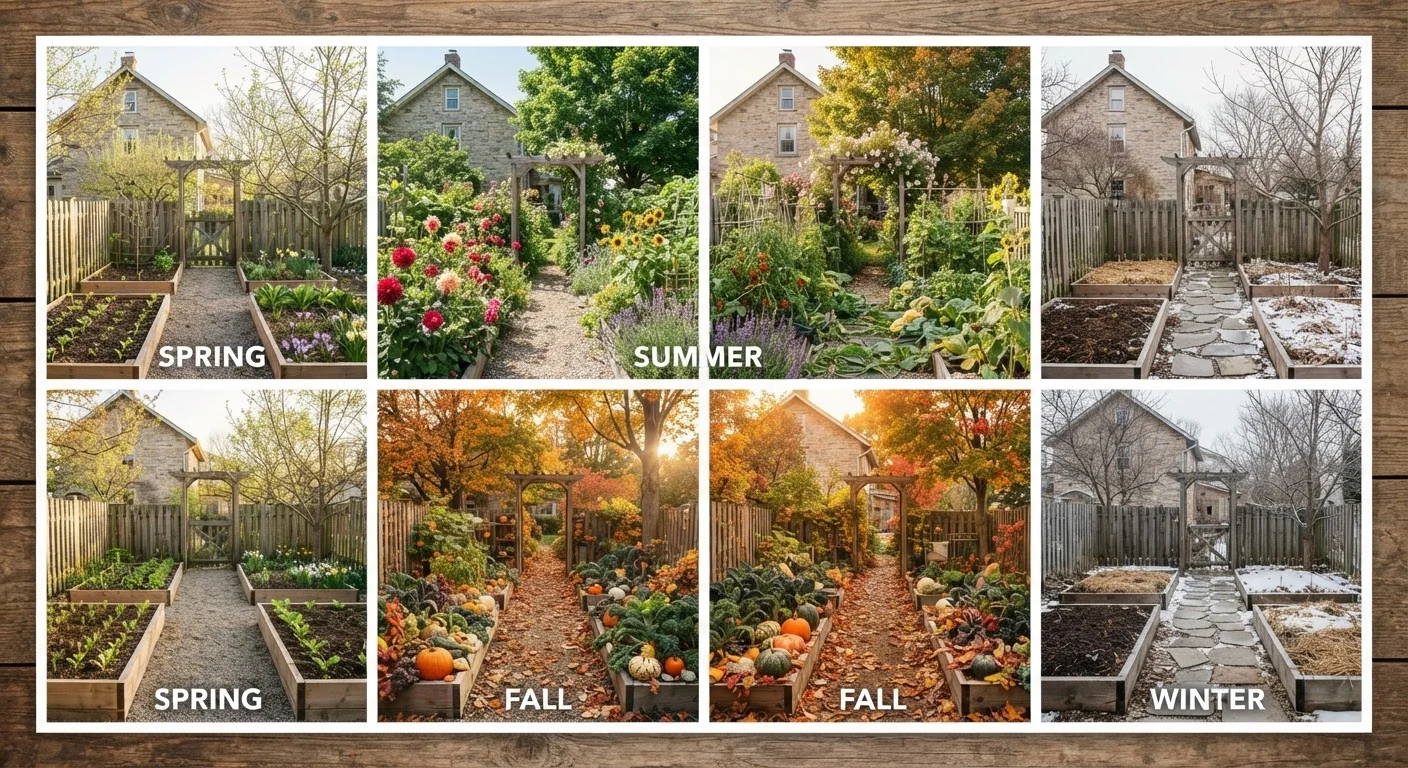
Why Seasonal Structure Makes Gardening Easier
Most gardening frustration comes not from skill gaps but from timing problems - planting too late, skipping fall prep, or trying to fix in spring what should have been done in fall. A seasonal framework turns an overwhelming to-do list into four manageable bursts of focused activity spread across the year.
This checklist is organized by season rather than month because weather - not the calendar - is the real driver. A warm February in the South calls for the same tasks a Midwesterner handles in April. Before you begin, it helps to know your USDA hardiness zone. Our guide to sunlight zones and growing conditions also explains how your yard's light patterns affect which plants will actually thrive there.
The tools and supplies you'll need are straightforward - see the tool list below before you get started.
Soil test kit or cooperative extension service
Determines your soil's pH and nutrient levels before amending so you're not guessing.
Garden calendar or planting journal
Tracks sowing dates, harvest notes, and observations to improve next season's planning.
Quality bypass pruners
Clean cuts reduce disease entry points when pruning shrubs, roses, and perennials.
Soil thermometer
Confirms when soil has warmed enough for direct sowing or transplanting warm-season crops.
Compost bin or pile
Recycles plant debris and kitchen scraps into free organic matter for bed top-dressing.
How to Work Through the Seasonal Checklist
Use the checklist groups below as a seasonal audit: work through each group at the start of that season and return to it mid-season if tasks were delayed. Items marked must are non-negotiable for plant health and productivity. Items marked should are strongly recommended for best results. Items marked nice to have improve your garden over time but won't cause immediate problems if skipped.
Adjust every task to your climate zone
A gardener in Georgia and a gardener in Minnesota are working in fundamentally different environments. This checklist uses general seasonal logic, but your specific planting windows - when to sow, when to mulch, when to harvest - depend on your USDA hardiness zone and local climate patterns. Regional timings can shift by 4-8 weeks compared to national averages. Consult your local cooperative extension service for zone-specific calendars.
If you're also thinking about broader home upkeep that runs alongside your garden calendar, our month-by-month home maintenance calendar covers the structural side of seasonal prep. For gardeners interested in building better soil with less effort, the composting at home guide is a natural companion to the fall and spring tasks below.
Spring (March-May)
Summer (June-August)
Fall (September-November)
Winter (December-February)
Putting It All Together: Year-Round Habits That Compound
The most effective gardeners treat seasonal tasks not as a one-time rush but as ongoing habits. Adding compost every fall means less fertilizing in spring. Deadheading through summer means more blooms without extra plants. Keeping a simple journal - even just a notes app - lets you track what worked and adjust next year's timing without relying on memory.
Don't skip your regional frost dates
All timing in this checklist assumes you know your area's average last spring frost and first fall frost dates. Planting too early or leaving tender plants in too late can result in total loss. Check the USDA Plant Hardiness Zone Map and your local cooperative extension office for dates specific to your zip code - general averages can be off by several weeks from your actual microclimate.
Pruning spring bloomers at the wrong time removes flowers
Shrubs that bloom in early spring - lilacs, forsythia, azaleas - set next year's flower buds on current-season wood immediately after they finish blooming. Pruning these in fall or late winter removes those buds entirely. Prune them within a few weeks of flowering, not before.
If you find that your spring and fall workload feel disproportionately heavy, our article on what distinguishes spring and fall maintenance routines can help you understand why each season asks different things of your yard and home - and how to prepare smarter rather than harder. Similarly, gardeners looking to reduce long-term water and fertilizer needs should explore native plants suited to different U.S. climates as a way to build a lower-maintenance garden over time.