Why Soil Composition Matters More Than Fertilizer
Many gardeners reach for fertilizer when plants look unhealthy, but the real problem is often in the soil itself. Nutrients can be present in the ground yet completely unavailable to plant roots if the soil chemistry isn't right. Understanding what your soil is made of - and how its components interact - is more useful than any single product you can apply to it.
Three factors shape almost everything about how well plants grow: the ratio of key nutrients (expressed as NPK), the soil's acidity or alkalinity (pH), and the amount of organic matter present. These aren't isolated concerns. They work together, and adjusting one often affects the others. Building a basic understanding of all three gives you a far more reliable foundation than guessing at what your plants need.
Before diving into nutrients, it's worth noting that soil health connects to other gardening fundamentals. How water moves through your soil, for example, directly affects how nutrients reach roots - see how timing and depth matter in watering for context on that relationship.
NPK Explained: What Each Nutrient Actually Does
The letters NPK appear on every fertilizer label, but they refer to three distinct functions in plant biology:
- Nitrogen (N) drives leafy, green growth. It's a core component of chlorophyll and amino acids. Nitrogen-deficient plants often turn pale or yellow, starting with older leaves. Lawns, leafy greens, and any plant you're growing primarily for foliage tend to be heavy nitrogen users.
- Phosphorus (P) supports root development, flowering, and fruiting. It's especially important during the early stages of plant establishment and when perennials are setting buds. A phosphorus shortfall can show up as purplish discoloration on leaf undersides.
- Potassium (K) governs overall plant health - regulating water movement within cells, strengthening stems, and supporting disease resistance. It works across the plant's life cycle rather than targeting one specific function.
The three numbers on a fertilizer bag (such as 10-10-10 or 5-10-5) represent the percentage by weight of each nutrient in that order: N-P-K. A higher first number favors vegetative growth; a higher middle number supports flowering and root establishment.
When choosing a fertilizer for vegetables mid-season, look at what the plant is doing right now. Heavy leaf growth calls for nitrogen; the transition to flowering means it's time to back off nitrogen and favor phosphorus.
Plants have different nutrient priorities at different growth stages. Matching fertilizer type to plant stage avoids wasting inputs and can prevent problems like excessive foliage at the expense of fruit.
Don't assume a lush, green lawn means your garden beds have healthy soil too. Lawn care products are formulated very differently from vegetable or flower bed needs - always test each area separately.
Lawn fertilizers are typically nitrogen-heavy by design, which can lead to nutrient imbalances if applied in garden beds expecting a different nutrient profile.
Soil pH: The Key That Unlocks Nutrients
pH is a measure of acidity or alkalinity on a scale from 0 to 14, with 7 being neutral. Soil below 7 is acidic; above 7 is alkaline. For most vegetables, annuals, and perennials, the ideal range is roughly 6.0 to 7.0.
Here's why it matters so much: even if nitrogen, phosphorus, and potassium are physically present in your soil, certain pH levels cause those nutrients to chemically bind with other compounds and become inaccessible to roots. Iron and manganese, for instance, become less available in alkaline soil. In highly acidic soil, aluminum and manganese can reach concentrations that are toxic to plants. Getting pH into the right range is effectively what allows a well-stocked soil to actually feed your plants.
Common pH adjustments include adding ground limestone (calcium carbonate) to raise pH in acidic soil, or elemental sulfur to lower pH in alkaline soil. Both work gradually - expect results over weeks or months, not days. Some plants, like blueberries and azaleas, prefer distinctly acidic conditions (around 4.5 to 5.5), so knowing your plants' preferences is essential before amending.
pH Changes Take Time - Don't Over-Apply
It's tempting to apply large quantities of lime or sulfur to speed up pH correction, but over-application can overshoot your target and create a new problem. Follow lab recommendations closely, retest after one growing season, and make incremental adjustments. Sudden large shifts in pH can also stress existing plants and disrupt soil microbiology.
Organic Matter: The Living Foundation
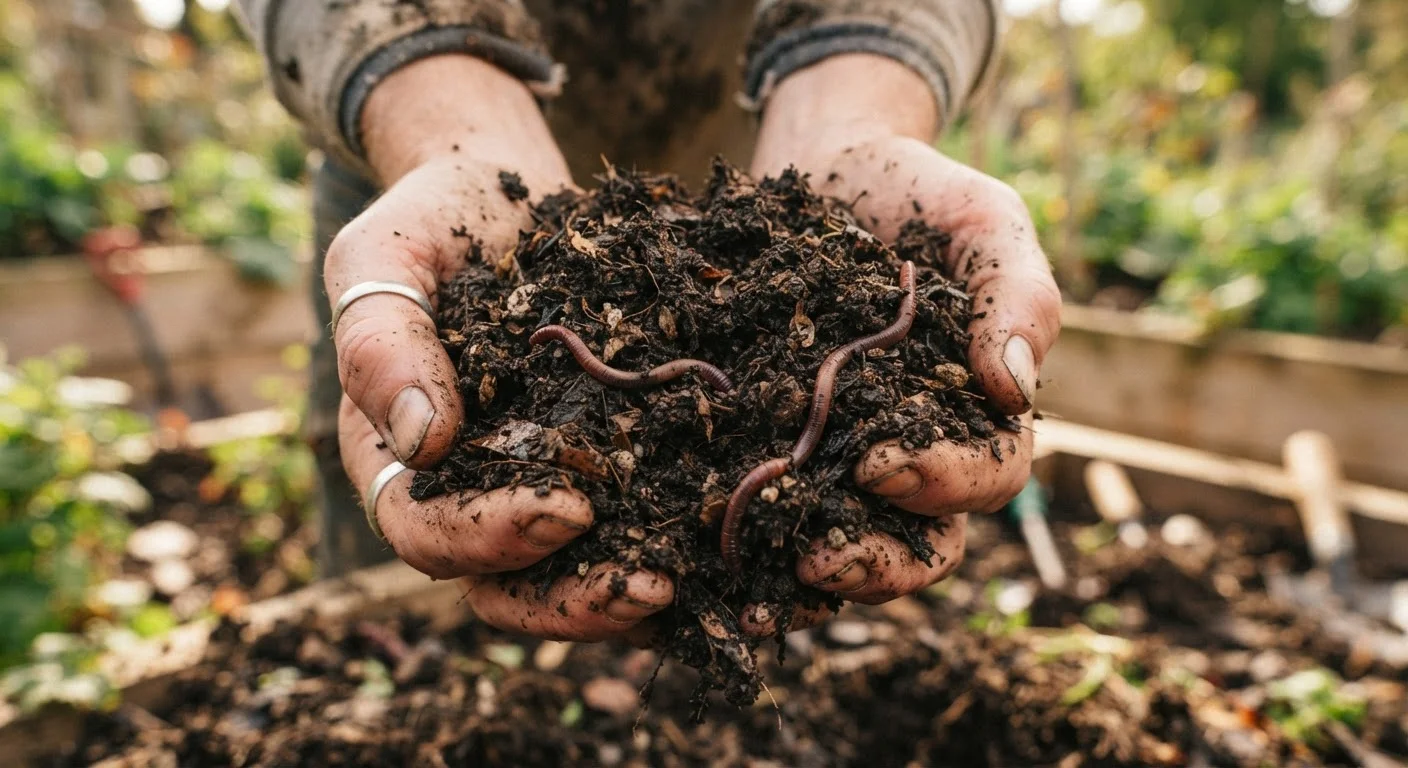
Organic matter refers to decomposed or decomposing plant and animal material in the soil. It serves multiple roles at once: it feeds soil microbes, improves structure in both sandy and clay soils, helps retain moisture, and slowly releases nutrients as it breaks down.
In sandy soils, organic matter acts like a sponge - helping hold water and nutrients that would otherwise drain away quickly. In heavy clay soils, it creates air pockets that improve drainage and make the soil easier to work. Most garden soils benefit from having at least 5% organic matter by volume, though many suburban yards fall short of this.
Compost is the most practical way to add organic matter. You can make it at home from kitchen scraps and yard waste - composting at home is more straightforward than most people expect. Aged manure and shredded leaves are other reliable options. Mulching the surface also contributes: as organic mulches break down, they gradually incorporate into the soil below. For more on that process, see what mulch actually does beneath the surface.
5-6%
Ideal organic matter content in productive garden soil
Many suburban garden soils test below 2-3% organic matter, limiting both nutrient availability and moisture retention.
6.0-7.0
Optimal pH range for most vegetables and flowers
Outside this range, nutrient lockout can occur even in otherwise well-amended soil, according to general soil science guidance.
How to Test and Improve Your Soil
The most reliable starting point is a soil test. Cooperative extension services in most U.S. states offer low-cost testing through their land-grant university programs. You collect a small sample from several spots in your garden, combine them, and send the mix to the lab. Results typically show pH, NPK levels, and sometimes organic matter content, along with specific amendment recommendations for what you want to grow.
Basic at-home test kits are also available at garden centers and measure pH and sometimes NPK. They're less precise than lab tests but useful for quick checks between seasons.
Once you have results, prioritize pH correction first - it affects everything else. Then address nutrient gaps with targeted amendments rather than broad-spectrum fertilizers, which can oversupply one nutrient while doing nothing for an actual deficiency. Finally, commit to building organic matter as an ongoing practice rather than a one-time fix. Annual additions of compost, even in modest amounts, compound over time into significantly better soil.
Healthy soil doesn't require perfection - it requires consistency. Understanding these three building blocks gives you the context to interpret what you're seeing in your garden and respond with something more useful than guesswork.