The Watering Mistake Most Gardeners Make
Ask most new gardeners how often they water, and the answer usually comes in days: every day, every other day, twice a week. Frequency feels logical - a regular schedule signals care. But plants don't run on a calendar. They respond to what's actually happening in the soil.
The most common watering error isn't neglect - it's overwatering. Roots need oxygen as much as moisture, and soil that stays perpetually wet becomes compacted and oxygen-starved. That environment invites root rot, fungal disease, and the very wilting gardeners were trying to prevent. If you've ever wondered why a plant keeps declining despite regular watering, waterlogged roots are often the culprit.
Shifting your focus from frequency to depth and timing is the single most impactful adjustment you can make.
How Water Actually Moves Through Soil
Water doesn't spread sideways the way many people imagine. It moves downward through soil, pulled by gravity, and the rate depends on soil texture. Sandy soils drain quickly and dry out fast. Clay soils hold water longer but can become compacted and slow-draining. Loamy soils - a balanced mix of sand, silt, and clay - drain well while retaining enough moisture for plant roots.
Understanding this matters for two reasons. First, a quick surface watering may wet only the top inch of soil, which evaporates before roots can use it. Second, roots follow moisture - if water is always near the surface, roots stay shallow and become vulnerable to heat and drought. Deep watering trains roots to reach down where soil stays cooler and more consistently moist.
Soil structure and composition are covered in detail in our guide to healthy garden soil fundamentals, which is worth reading alongside this one.
50%
Reduction in water use with drip irrigation vs. overhead
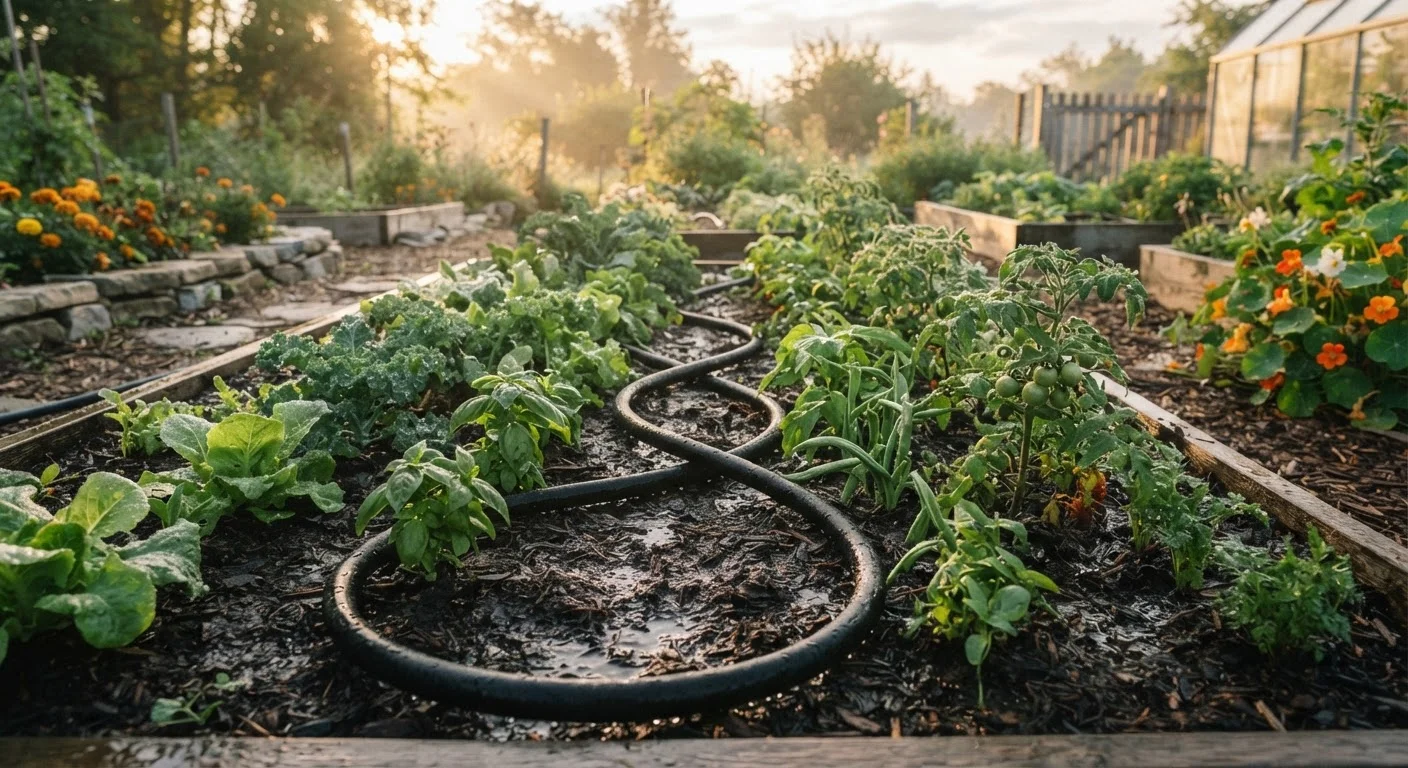
Research from university cooperative extension programs consistently shows drip and soaker-hose systems deliver water far more efficiently than overhead sprinklers in home gardens.
6-8 in
Target soil depth for thorough watering
Most vegetable and annual plant roots concentrate in the top 6-8 inches of soil - watering to this depth ensures the active root zone is genuinely hydrated, not just the surface.
Putting Good Watering Habits Into Practice
Applying these principles takes a bit of observation at first, but quickly becomes intuitive. Before each watering session, push your finger or a small trowel 2-3 inches into the soil. If it feels moist at that depth, skip watering. If it's dry, it's time.
Mulching is one of the most effective ways to reduce how often you need to water at all. A 2-3 inch layer of organic mulch slows surface evaporation, keeps soil cooler, and moderates moisture swings between rain and dry spells. Our guide on what mulch actually does beneath the surface explains how different mulch types affect soil moisture retention.
The type of garden setup also plays a role. Raised beds drain faster than in-ground plots and typically need more attentive watering - a trade-off worth knowing before you build. The comparison between raised beds and in-ground planting walks through these differences in full.
Seasonal and Plant-Specific Adjustments
Watering needs shift throughout the year. Newly transplanted seedlings need more frequent moisture than established plants because their root systems haven't yet spread. During peak summer heat, even drought-tolerant plants may need supplemental watering. In fall, most plants need less - and continuing a summer-level schedule into cooler months is a common cause of root problems.
Container plants and raised beds also dry out faster than in-ground gardens, so they warrant closer monitoring. Vegetables and annuals generally need more consistent moisture than established perennials, shrubs, or native plants adapted to local rainfall patterns.
Adjusting your routine to match the season is a core part of good garden stewardship. Our seasonal gardening task guide covers what to pay attention to throughout the year, including when to scale back irrigation as temperatures drop.
There are also persistent myths about watering - like the idea that you should never water in the sun because it scorches leaves. This isn't accurate for most garden plants. What does matter is avoiding prolonged leaf wetness overnight. If you've encountered advice like this and aren't sure what to trust, common garden myths worth revisiting is a useful read.
Container Plants Need Extra Attention
Pots and containers dry out much faster than garden beds because they have limited soil volume and often better drainage. During hot weather, containers may need watering daily. Always check the soil an inch or two below the surface before watering, and ensure containers have drainage holes so roots never sit in standing water.