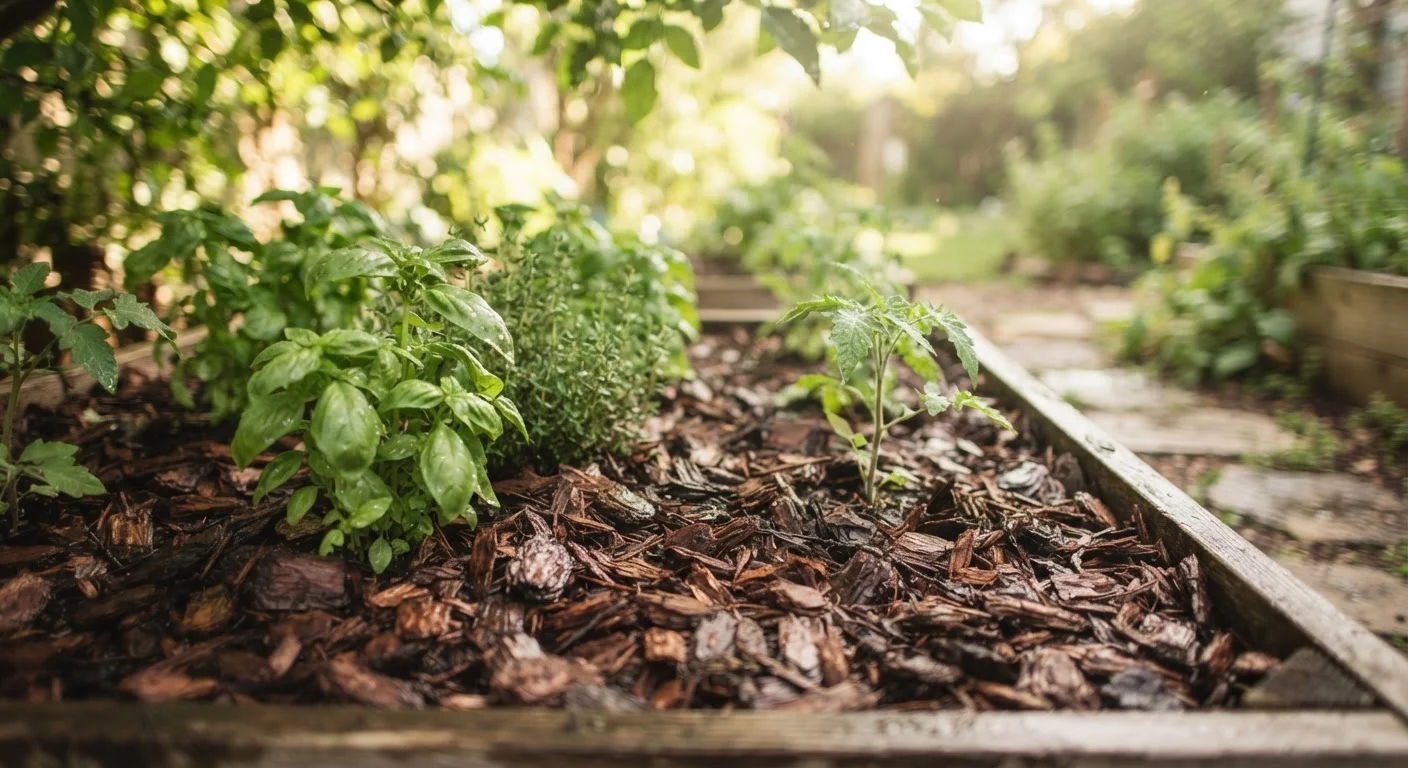
More Than Just a Finishing Touch
Many gardeners reach for mulch as a cosmetic step - something to make beds look neat after planting. But the visual result is almost beside the point. What mulch actually does happens underground and at the soil surface, largely out of sight, over weeks and months.
Understanding those mechanisms helps you use mulch intentionally rather than by habit, and it explains why well-mulched gardens generally need less water, fewer weeds, and less intervention overall. This is also why mulch works in tandem with good watering practice - see our guide to watering timing and depth for how these two habits complement each other.
Up to 70%
Reduction in soil moisture evaporation with mulch
Research from cooperative extension programs consistently shows mulched soil retains significantly more moisture than bare soil under comparable conditions.
2-3 inches
Recommended mulch depth for most garden beds
This range is widely cited by university extension services as the threshold that provides meaningful weed suppression and moisture retention without restricting root oxygen.
10°F or more
Soil temperature difference under mulch vs. bare soil
Studies have found that mulched soil can remain noticeably cooler in summer heat, reducing heat stress on shallow root systems.
What Mulch Does to Moisture and Temperature
Bare soil loses water quickly. Sunlight and wind accelerate evaporation from the surface, and in summer, that process can strip moisture from the top several inches of soil within a day or two of watering. A mulch layer slows this dramatically by shading the soil and reducing airflow directly above it.
Temperature regulation works on a similar principle. Soil under mulch heats up more slowly in summer and cools down more slowly in fall. For plant roots - which are sensitive to sudden shifts - this buffer matters. In cold-winter climates, mulch applied in late fall helps protect perennial root systems from freeze-thaw cycles that can heave plants out of the ground.
Time Your Mulch Application Thoughtfully
In spring, wait until the soil has warmed before mulching vegetable beds - mulch applied to cold, wet soil in early spring can slow warming and delay planting. In fall, apply mulch after the first hard frost to insulate overwintering roots without encouraging late-season pest or disease activity.
The Soil Health Piece: What Organic Mulches Add Over Time
Inorganic mulches like gravel or landscape fabric hold their form for years, but they contribute nothing to the soil beneath them. Organic mulches behave differently. As wood chips, straw, shredded leaves, or compost break down, they gradually release organic matter into the soil - improving its structure, water-holding capacity, and, in some cases, its nutrient content.
This decomposition also feeds soil organisms: earthworms, fungi, and bacteria that form the foundation of a healthy growing environment. Understanding what's already in your soil makes this process easier to work with - our soil types explainer covers what different soil compositions mean for your garden. For a deeper look at nutrients and pH, see the building blocks of healthy garden soil.
Common Mulch Types and Where They Fit
No single mulch suits every situation. The right choice depends on what you're growing, how long you want the mulch to last, and whether improving soil is a priority.
- Wood chips and bark: Long-lasting and good for pathways, trees, and ornamental shrubs. Break down slowly. Not ideal for annual vegetable beds where you'll be digging regularly.
- Straw: Lightweight and easy to apply around vegetables. Decomposes within a season, so it needs replenishing. Avoid hay, which often contains weed seeds.
- Shredded leaves: A practical, low-cost option. They mat down somewhat, so mixing them with other materials or shredding finely reduces compaction.
- Grass clippings: Apply in thin layers only - thick clumps of clippings mat into a slimy barrier. Avoid clippings from lawns treated with herbicides.
- Gravel or stone: Works well around drought-tolerant plants and in areas where you want a permanent, low-maintenance surface. Does not improve soil.
If you're gardening in raised beds, the choice of mulch interacts with how you've built and filled those beds - something worth thinking through alongside the trade-offs between raised beds and in-ground planting.
Application: Getting It Right Without Overcomplicating It
The basics of applying mulch are straightforward. Clear visible weeds first, then spread your chosen material evenly to a depth of 2-3 inches. Leave a gap of at least 2-3 inches around the base of any plant stem or tree trunk - mulch piled against stems traps moisture and can lead to rot or fungal disease.
For trees, avoid the common "mulch volcano" - a mounded pile built up against the trunk. A flat, donut-shaped ring around the tree is far better. Replenish organic mulches as they decompose, typically once or twice a year depending on the material and your climate.
It's worth cross-checking any mulch-related garden wisdom you've picked up over the years. Some common practices don't hold up as well as they seem - our article on garden myths most new growers still believe covers several examples that apply directly to mulching habits.
This article provides general gardening information. Local climate, soil conditions, and plant types all affect how mulching will perform in your specific garden.