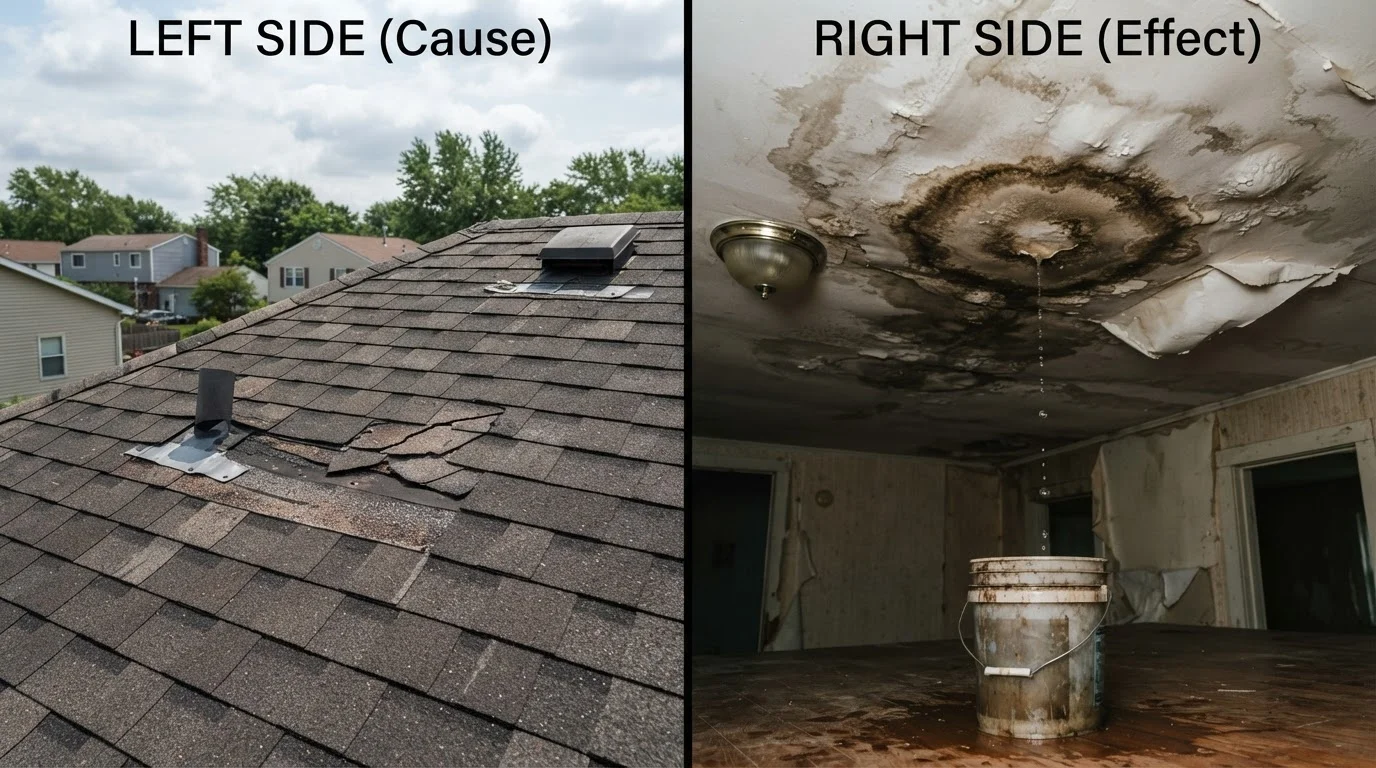
How Small Problems Grow Into Expensive Ones
The relationship between a minor defect and a major repair isn't random - it follows a predictable pattern. Most home systems are interdependent, so when one component fails, it creates stress on the surrounding materials. A cracked caulk line around a shower isn't just cosmetic; water seeps behind tile, saturates the backer board, and eventually reaches the subfloor. By the time visible damage appears, the repair scope has grown from a $20 tube of caulk to potentially thousands of dollars in tile removal and subfloor replacement.
The same logic applies across nearly every system in a home. A missing shingle exposes roof deck to moisture. A slow drip from a supply line feeds mold growth inside a cabinet. A worn HVAC filter forces the blower motor to work harder, shortening its lifespan. None of these start as emergencies - they become emergencies because the window for an inexpensive fix quietly closes.
When DIY Isn't the Right Call
Some deferred maintenance items - particularly those involving electrical panels, gas lines, structural concerns, or mold remediation - should be handled by licensed professionals. Attempting these repairs without proper training can create safety hazards or code violations that compound the original problem. When in doubt, get a professional assessment first.
For a closer look at which tasks carry real risk if done incorrectly, see when to call a professional versus handling it yourself.
The Categories Where Delay Costs Most
Not all deferred maintenance carries equal risk. Some categories consistently generate outsized repair bills when neglected:
- Water intrusion: Roof leaks, window seal failures, and foundation cracks allow moisture into places it cannot easily escape. Mold can begin colonizing in as little as 24-48 hours under the right conditions, and structural wood softens over months.
- HVAC systems: Skipping annual servicing shortens equipment life. A dirty coil or blocked drain line can cause a unit to fail during peak summer heat - when repair availability is low and costs spike.
- Plumbing slow leaks: Even a dripping connection inside a wall can cause significant damage before it becomes visible. Water damage is consistently one of the most common and costly homeowner insurance claims.
- Exterior envelope: Paint isn't decorative - it protects wood siding and trim from moisture. Once bare wood is exposed, rot follows. Re-painting is substantially cheaper than replacing siding.
1%-4%
Of home value recommended annually for maintenance
Many housing professionals suggest homeowners budget roughly 1-4% of their home's value per year for routine upkeep and repairs, with older homes typically requiring the higher end of that range.
24-48 hrs
Time for mold growth to begin after water exposure
According to the U.S. Environmental Protection Agency, mold can begin to grow on wet building materials within 24 to 48 hours under typical indoor conditions.
Top 5
Water damage ranks among costliest homeowner claims
Water damage and freezing consistently rank among the most frequent and costly categories of homeowner insurance claims, according to industry loss data.
Understanding these risk categories helps homeowners triage their to-do lists. Address anything involving water or safety first; cosmetic and convenience items can wait. Also be aware that common maintenance myths can lead homeowners to unknowingly accelerate damage.
Building the Habit of Preventive Upkeep
Preventive maintenance isn't about doing everything at once - it's about building a rhythm that catches problems while they're still small. Two seasonal walkthroughs per year, one in spring and one in fall, cover the majority of what most homes need. During each walkthrough, check gutters and downspouts, inspect the roof from ground level using binoculars, test smoke and carbon monoxide detectors, look under sinks for drips, and note any exterior cracks in caulk or paint.
Tracking the age of major systems matters too. Most water heaters have a serviceable life of 8-12 years, HVAC equipment 15-20 years, and roofing materials vary widely by type. Knowing where your systems are in their lifespan lets you plan replacements before a failure forces an emergency call - and emergency service almost always costs more than scheduled work.
Budgeting for maintenance is a practical extension of this mindset. Setting aside funds before things break gives homeowners the flexibility to act promptly when a problem is caught early, rather than delaying because the timing is inconvenient. Similarly, cutting corners during repairs often recreates the same compounding dynamic that deferred maintenance does - just under a different name.
Create a Simple Home Maintenance Log
Keep a running document - even a basic spreadsheet - that notes when filters were changed, gutters cleaned, and systems last serviced. This log helps you stay on schedule, spot recurring issues, and provide documentation that can be valuable when selling your home.
The same compounding principle applies to vehicles. Skipping oil changes or ignoring warning lights consistently leads to larger mechanical failures. Understanding a repair estimate before signing can also help you evaluate whether early intervention was worth it.