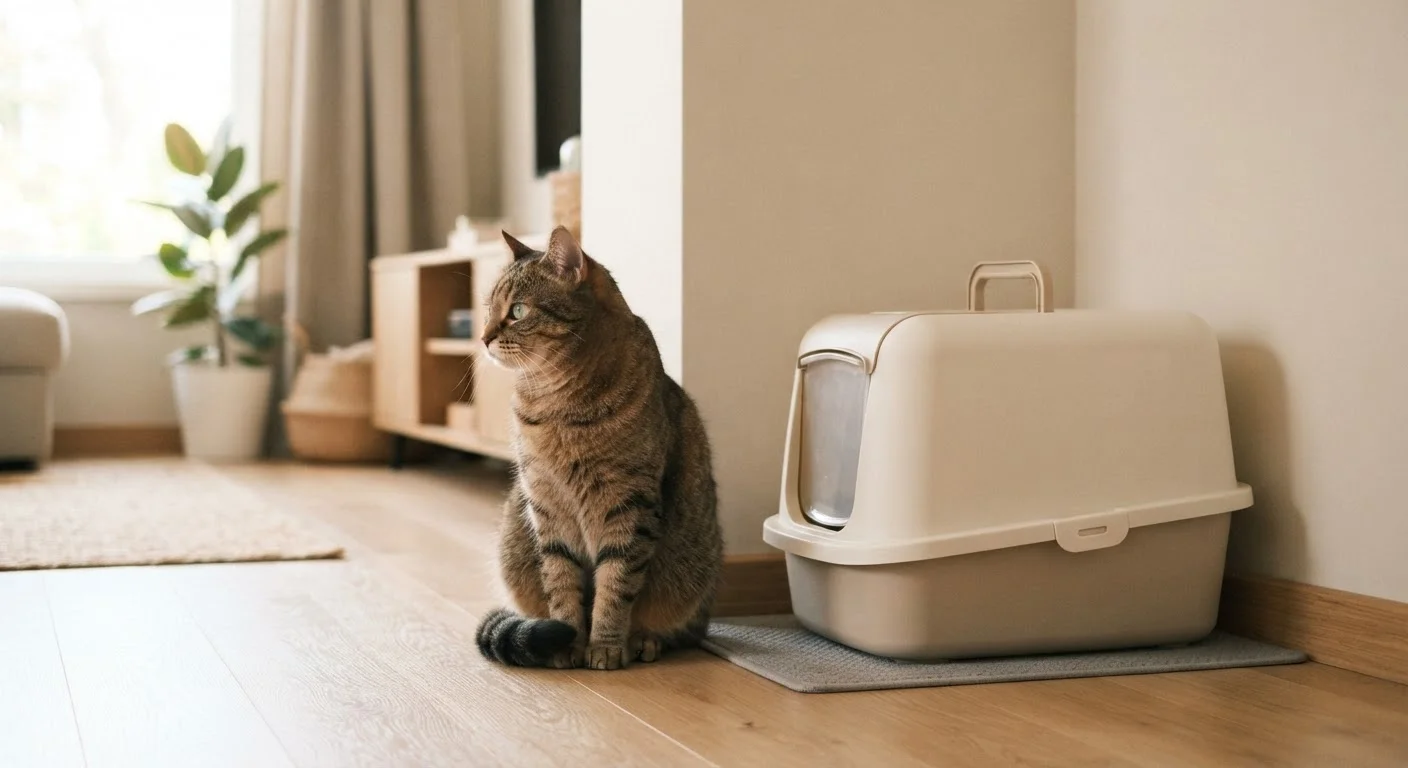
Why Avoidance Is Never Just Bad Behavior
Cats are instinctively motivated to bury their waste - a behavior rooted in survival. When a cat stops using its litter box, it is not staging a protest. Something has made the box feel unsafe, uncomfortable, or painful to use. Understanding that distinction changes how owners respond, shifting from frustration to problem-solving.
Avoidance typically falls into two broad categories: medical and environmental. Both are addressable, but they require different approaches. Treating an environmental problem when the real cause is a bladder infection - or vice versa - wastes time and allows the underlying issue to worsen. That is why a veterinary evaluation is almost always the right first move when avoidance appears, especially if the change is sudden. See our guide to feline wellness exams for what a checkup typically involves.
Spraying Is Different from Inappropriate Elimination
Cats that back up to a vertical surface and release a small amount of urine are spraying - a marking behavior driven by hormonal or territorial factors - rather than avoiding the litter box. Spraying has different triggers and different management approaches, including spaying or neutering for intact cats and environmental modifications for anxious or multi-cat households. Your veterinarian or a veterinary behaviorist can help distinguish between the two.
Medical Causes That Are Frequently Missed
Health problems are the most commonly overlooked driver of litter box avoidance, partly because their symptoms can be subtle at first. The following conditions are worth knowing:
- Urinary tract infections (UTIs) and feline idiopathic cystitis (FIC): Inflammation of the lower urinary tract makes urination painful. The cat may associate that pain with the box itself and begin avoiding it. Frequent trips to the box, straining, or blood in the urine are warning signs.
- Kidney disease: Increased urine volume is a hallmark of chronic kidney disease. A cat producing more urine may not always reach the box in time, or may begin eliminating wherever it is most convenient.
- Arthritis: Joint pain is underdiagnosed in cats, particularly in older animals. A box with high sides or located on a different floor of the house can become genuinely difficult or painful to access. Cats with arthritis may eliminate nearby rather than endure the journey or the climb.
- Diabetes and hyperthyroidism: Both conditions increase urination frequency and volume, which can overwhelm a cat's ability to consistently reach its box.
- Constipation or megacolon: A cat that experiences pain while defecating may connect that sensation to the box and avoid it for defecation specifically - while continuing to urinate normally.
This article provides general educational information about cat behavior and health. It is not a substitute for professional veterinary advice. Always consult a licensed veterinarian if your cat is showing signs of illness or a change in elimination behavior.
Environmental Factors Cats Are Sensitive To
Even a perfectly healthy cat can develop avoidance when its environment does not meet its needs. The most common environmental triggers include:
~10%
Cats affected by elimination problems in their lifetime
Estimates from veterinary behavior literature suggest inappropriate elimination affects roughly one in ten cats at some point, making it among the most reported feline behavior concerns.
1+1 rule
Recommended boxes per cat in multi-cat homes
Veterinary behaviorists widely recommend one litter box per cat plus one additional box to reduce resource competition and territorial stress.
~30%
Cats with FIC showing signs of stress-related flare-ups
Feline idiopathic cystitis is estimated to account for a substantial share of lower urinary tract disease cases in cats under 10 years, with stress identified as a significant contributing factor.
- Cleanliness: Many cats will refuse a box that has not been scooped within the past 24 hours. The bar for what constitutes "too dirty" varies by individual, but erring toward more frequent cleaning is nearly always effective.
- Litter type and scent: Heavily scented litters, while marketed to human noses, can be overpowering to a cat's sensitive olfactory system. Abrupt switches to a new litter brand or texture are a common and easily overlooked trigger.
- Box size: A cat should be able to turn around completely and posture comfortably inside its box. Many commercially available boxes are too small for average adult cats, particularly larger breeds.
- Box placement: Boxes placed near loud appliances, in high-traffic areas, or in locations where a cat can be startled or cornered can cause lasting aversion. Cats prefer privacy and reliable escape routes.
- Covered vs. uncovered: Some cats feel trapped inside hooded boxes; others prefer the privacy. If avoidance developed after a cover was added or removed, that may be the cause.
In multi-cat households, resource competition is a significant and frequently underestimated stressor. One cat can physically or socially block another's access to the box, leading the lower-status cat to eliminate elsewhere. Understanding this dynamic is part of the broader picture of feline communication and behavior that shapes daily life in a multi-cat home.
Try an Uncovered Box First
If you are troubleshooting avoidance and are unsure where to start, switching to an uncovered, larger box with unscented litter is a low-cost first step that resolves a surprising number of cases. Place it in a quiet, low-traffic location and scoop it at least once daily. If avoidance continues after a week, a veterinary exam should follow.
How to Approach the Problem Systematically
Because avoidance has multiple possible causes, a methodical approach works better than guesswork. A useful sequence is:
- Rule out medical causes first. Schedule a veterinary exam and urinalysis before making environmental changes. If a health issue is driving the behavior, treating it is the most direct path to resolution.
- Audit the boxes. Count, size, location, cleanliness, and litter type should all be evaluated. Introduce changes gradually - especially litter type - to avoid compounding the problem.
- Observe household dynamics. In multi-cat homes, watch for signs that one cat is being prevented from accessing the box. Adding boxes in different locations often resolves inter-cat conflict without requiring behavioral intervention.
- Clean soiled areas thoroughly. Cats are drawn back to areas where they have previously eliminated by scent. Enzymatic cleaners, which break down the odor compounds rather than masking them, are the most effective option for cleaning affected surfaces.
- Avoid punishment. Scolding or physically correcting a cat for eliminating outside the box does not communicate what the owner intends. It increases anxiety, which typically makes avoidance worse rather than better.
Nutrition and overall health are connected threads in feline wellness. Owners managing cats with diet-related conditions may also find it useful to review how feeding habits affect feline health, since obesity and urinary health are closely linked in cats.