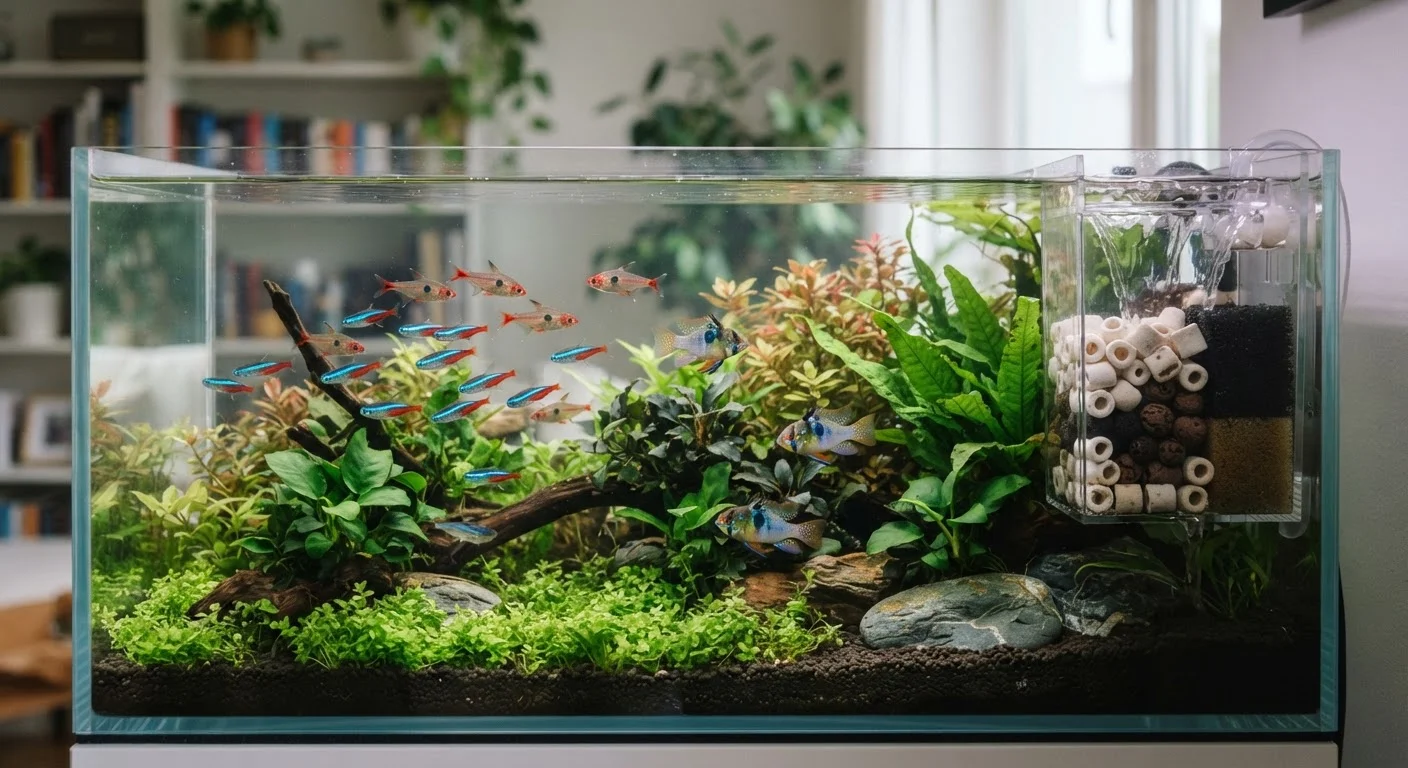
Why the Nitrogen Cycle Is the Foundation of Fishkeeping
Every fish produces waste. That waste breaks down into ammonia - a compound that is directly toxic to fish even at very low concentrations. In a natural river or lake, ammonia is diluted across enormous volumes of water. In the closed environment of an aquarium, it accumulates rapidly unless something converts it into a less harmful form.
That "something" is colonies of beneficial bacteria that establish themselves in your filter media and substrate. Understanding how they work - and what disrupts them - is the single most important piece of knowledge a fish keeper can have. Without a functioning nitrogen cycle, no amount of quality equipment or careful fish selection will prevent fish from suffering.
If you are setting up your first tank, see our step-by-step freshwater aquarium guide for practical cycling instructions alongside equipment advice.
The Three Stages: Ammonia, Nitrite, and Nitrate
The nitrogen cycle moves through three distinct chemical stages, each driven by a different group of bacteria.
Stage 1: Ammonia (NH₃)
Fish excrete ammonia directly through their gills as well as through urine and decomposing waste. Uneaten food and decaying plant matter also contribute. Ammonia damages fish gill tissue and disrupts oxygen uptake - even low levels cause chronic stress.
Stage 2: Nitrite (NO₂⁻)
Nitrosomonas bacteria colonize the filter and convert ammonia into nitrite. Nitrite is still highly toxic; it interferes with hemoglobin's ability to carry oxygen, causing a condition sometimes called "brown blood disease" in fish. During the early weeks of cycling, nitrite spikes are common and dangerous.
Stage 3: Nitrate (NO₃⁻)
A second bacterial group - primarily Nitrospira - converts nitrite into nitrate. Nitrate is far less acutely toxic and accumulates slowly. It is removed through partial water changes and, in planted tanks, is consumed directly by aquatic plants.
0 ppm
Safe ammonia level in a cycled aquarium
Any detectable ammonia in a cycled tank indicates a problem requiring immediate investigation and corrective water changes.
4-8 weeks
Typical time to fully cycle a new tank
This timeline reflects standard fishless cycling at typical tropical tank temperatures; cold water tanks may take longer.
20-40 ppm
General nitrate threshold to stay below
Many aquarists and aquatic care references cite this range, though sensitive species may require levels closer to 10 ppm or lower.
How to Cycle a New Aquarium
A new tank has no bacterial colony yet. There are two main approaches to establishing one safely.
Fishless Cycling
This is the method most aquatic veterinarians and experienced hobbyists recommend. You add an ammonia source - such as pure ammonia drops or a small amount of fish food - to feed developing bacteria without exposing any livestock to toxic water. Test daily. The cycle is complete when ammonia and nitrite both read zero within 24 hours of adding an ammonia dose, and nitrate is present.
Fish-In Cycling
Some beginners add hardy fish before cycling is complete. This exposes fish to ammonia and nitrite stress, requires daily or every-other-day partial water changes to keep parameters survivable, and demands close monitoring. If you have already added fish before understanding the cycle, read our guide on common beginner mistakes for how to manage the situation.
Speed Up Cycling With Established Media
One of the most effective ways to shorten the cycling period is to seed your new tank with filter media, gravel, or decorations from an established, disease-free aquarium. The existing bacterial colony transfers directly and can cut cycling time from weeks to days. Ask a trusted local fish store or fellow hobbyist if they can provide a small amount of seeded media.
Maintaining a Stable Cycle in an Established Tank
Once cycled, a tank does not stay stable automatically. Several common actions can crash or disrupt the bacterial colony.
- Cleaning filter media in tap water: Chlorine kills beneficial bacteria. Rinse media only in water removed from the tank during a water change.
- Overstocking: Too many fish produce more ammonia than the existing bacterial population can process. Add new fish gradually.
- Overfeeding: Uneaten food decays and spikes ammonia. Feed only what fish consume in two to three minutes.
- Large water changes: Replacing more than 50% of water at once can shock the bacterial colony and destabilize parameters.
Test your water weekly even in an established tank. Ammonia and nitrite should always read zero. Nitrate should stay below 20-40 ppm depending on the species you keep - some fish, such as discus, are particularly sensitive to elevated nitrate. Pond keepers face the same nitrogen cycle principles, though scale and season introduce unique variables; see how aquarium and pond care needs differ for a comparison.