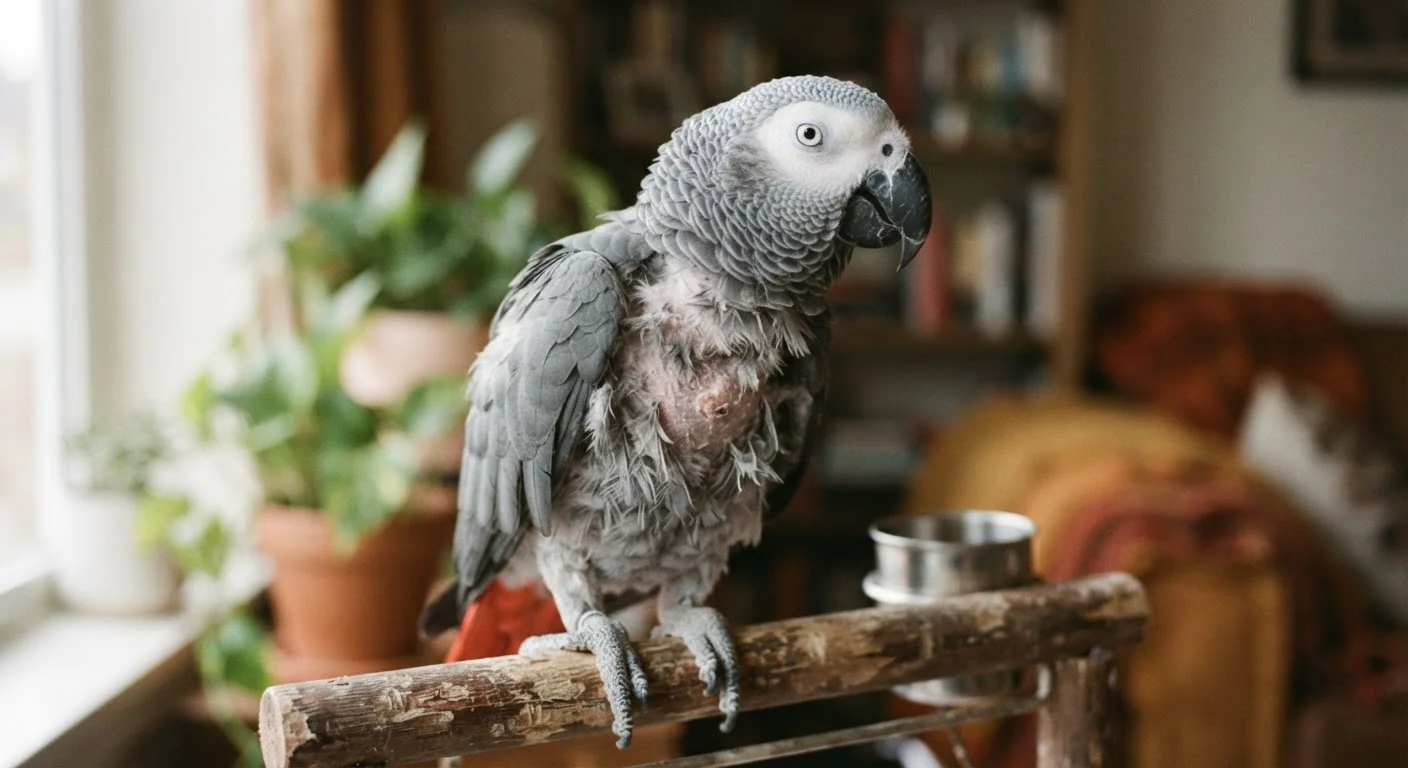
What Feather-Plucking Actually Looks Like
Owners often initially mistake feather-plucking for normal molting or excessive preening. The key distinction is the pattern and outcome. A bird engaged in feather destructive behavior targets areas it can reach directly with its beak - typically the chest, abdomen, flanks, and the inner surfaces of the wings. The resulting feathers appear frayed, broken at the shaft, or absent entirely, leaving patches of bare skin. The head and neck - areas the bird cannot reach itself - are typically spared unless a cage-mate is involved.
The behavior can range from occasional barbering of feather tips to compulsive full removal down to the skin. In severe or chronic cases, skin trauma, bleeding, and secondary infection become serious concerns. Recognizing the difference between normal preening and destructive plucking early is critical to getting timely help.
Medical Causes That Must Be Ruled Out First
Before assuming a psychological origin, an avian veterinarian will systematically investigate physical causes - and for good reason. A wide range of medical conditions can produce the same outward behavior:
- Skin and feather follicle infections: Bacterial or fungal infections can cause intense local irritation, prompting a bird to target a specific area.
- External parasites: Mites and lice cause discomfort that drives birds to scratch and pluck aggressively.
- Nutritional deficiencies: Diets heavy in seeds and lacking fresh vegetables, legumes, and appropriate pellets are linked to poor feather quality and skin health, both of which can trigger plucking.
- Allergies: Reactions to airborne irritants - cigarette smoke, aerosol sprays, certain foods - can inflame skin and drive self-directed scratching and plucking.
- Internal disease: Liver disease, heavy metal toxicity, hormonal imbalances, and reproductive conditions have all been associated with feather destructive behavior.
- Viral infections: Psittacine Beak and Feather Disease (PBFD), caused by a circovirus, directly damages feather follicles and is a serious differential diagnosis, particularly in parrots.
A thorough veterinary workup - including blood panels, skin cytology, and potentially imaging - is the appropriate first step. Knowing which symptoms warrant urgent care can help owners act before a condition escalates.
~10%
Captive parrots estimated to develop feather destructive behavior
Prevalence estimates in avian veterinary literature suggest feather destructive behavior affects a meaningful proportion of captive parrot populations, with some studies citing figures around 10% depending on species and housing conditions.
Top 3
Psittacine Beak and Feather Disease ranking among parrot diseases
PBFD is consistently ranked among the most significant infectious diseases affecting captive psittacines and is a key differential when feather loss is observed, particularly in parrots.
Behavioral and Psychological Drivers
When medical causes are ruled out or treated without resolving the plucking, the focus shifts to psychology and environment. Captive birds - especially highly intelligent species like African Greys, cockatoos, and Amazon parrots - have complex social and cognitive needs that domestic settings often fail to fully meet.
Boredom and under-stimulation are among the most cited behavioral triggers. Wild parrots spend the majority of their waking hours foraging, navigating complex social groups, and solving environmental challenges. A bird confined to a small cage with minimal stimulation has few outlets for this energy. Building an enriching environment - through foraging toys, varied perches, and regular out-of-cage time - directly addresses this deficit.
Loneliness and separation distress are particularly potent in species that pair-bond closely. A bird strongly bonded to its owner may develop anxiety when left alone for extended periods. Owners weighing whether to add a companion should read about the real trade-offs of keeping a single bird versus a pair.
Chronic stress from unpredictable routines, loud environments, placement near windows with predator activity, or frequent household disruption can also establish or reinforce plucking patterns. Once the behavior is established, it can persist even after stressors are removed, because self-directed behaviors can become self-reinforcing over time.
Keep a Plucking Log Before Your Vet Visit
Document when plucking occurs, which body areas are affected, any recent household changes, and your bird's diet and sleep schedule. This information is invaluable to an avian veterinarian working through a differential diagnosis and can shorten the time to an accurate conclusion.
Environmental Factors Often Overlooked
Even well-intentioned owners sometimes miss environmental contributors that are easily corrected:
- Low humidity: Many parrot species originate from tropical or subtropical habitats. Indoor air - especially in heated homes - can be far drier than their natural range, leading to skin irritation and feather brittleness.
- Disrupted sleep: Birds require 10-12 hours of uninterrupted, dark sleep. Chronic sleep deprivation from late household activity or irregular light exposure is a known stressor that can contribute to behavioral problems including plucking.
- Airborne irritants: Non-stick cookware fumes, scented candles, air fresheners, and tobacco smoke are harmful to avian respiratory systems and can inflame skin and mucous membranes.
- Cage placement: A cage positioned in heavy foot-traffic areas, near exterior windows, or with inadequate visual privacy can create persistent low-grade stress.
Addressing these factors requires no medical intervention and can meaningfully reduce a bird's baseline stress level, often improving other behaviors alongside plucking.
This article is for informational and educational purposes only and does not constitute veterinary advice. Always consult a qualified avian veterinarian for diagnosis and treatment of your individual bird.