What Defensive Driving Actually Is
The phrase gets slapped on bumper stickers and driver's ed pamphlets so often that it's started to lose meaning. Most drivers vaguely associate it with going slow or being overly cautious. That's not it.
Defensive driving is the practice of operating your vehicle in a way that anticipates hazards before they fully develop - and having an exit strategy ready. It's active, not passive. It assumes other drivers will make mistakes and positions you to absorb those mistakes without a collision.
Think of it as managing your risk rather than just reacting to it. The goal isn't to be timid - it's to be prepared.
Following distance
The gap between your vehicle and the one in front of you. It determines how much time you have to react and stop if traffic suddenly slows.
Situational awareness
A real-time mental picture of what's happening around your vehicle - other cars, road conditions, pedestrians, and anything that could develop into a hazard.
Stopping distance
The total distance your vehicle travels from the moment you perceive a hazard to when the car comes to a complete stop. It includes both your reaction time and the braking distance itself.
Space cushion
A buffer of empty space maintained around all sides of your vehicle, giving you room to steer or brake without immediately hitting something.
Risk anticipation
Actively predicting where a hazard might come from based on what other drivers, pedestrians, and conditions are doing - before anything actually goes wrong.
The Core Principles in Plain Terms
Defensive driving rests on a handful of interlocking principles that work together:
- Space management. Keep enough distance around your vehicle in every direction - front, rear, and sides - that you have room to maneuver if something goes wrong. Following distance is the most critical piece. The myths around tailgating are worth examining, because many drivers genuinely believe they're leaving adequate space when they aren't.
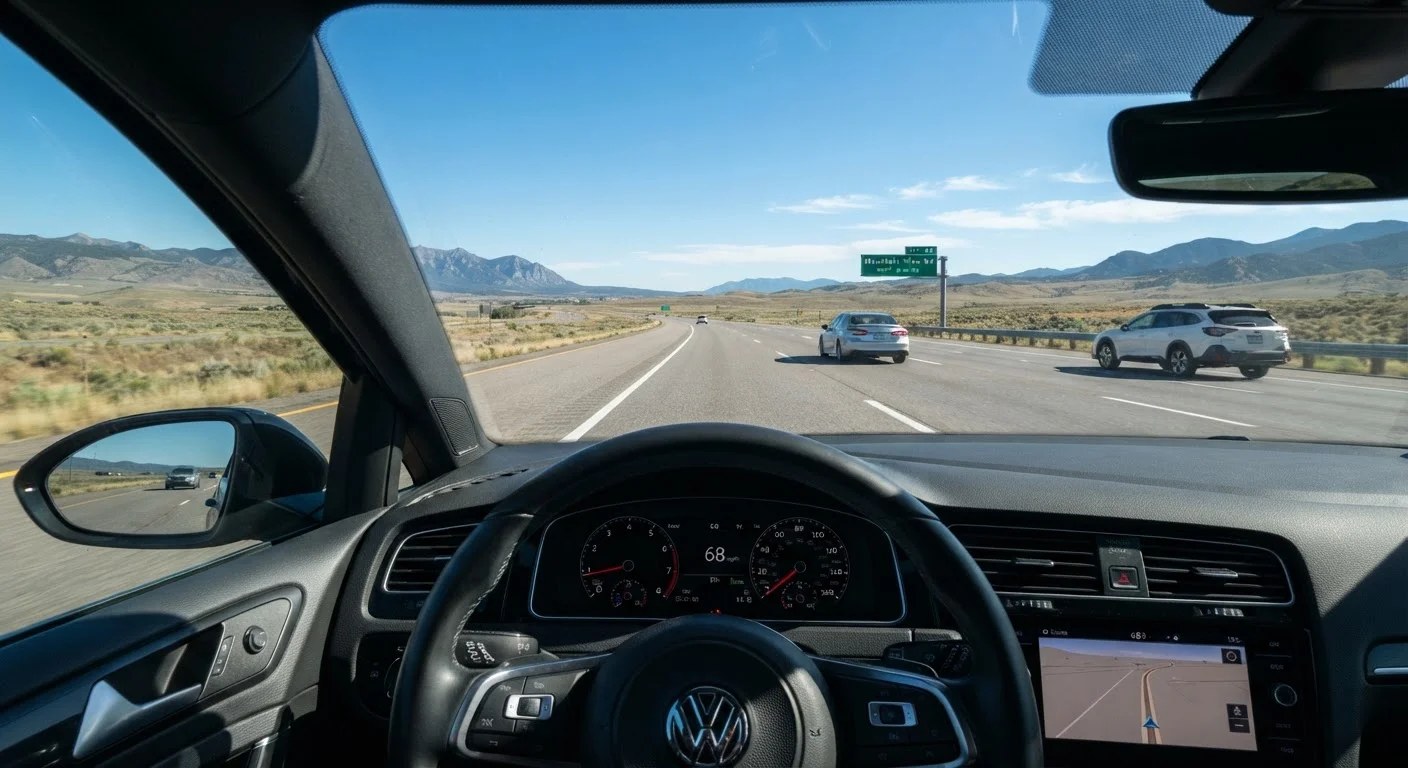
- Forward scanning. Look well ahead of your hood - ideally 10-15 seconds down the road. This gives you time to process what's developing rather than just reacting to what's already in front of you. Scanning the road ahead effectively is a trainable skill, not an innate talent.
- Anticipating other drivers. Watch for behavior that signals what a driver is about to do - drifting toward a lane line, brake lights tapping repeatedly, a vehicle pulling close to an intersection without slowing cleanly. React to the cue, not the outcome.
- Speed appropriate to conditions. Posted speed limits assume ideal conditions. Rain, darkness, heavy traffic, and road construction all call for reducing speed below the limit. This isn't timidity - it's physics.
Practice the Three-Second Rule Daily
Choose a fixed roadside marker - a sign, a shadow line, a bridge support - and watch when the vehicle ahead passes it. Count one-one-thousand, two-one-thousand, three-one-thousand. If you reach that marker before finishing the count, you're too close. Make this a habit on every drive until the correct gap becomes instinctive.
Real-World Scenarios Where It Counts
Principles become useful when you see them applied. A few common situations:
Highway merges. Instead of holding your lane and forcing a merging driver to figure it out, check whether moving over a lane is safe. If it isn't, adjust your speed to create a clear gap. You've resolved the conflict before it becomes one.
Intersections. Even on a green light, a quick left-right check before accelerating through costs you half a second and can prevent a T-bone from a driver running a red. Intersections are among the most common crash sites.
Adverse weather. Rain dramatically increases stopping distances and reduces tire grip. If you're not already thinking about how driving in heavy rain changes your habits, you're probably carrying over dry-road assumptions that don't hold. Similarly, night driving demands specific adjustments that most drivers never consciously make.
Tailgaters behind you. When someone is following you too closely, the defensive move is a gentle, gradual slowdown to increase the gap in front of you - giving yourself more buffer room if you need to brake suddenly.
Common Mistakes That Undermine It
Even drivers who think of themselves as defensive make consistent errors:
- Complacency on familiar routes. Familiarity breeds inattention. Most crashes happen close to home, on roads drivers know well - precisely because the brain disengages.
- Checking mirrors infrequently. Your situation changes constantly. Mirrors should be scanned every 5-8 seconds so you always have a current mental map of what's around you.
- Carrying dry-road habits into bad weather. Speed and following distance that work on a clear afternoon are dangerous in rain or fog. Conditions demand a real-time recalibration, not an afterthought.
- Assuming right-of-way protects you. Having the right of way is a legal concept, not a physical shield. Yielding to a driver who's clearly going to blow through a stop sign is always the right call, even if you were legally in the clear.
Right-of-Way Is Not a Safety Guarantee
Many drivers treat having the right of way as if it physically stops other vehicles. It doesn't. If another driver is clearly about to run a red light or blow through a stop sign, yielding - even though you were legally in the clear - is always the correct defensive choice. Your priority is avoiding the crash, not proving you had the right to proceed.
How to Build These Habits Over Time
Defensive driving isn't a checklist you run through consciously on every trip - eventually, it becomes the default mode. Getting there takes deliberate practice.
Start with one principle per week. The first week, focus exclusively on following distance. The second, work on your scanning range. Narrow focus makes new habits stick faster than trying to overhaul everything at once.
Before each drive, a quick pre-drive walkthrough also sets the right mindset. A consistent pre-drive routine catches issues - low tire pressure, obstructed mirrors, fogged windows - that compromise your ability to drive defensively before you've even left the driveway.
Over time, these habits compound. A driver who routinely scans ahead, manages space, and adjusts for conditions doesn't just avoid more crashes - they feel noticeably calmer and more in control, because they're operating with more margin than most of the traffic around them.