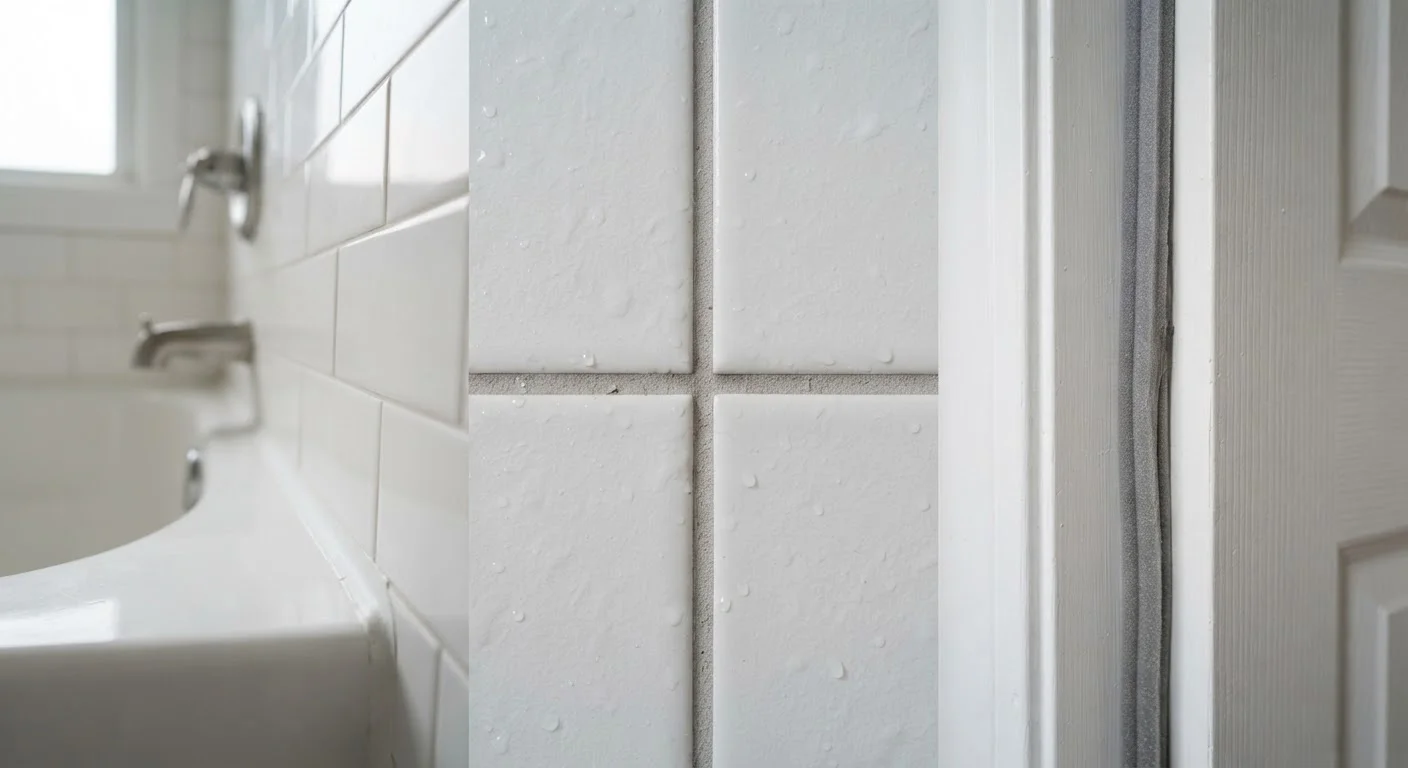
What Each Seal Actually Does
Caulk, grout, and weatherstripping are all designed to block something - water, air, or debris - but they work in entirely different ways and fail for different reasons. Mixing them up leads to repairs that don't hold and problems that keep coming back.
| Caulk flexibility | Remains pliable after curing |
| Grout composition | Cement-based or epoxy-based (rigid) |
| Weatherstripping seal type | Mechanical (compression-based) |
| Typical caulk lifespan (wet areas) | 5-10 years |
| Typical foam weatherstripping lifespan | 2-3 years |
| Grout vs. caulk at corners | Always use caulk, not grout, at inside corners and transitions |
- Caulk
- A flexible, waterproof sealant applied as a continuous bead along joints where two surfaces meet and may shift slightly - think bathtub edges, window frames, or the gap between a countertop and a wall. Because it stays somewhat pliable after curing, caulk can accommodate small amounts of movement without cracking.
- Grout
- A rigid, cement-based (or epoxy-based) filler pressed between tile pieces. Grout holds tiles in proper alignment and closes off the spaces between them so water and debris can't work underneath. Because it is rigid, grout cracks when surfaces flex or settle - it is not a substitute for caulk at corners or transitions. For a deeper look at why grout fails, see our guide to cracked grout causes and repairs.
- Weatherstripping
- A compressible material - foam, rubber, vinyl, or felt - installed along the edges of doors and operable windows to block drafts and reduce energy loss. Unlike caulk or grout, weatherstripping is a mechanical seal: it works by being compressed each time the door or window closes. Our room-by-room weatherstripping walkthrough covers inspection and replacement in detail.
Signs That Each One Needs Replacing
Each seal type deteriorates in recognizable ways. Catching the warning signs early prevents the kind of water damage or energy waste that costs significantly more to fix later. Staying alert to these signs is a straightforward preventive maintenance habit - similar in spirit to the regular roof-care habits that extend a roof's lifespan.
Caulk
A flexible, waterproof compound applied in a continuous bead along joints between two surfaces. It remains pliable after curing, allowing it to accommodate minor movement without cracking.
Grout
A rigid filler - typically cement-based or epoxy-based - packed between tile pieces to hold them in alignment and prevent water or debris from reaching the substrate below.
Weatherstripping
Compressible material (foam, rubber, vinyl, or felt) installed along door and window edges to block drafts and reduce conditioned air loss. It seals by compression each time a door or window is closed.
Compression Set
The permanent deformation of foam or rubber weatherstripping after repeated compression. When a material develops compression set, it no longer springs back to its original shape and can no longer form a tight seal.
Substrate
The underlying surface beneath tile, caulk, or another finish material - such as cement board, drywall, or wood. Protecting the substrate from moisture is a key purpose of grout and caulk.
Repointing
The process of removing damaged or missing grout from tile joints and pressing in fresh grout to restore a complete seal. Sometimes called regrouting.
Caulk: What to Look For
- Cracks, gaps, or separation from one or both surfaces - even a hairline crack allows water infiltration.
- Discoloration or mold growth on or under the bead, especially in wet areas like showers and sinks.
- Shrinkage or peeling where the caulk has pulled away and is no longer sealing the joint.
- Hardness or brittleness - old caulk loses its flexibility and can no longer flex with minor movement.
Grout: What to Look For
- Visible cracks running through grout lines, often following a pattern that matches underlying movement or settling.
- Crumbling or missing sections where grout has eroded out of joints entirely.
- Staining that won't clean may indicate the grout's surface sealer has failed, making it porous. To understand which sealant to use over repaired grout, see our comparison guide.
- Loose or hollow-sounding tiles adjacent to damaged grout lines - water has likely reached the substrate.
Weatherstripping: What to Look For
- Visible daylight around a closed door or window.
- Drafts felt by hand along the door or window perimeter on a windy day.
- Compression set - foam or rubber that no longer springs back when pressed, meaning it can no longer form a tight seal.
- Torn, cracked, or missing strips anywhere along the frame.
Replacement Frequency and Practical Rules of Thumb
There is no universal replacement schedule because lifespan depends heavily on material quality, climate exposure, and usage frequency. The ranges below reflect common experience across typical residential settings - your home may vary.
| Seal Type | Typical Lifespan | High-Wear Trigger |
|---|---|---|
| Caulk (bathroom/kitchen) | 5-10 years | Frequent moisture, temperature swings |
| Caulk (exterior/windows) | 5-7 years | UV exposure, seasonal expansion and contraction |
| Grout (floor tile) | 10-15+ years with sealing | Heavy foot traffic, structural settling |
| Grout (wall/shower tile) | 8-12 years | Constant moisture, cleaning chemicals |
| Foam weatherstripping | 2-3 years | High-traffic doors, extreme cold |
| Rubber/vinyl weatherstripping | 5-8 years | Prolonged UV exposure, heavy door use |
A practical approach is to add a quick seal inspection to your twice-yearly home walkthrough - ideally in spring after winter stress and in fall before heating season begins. Catching a failing caulk bead or compressed weatherstripping strip early is a minor repair; ignoring it can mean drywall replacement or a noticeable spike in heating and cooling costs.
This article provides general home maintenance information for educational purposes. Local building codes, climate conditions, and specific materials may affect the guidance appropriate for your home. Consult a qualified contractor for significant repairs or when in doubt about structural or water-damage concerns.