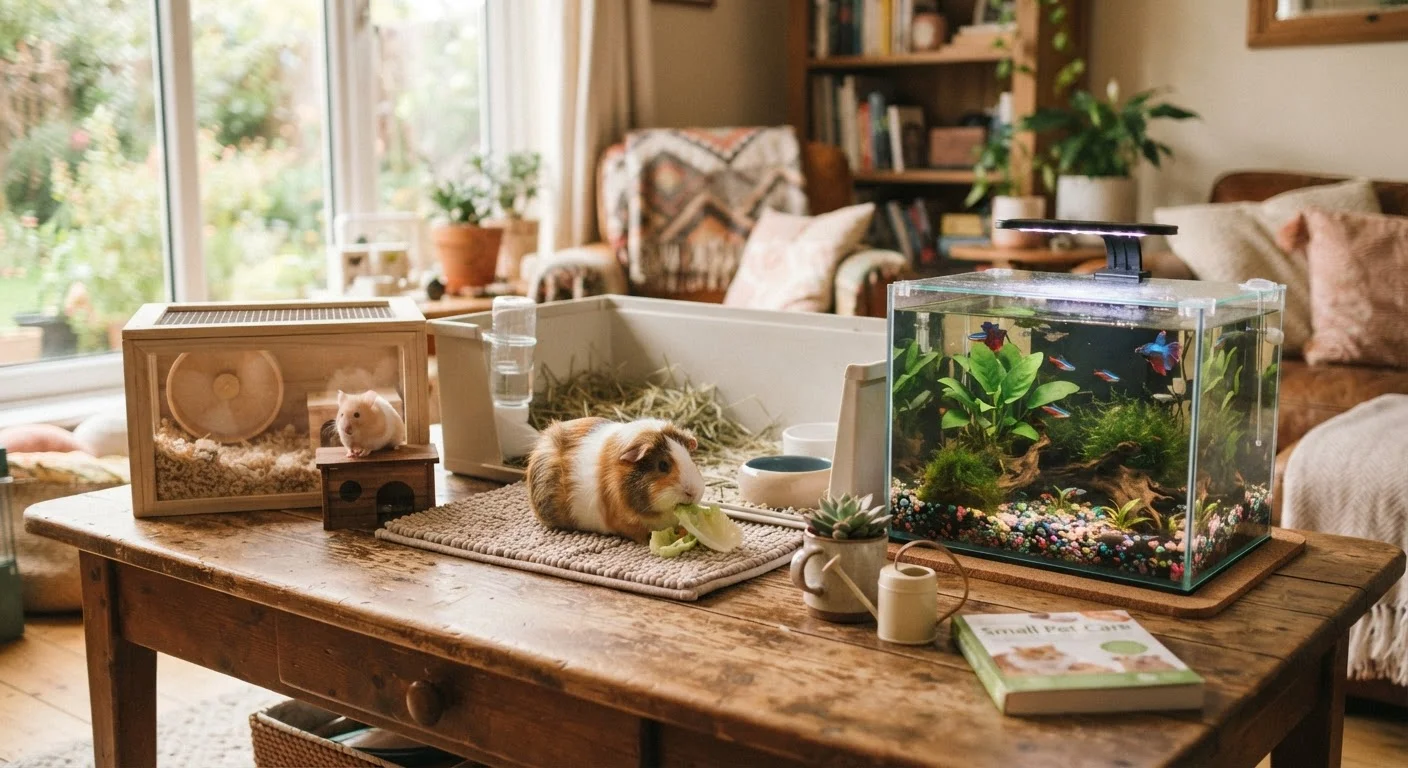
Why Small Pet Myths Are More Harmful Than They Seem
Small pets - hamsters, guinea pigs, rabbits, pet birds, and fish - are frequently marketed as easy, low-cost alternatives to dogs and cats. That framing has produced a layer of persistent myths that veterinarians encounter constantly. Unlike myths about technology or travel (where the stakes are usually inconvenience), misinformation about small-animal care directly affects living creatures with specific physiological and behavioral needs.
The animals most affected are often the ones least able to signal distress. Prey species instinctively suppress signs of illness or pain, so an owner acting on bad information may not notice a problem until it becomes a crisis. Understanding where common beliefs go wrong is the first step toward providing genuinely good care. For a broader look at recognizing when something is wrong, see signs your small pet needs a vet visit.
Myth
Hamsters and guinea pigs are low-maintenance starter pets, perfect for children who want their first animal.
Fact
Both species require daily feeding, fresh water, cage cleaning, environmental enrichment, and regular health monitoring - and guinea pigs need companionship from their own kind.
The 'starter pet' label is one of the most damaging in small-animal care. Hamsters need enclosures far larger than the typical retail cage - the minimum recommended floor space for a Syrian hamster is generally considered to be around 400 square inches by most exotic-animal veterinarians and welfare organizations. Guinea pigs are highly social animals that typically suffer from chronic stress when kept alone. Both species hide illness, so owners need to be observant, not passive. Children can absolutely enjoy these animals, but an engaged adult must remain the primary caregiver.
Myth
Fish only have a three-second memory, so tank conditions and mental stimulation don't really matter.
Fact
Research consistently shows fish can retain learned information for months, recognize individual humans, navigate mazes, and demonstrate anticipatory behavior around feeding schedules.
The three-second memory claim is not supported by the scientific literature. Studies on goldfish and other species have demonstrated memory retention lasting weeks to months. Fish experience stress responses to poor water quality, overcrowding, and inadequate hiding spaces. Enrichment - varied tank layouts, appropriate tankmates, and stable water parameters - genuinely affects fish welfare. Dismissing this as unnecessary because fish are 'simple' has led to chronic suffering in millions of pet fish kept in bowls far too small for their needs.
Myth
Rabbits should eat primarily pellets, with hay as an optional extra.
Fact
Grass hay - timothy, orchard, or meadow hay - should make up the vast majority of an adult rabbit's diet; pellets are a supplement, not a staple.
Rabbits have a unique digestive system that requires constant movement of fibrous material. Hay provides the indigestible fiber that keeps gut motility normal and wears down continuously growing teeth. A diet heavy in pellets and low in hay is directly linked to GI stasis (a life-threatening slowdown of the digestive tract), dental disease, and obesity in rabbits. Fresh leafy greens play a supporting role, while fruits and starchy treats should be given only sparingly if at all. For a stage-by-stage breakdown, see what to feed a pet rabbit at every life stage.
Myth
Birds are happy in a cage as long as they have a mirror for company and seeds to eat.
Fact
Pet birds - especially parrots and cockatiels - are highly social, cognitively complex animals that need interaction, varied diet, and space to fly or climb daily.
Mirrors do not substitute for real social interaction; in some species they can actually cause behavioral problems by confusing the bird about its own identity. A seed-only diet is nutritionally incomplete for most pet birds - pellets, fresh vegetables, and appropriate fruits are generally recommended by avian veterinarians. Confinement without mental stimulation leads to feather-destructive behavior, screaming, and other signs of chronic stress. Birds kept alone especially need substantial daily engagement from their owners. The question of whether to keep one bird or two involves real trade-offs - see keeping a single bird vs. a pair for a detailed look.
Myth
Small pets don't need veterinary care - they're cheap to replace if something goes wrong.
Fact
All vertebrate animals benefit from routine veterinary observation, and small pets often require exotic-animal specialists whose care reflects genuine medical complexity.
The 'replaceable' mindset causes two problems: it treats animals as disposable objects rather than animals with welfare needs, and it means health problems go undetected until they become emergencies. Many small-mammal and avian conditions are highly treatable when caught early and rapidly fatal when caught late - precisely because these animals mask symptoms so effectively. Finding an exotic-animal or small-mammal veterinarian before a crisis, not during one, is strongly recommended by animal welfare professionals.
Myth
Hamsters are solitary by choice, so keeping two together is more humane.
Fact
Syrian hamsters are genuinely solitary animals - housing two together typically results in serious fighting and injury, regardless of how they behave initially.
This myth often leads well-meaning owners to pair Syrian hamsters in the belief they will be happier together. In the wild, Syrian hamsters are territorial and live alone outside of brief mating encounters. Placing two in the same enclosure - even if they seem to coexist at first - frequently ends in injury or death for one animal. Dwarf hamster species (such as Roborovski or Campbell's) may be kept in same-sex pairs under carefully monitored conditions, but even then separation may become necessary. Species-specific social needs, not general assumptions about loneliness, should guide housing decisions.
Species-Specific Care: Getting the Basics Right
Correcting myths is only useful if it leads to better habits. Each small-pet species has a distinct biological profile - diet, social structure, temperature tolerance, activity cycle - and generalizing across them causes real problems. Guinea pigs, for instance, cannot synthesize their own vitamin C and will develop scurvy without dietary supplementation. Hamsters are crepuscular to nocturnal, meaning daytime handling can stress them significantly; building trust through proper handling technique makes a measurable difference in their wellbeing.
Rabbits are another species often misrepresented. Contrary to widespread belief, they are not simple pets that thrive in small hutches eating mostly pellets. For a thorough look at what rabbits actually need, everything that goes into caring for a pet rabbit covers housing, diet, and health considerations in depth. If you are weighing a hamster against a guinea pig, this comparison of their care needs can help you make an informed choice.
Prey Animals Hide Pain - Don't Wait for Obvious Signs
Guinea pigs, rabbits, hamsters, and birds are all prey species that instinctively conceal weakness. By the time an owner notices labored breathing, weight loss, or lethargy, the animal may already be in a serious condition. Daily observation - checking food and water intake, droppings, and activity level - is the most reliable early-warning system available to small-pet owners.
Fish ownership carries its own set of misunderstandings. Persistent beginner mistakes - many rooted in myth - are behind the high early-mortality rate many new owners experience. common fish setup mistakes addresses the root causes directly. For a broader sense of how care requirements vary, aquarium versus pond fish care differences is a useful reference.
This article is for general informational purposes only and does not constitute veterinary advice. Always consult a licensed veterinarian for guidance specific to your pet's health and care needs.