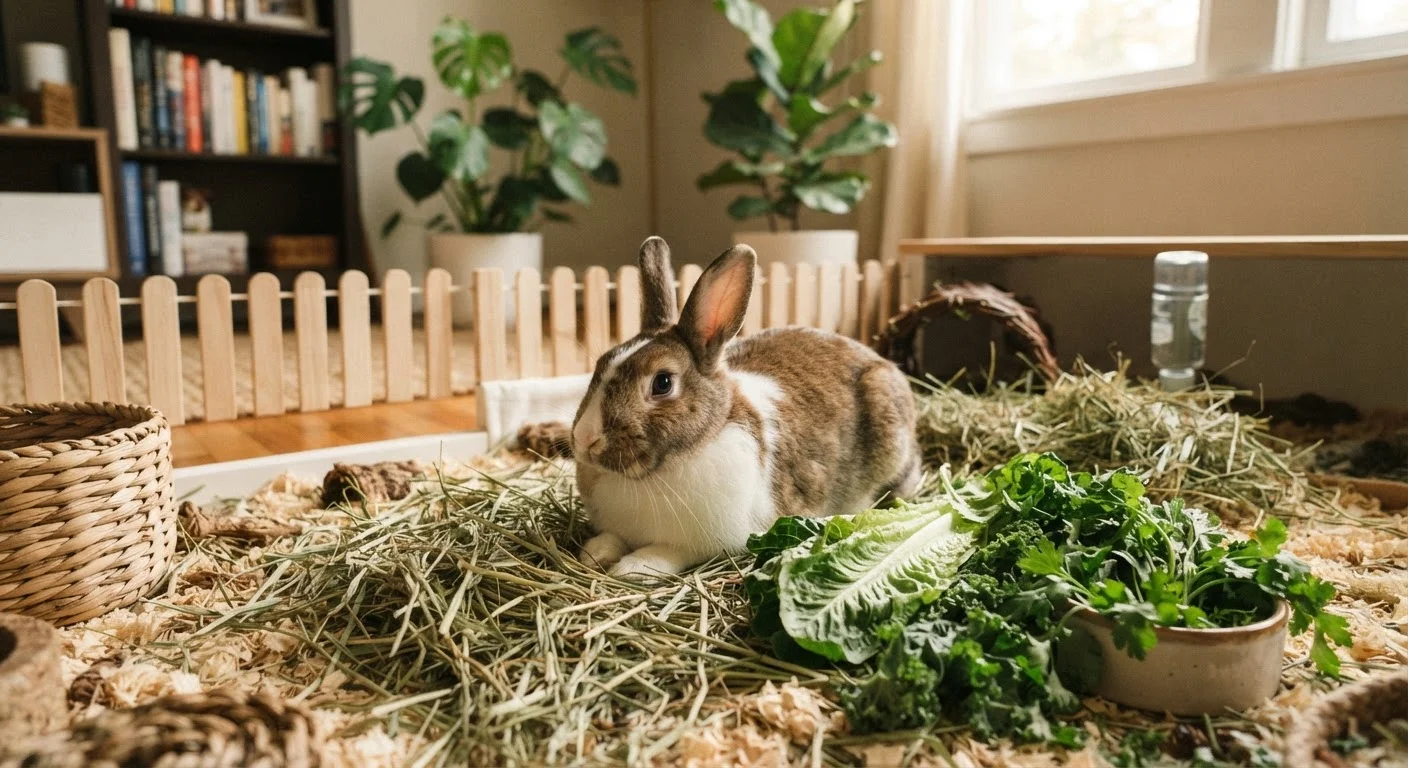
Understanding What Rabbits Actually Need
Rabbits are among the most misunderstood pets in American homes. Often marketed as low-effort starter pets, they are in fact complex animals with precise nutritional, spatial, social, and behavioral requirements. Meeting those needs consistently is what separates a rabbit that merely survives from one that genuinely thrives.
Before diving into specifics, it helps to understand rabbit biology. Rabbits are obligate herbivores and hindgut fermenters - meaning their digestive systems depend on a near-constant intake of high-fiber plant material to function. They are also prey animals hardwired for vigilance, which shapes how they express comfort, stress, and illness. Our guide on common small-pet myths covers why assumptions borrowed from other species so often lead rabbit owners astray.
Rabbits Are Not 'Starter' Pets
Despite their small size, rabbits have needs that rival those of a cat or small dog in complexity and daily time investment. They require species-appropriate diet, substantial space, companionship, and regular veterinary care. Families or individuals looking for a genuinely low-maintenance pet may want to explore other options before committing to a rabbit.
Housing: Space, Setup, and Safety
The small cages marketed for rabbits at most pet retailers are inadequate. Rabbit welfare organizations generally recommend a minimum of 12 square feet of enclosure space, with access to an additional 24 square feet or more of exercise area for several hours daily. A rabbit that cannot run, binky (leap and twist), and stretch fully upright will develop physical and behavioral problems over time.
Enclosures should be escape-proof and free of wire-bottom flooring, which causes painful sore hocks (skin lesions on the feet). Solid flooring covered with absorbent bedding - paper-based bedding or fleece - is far preferable. Litter boxes filled with hay encourage natural elimination habits. Temperature matters too: rabbits tolerate cool environments well but are highly susceptible to heat stroke above roughly 80°F (27°C). Avoid placing enclosures near drafts, direct sunlight, or loud appliances.
Rabbit-proofing the broader living area is essential if your rabbit has free-roam time. Electrical cords, toxic houseplants, and small ingestible objects all pose serious hazards. Before your rabbit even arrives, reviewing the small pet readiness checklist can help ensure your home is genuinely prepared.
Diet: Hay, Greens, Pellets, and Water
Grass hay - timothy, orchard grass, or meadow hay - should make up roughly 80% of a rabbit's diet and be available at all times. The long fiber in hay keeps the GI tract moving, wears down continuously growing teeth, and prevents dangerous blockages. Alfalfa hay is appropriate only for young rabbits under six months; its high calcium content is harmful to adult rabbits fed long-term.
Fresh leafy greens make up most of the remaining diet. Romaine lettuce, cilantro, parsley, and bok choy are solid choices. Iceberg lettuce, spinach fed daily, and starchy vegetables should be limited or avoided. Pellets, if offered, should be plain timothy-based and portioned to about ¼ cup per five pounds of body weight for adults - not a free-choice staple. Fruits and sugary treats are occasional offerings only.
Fresh water must always be available, ideally in both a bowl and a sipper bottle to accommodate individual preference. Our dedicated resource on feeding rabbits at every life stage goes deeper on nutritional shifts from kit to senior.
80%
Hay as share of a rabbit's daily diet
Rabbit welfare organizations consistently recommend unlimited grass hay as the dietary cornerstone for adult domestic rabbits.
8-12 years
Typical domestic rabbit lifespan
With attentive care, many domestic rabbits live well into their second decade, making them a long-term companion animal.
12 sq ft
Minimum recommended enclosure space
The Rabbit Welfare Association recommends at least 12 square feet of living space, separate from exercise area.
Social and Behavioral Needs
Rabbits are colony animals in the wild. Kept alone without adequate human interaction or a rabbit companion, they frequently develop signs of chronic stress, including repetitive behaviors (circling, bar-chewing) and increased aggression or timidity. Bonded pairs or small groups are widely regarded as a gold standard for rabbit welfare.
Introducing rabbits requires a structured, neutral-territory bonding process - it cannot be rushed. A rabbit behaviorist or experienced rescue can guide this process if needed. Spaying and neutering both reduces hormonal aggression and eliminates serious reproductive health risks, particularly uterine cancer in unspayed females.
Daily interaction with their human caretakers matters too. Rabbits communicate through body language - a flopped-over pose signals deep relaxation, thumping indicates alarm, and tooth-grinding (as opposed to soft tooth-clicking) signals pain or discomfort. Learning to read these cues is a foundational skill for any rabbit owner.
Grooming and Physical Maintenance
Most short-haired rabbit breeds require weekly brushing; long-haired breeds such as Angoras need daily attention to prevent painful matting. During seasonal sheds - which can be dramatic - daily brushing for any breed helps remove loose fur before it is ingested. Unlike cats, rabbits cannot vomit, so ingested fur that accumulates can contribute to GI slowdown.
Nails grow continuously and typically need trimming every six to eight weeks. Overgrown nails can catch on bedding or curve into the foot pad. If you are uncertain about technique, a rabbit-savvy veterinarian or groomer can demonstrate the correct approach. Ears should be checked weekly for wax buildup or signs of mite infestation (dark, crusty debris).
When trimming nails, use a flashlight held beneath the nail to locate the quick - the blood vessel inside - before cutting, especially on dark-nailed rabbits.
Cutting into the quick is painful and can cause bleeding that discourages future cooperation from your rabbit; good visibility prevents this common mistake.
Place a handful of hay inside the litter box rather than beside it - rabbits naturally graze and eliminate simultaneously, and this habit dramatically improves litter training success.
Working with natural rabbit behavior rather than against it makes training faster and reduces mess outside the box.
Health Warning Signs and Veterinary Care
Rabbits are stoic by survival instinct - they suppress signs of weakness as long as possible. By the time illness is obvious, a rabbit may already be in serious distress. The most critical emergency is GI stasis: a slowdown or complete halt of gut motility. Warning signs include a sudden drop in or absence of fecal pellets, reduced appetite, a hunched posture, and a distended abdomen. GI stasis can become fatal within 24-48 hours and requires immediate veterinary care.
Other red flags include labored or open-mouth breathing, head tilt (associated with inner ear infection or E. cuniculi, a parasitic infection), persistent wetness around the chin (linked to dental disease), and watery or absent urine. Annual wellness exams with a veterinarian experienced in rabbit medicine are strongly recommended - not all small-animal vets have rabbit-specific training, so seek out an exotics or rabbit-knowledgeable practice.
GI Stasis Is a Veterinary Emergency
If your rabbit stops eating, produces no fecal pellets for more than 12 hours, or sits hunched with a visibly rounded belly, contact a rabbit-experienced veterinarian immediately. GI stasis is not a 'wait and see' situation - it can become fatal within 24 to 48 hours. Do not attempt home remedies in place of professional evaluation.
This article provides general educational information about rabbit care and is not a substitute for guidance from a qualified veterinarian. Always consult a rabbit-savvy vet for any health concerns specific to your animal.
Lifespan and Long-Term Commitment
Domestic rabbits commonly live 8-12 years with proper care - some individuals reach 14 years. This is a commitment more comparable to a cat than to a hamster. Would-be owners should think carefully about housing stability, travel plans, and budget over that full span before acquiring a rabbit.
Senior rabbits (generally considered seven years and older) benefit from more frequent vet checkups, softer bedding to protect aging joints, and dietary adjustments as needed. Their exercise requirements do not disappear with age, but lower-impact movement may become preferable. Rescue organizations across the country have adult and senior rabbits available for adoption - these animals often bond quickly and are already spayed or neutered.
If you're evaluating whether a rabbit is the right fit compared to other small mammals, our comparison of guinea pigs versus hamsters can help you weigh the differences in lifestyle demands across species.