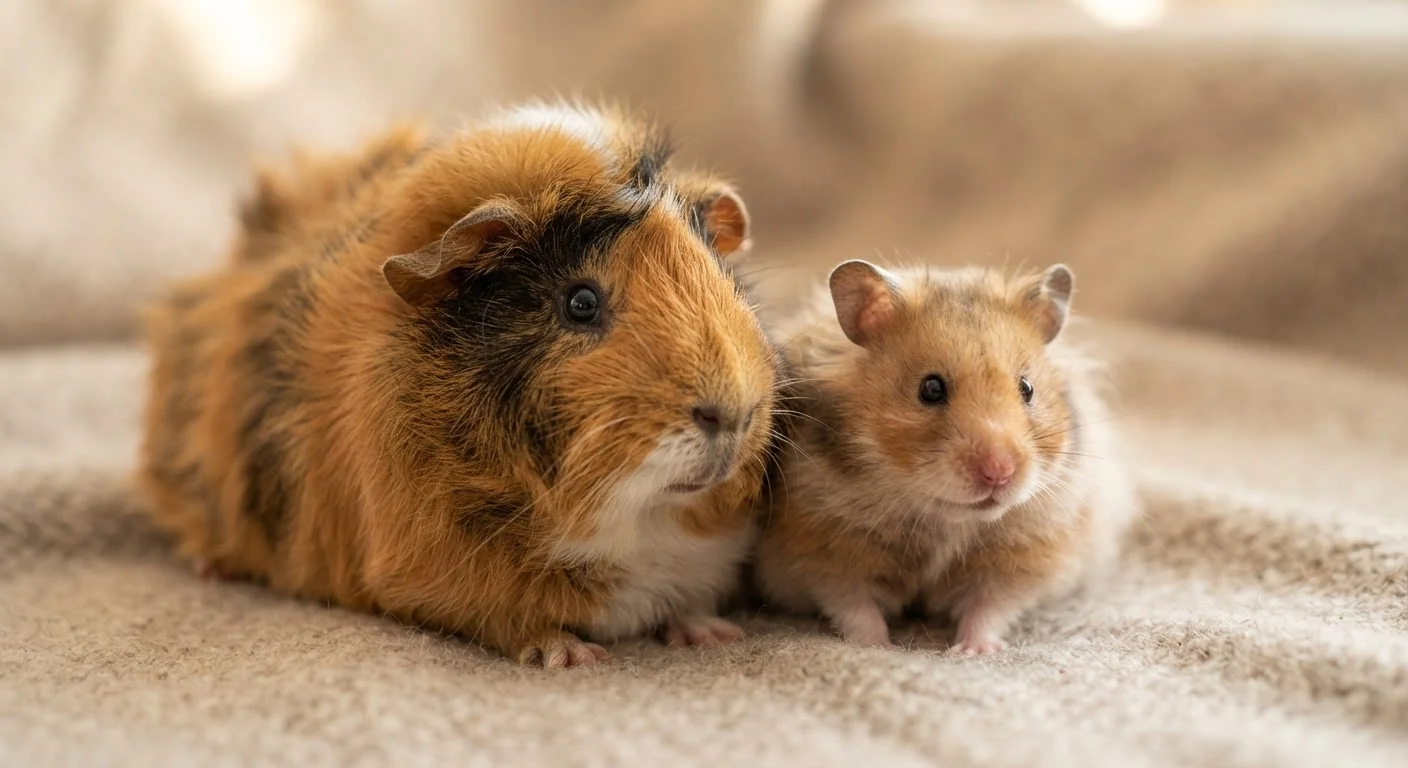
Social Needs and Temperament
Guinea pigs are highly social animals. In the wild, they live in groups, and domestic guinea pigs generally thrive with at least one compatible companion of the same species. A single guinea pig kept without social contact can develop signs of stress and boredom. Pairs or small same-sex groups are widely recommended by exotic animal veterinarians.
Hamsters, by contrast, are largely territorial and solitary - most species, including the common Syrian hamster, will fight if housed together past a young age. Dwarf hamster species can sometimes coexist in bonded pairs, but introductions require careful management and aren't guaranteed to succeed.
Temperament during handling also differs. Guinea pigs, once socialized, tend to be calmer and less likely to bite. Hamsters can bite when startled or handled incorrectly, particularly because they are groggy and disoriented if woken during the day. Building trust with a hamster takes patience and consistent, low-stress sessions - it's very achievable, but requires understanding their nature.
| Criterion | Guinea Pig | Hamster |
|---|---|---|
| Social needs | Needs companions; thrives in pairs or groups | Mostly solitary; cohabitation often causes fighting |
| Activity schedule | Flexible; active periods overlap with daytime | Nocturnal; most active at night |
| Average lifespan | 5-7 years | 2-3 years |
| Minimum space needed | 7.5+ sq ft floor space per animal | Smaller footprint, but enrichment is essential |
| Handling tolerance | Generally calmer once socialized | Can bite if startled or woken during the day |
| Vitamin C requirement | Yes - must come from daily fresh food | No special requirement |
| Diet type | Herbivore (hay, veggies, pellets) | Omnivore (seed/pellet mix, veggies, occasional protein) |
| Noise level | Moderate; vocalizes frequently (wheeking, purring) | Low vocal noise; wheel activity can be audible at night |
Space, Housing, and Activity
Guinea pigs need substantial floor space. Exotic vet guidelines generally suggest a minimum of 7.5 square feet of unobstructed floor space for one guinea pig, with more for pairs. Tall, multi-level cages designed for hamsters are not appropriate - guinea pigs need horizontal room to roam, not climbing structures that risk injury.
Hamsters require less total space but need an enriched environment: a deep substrate layer for burrowing, a large solid-surface wheel (at least 10-11 inches in diameter for Syrians), and hiding areas. An undersized wheel or barren cage can lead to repetitive stress behaviors.
Activity timing is another key difference. Guinea pigs are crepuscular with flexible active periods that overlap with daylight hours, making interaction more natural for most households. Hamsters are nocturnal - disturbing them during the day can cause chronic stress and defensive biting. This matters enormously for families expecting daytime interaction.
5-7 yrs
Average guinea pig lifespan
Guinea pigs outlive most hamster species by several years, making them a longer-term care commitment.
7.5 sq ft
Minimum floor space for one guinea pig
Exotic animal veterinary guidelines commonly cite this as the minimum unobstructed floor space for a single guinea pig.
2-3 yrs
Typical hamster lifespan
Most common hamster species, including Syrian hamsters, average two to three years under good care conditions.
Diet and Health Considerations
Diet is where the species diverge most sharply. Guinea pigs cannot synthesize vitamin C internally - a trait they share with humans - and must receive it daily through fresh foods such as bell pepper, leafy greens, and small amounts of fruit. Vitamin C deficiency (scurvy) is a genuine and preventable health risk. A hay-based diet supplemented with fresh vegetables and a small amount of species-appropriate pellets meets their core nutritional needs.
Hamsters are omnivores. A quality hamster-specific seed or pellet mix, supplemented with occasional vegetables and small amounts of protein, forms a balanced diet. Unlike guinea pigs, they do not have a vitamin C dependency.
Both animals benefit from regular veterinary care from a vet experienced with exotic small mammals. Dental problems, respiratory infections, and gastrointestinal issues occur in both species and often require prompt professional attention. Many commonly held beliefs about small-pet care are inaccurate - veterinarians frequently flag misleading small-pet myths that lead to avoidable health problems.
Lifespan and Long-Term Commitment
Lifespan shapes the nature of ownership more than many first-time owners anticipate. Guinea pigs live an average of five to seven years, though some reach eight. This is a meaningful commitment - including ongoing veterinary costs, daily care, and the emotional bond that develops over time. Prospective owners should plan accordingly.
Hamsters typically live two to three years, depending on species. Dwarf hamsters often fall at the shorter end; Syrian hamsters can occasionally reach three years with good care. While a shorter lifespan may seem appealing for a first-time owner, the grief of losing a pet is real regardless of lifespan, and the daily care demands still apply throughout.
Before any small pet arrives home, practical readiness matters as much as enthusiasm. A pre-arrival checklist can help confirm that housing, diet supplies, and a vet contact are in place before the animal arrives. If you're also considering other small mammals, rabbit care involves its own distinct set of requirements worth reviewing separately.
This article provides general educational information about small pet species and is not a substitute for advice from a qualified exotic animal veterinarian. Consult a vet familiar with small mammals before acquiring a new pet or if you have concerns about an animal's health.