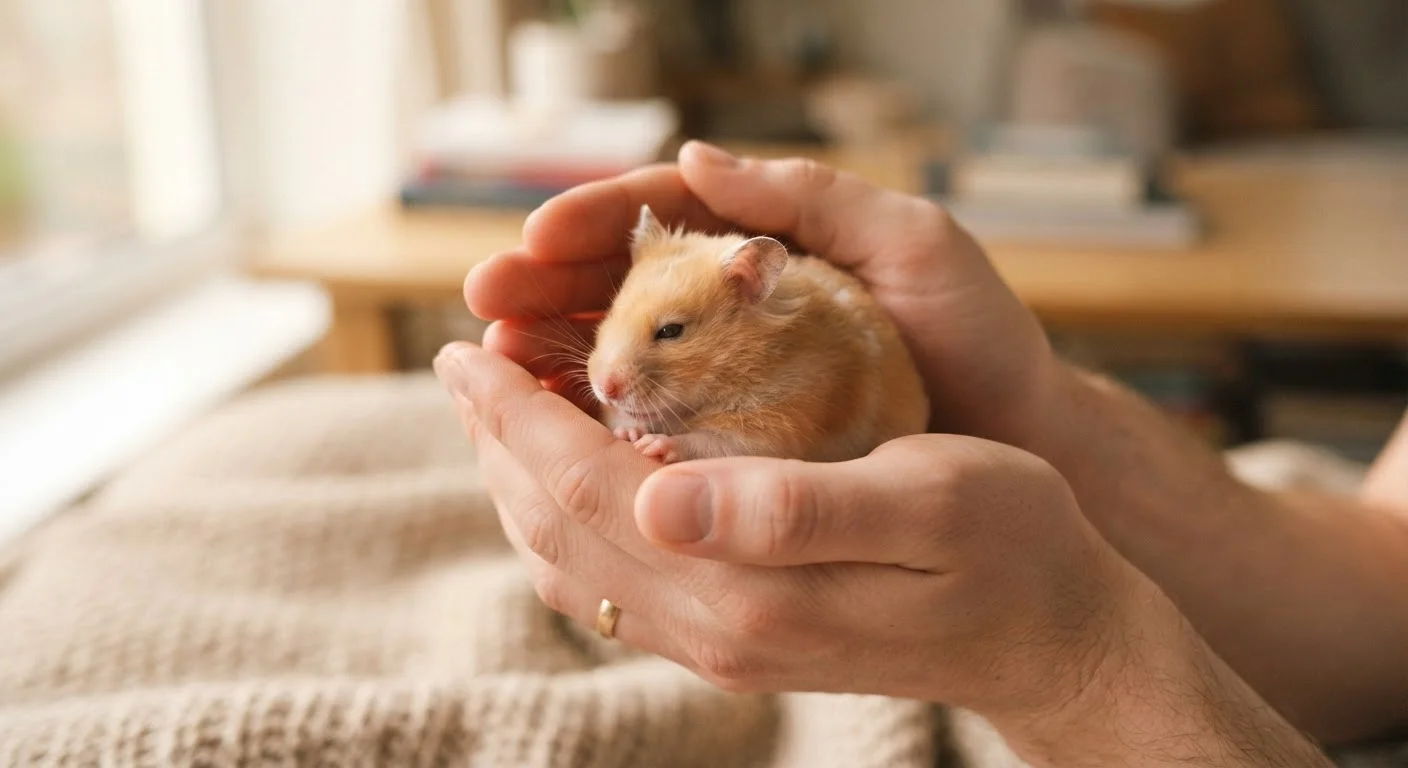
Why Hamsters React the Way They Do
Understanding hamster behavior starts with their biology. Hamsters are prey animals with relatively poor eyesight but highly developed senses of smell and hearing. They navigate and assess threat largely through scent, which is why your smell matters far more to your hamster than your appearance. A sudden movement, an unfamiliar odor, or a shadow from above can trigger a rapid stress response - including freezing, retreating, or biting - even in otherwise tame animals.
Hamsters are also solitary by nature and do not have an innate drive to seek companionship the way social animals like guinea pigs do. This doesn't mean they can't become comfortable with human handling - they can, and most do with consistent effort - but it does mean socialization is built through earned trust rather than natural affinity. If you're still deciding whether a hamster is the right fit for your household, the comparison in Guinea Pig vs. Hamster covers handling tolerance differences in detail.
It's also worth noting that many handling difficulties stem from common misconceptions about small pets. Small Pet Care Myths That Veterinarians Wish Would Go Away addresses why hamsters aren't the low-maintenance starter pets they're often marketed as - and why that misunderstanding leads to poor socialization outcomes.
Never Handle a Sleeping Hamster
Hamsters are crepuscular - most active at dawn and dusk - and startling one out of deep sleep is the most common cause of bites. Always wait until your hamster is awake and moving around before initiating contact. Forcing interaction during rest periods increases stress hormones and can undermine weeks of trust-building progress.
Step-by-Step Socialization Process
Before you begin, confirm your hamster has had adequate time to settle into its environment. If you haven't yet set up the enclosure or you're still in the preparation stage, review the Bringing a Small Pet Home checklist to make sure your setup supports low-stress living from day one.
What you will need
Small treat pieces
Used to associate your hand and presence with a positive experience during scent introduction.
Soft fleece cloth or hand towel
Provides a fallback surface to scoop a hamster that isn't yet comfortable with bare-skin contact.
Playpen or exercise pen
Creates a secure, enclosed area for supervised floor time once basic trust is established.
Allow a Full Settling Period Before Any Contact
When a hamster arrives in a new environment, its stress levels are elevated. For the first five to seven days, limit interaction to quiet observation and routine cage maintenance. Speak softly near the enclosure so your hamster begins associating your voice with safety. Avoid tapping on the glass or reaching inside during this window.
Introduce Your Scent Through Hand Proximity
Once your hamster is eating, grooming, and moving around confidently, begin hand introduction. Rest your hand flat inside the enclosure - palm up, fingers relaxed - without reaching toward the animal. Hold this position for two to three minutes per session. Let the hamster approach on its own terms. Repeat once or twice daily for several days before moving forward.
Progress to Brief Nose-and-Whisker Contact
When your hamster regularly approaches and sniffs your hand without retreating, move your fingers very slowly toward it. Allow the animal to sniff your fingertips fully before attempting any movement to scoop or lift. Some hamsters reach this milestone in days; others take two to three weeks. Do not rush this stage - it is the foundation of all future handling tolerance.
Practice the Two-Hand Scoop
When your hamster shows no avoidance behavior during fingertip contact, practice a gentle two-hand scoop. Slide both hands under the hamster from either side, forming a loose cup. Lift just an inch or two off the cage floor initially and hold for ten to fifteen seconds before lowering the animal back down. Gradually increase height and duration across multiple sessions over several days.
Build Handling Duration Incrementally
Once your hamster tolerates the two-hand scoop calmly, extend session length in small increments - five minutes, then ten, then fifteen over the following week. Allow the hamster to walk from hand to hand freely rather than restraining it. This free movement builds confidence. A relaxed hamster will groom itself, investigate your sleeve, or sit still; an anxious one will attempt to jump or will freeze rigidly.
Introduce Supervised Floor Time
Once your hamster is comfortable with in-hand handling, supervised floor time inside a small playpen adds valuable enrichment and socialization. Use this time to observe your hamster's natural behavior - curiosity, exploration, and play are positive signs. Keep other household pets fully separated during these sessions and maintain close supervision throughout.
Biting Signals a Stress Threshold - Not Spite
If your hamster bites during a session, end contact calmly and give the animal space - do not tap, blow on, or punish it. Punishment creates fear associations and makes socialization harder. If biting persists despite following gradual steps, consult an exotic animal veterinarian to rule out pain or illness as underlying causes.
Reading Your Hamster's Body Language
Effective socialization depends on recognizing when a session is going well and when to stop. Signs of a relaxed hamster include slow, deliberate movement across your hands, brief grooming behavior, and a willingness to accept treats. Signs of stress include rigid posture, teeth chattering, flattened ears, or rapid attempts to escape. Yawning can sometimes signal mild stress rather than tiredness in hamsters.
If you notice stress signals, lower your hamster gently back into the enclosure immediately and allow it to retreat to its nest. Do not attempt to resume handling that day. Respecting these signals consistently is what builds the long-term trust that makes handling enjoyable rather than stressful for the animal. The same principle of reading animal body language applies across species - similar patience and observation skills are at the core of grooming a cat at home without stress, for example.
Consistency Matters More Than Duration
Short, predictable daily sessions outperform sporadic long ones. Hamsters learn routines quickly, and a consistent handling window - aligned with their natural active periods at dawn or dusk - helps them anticipate and feel less startled by interaction. Even five minutes per day, done consistently, yields better results than an hour-long session once a week.
This article is for general informational and educational purposes only. For concerns about your hamster's health or persistent behavioral issues, consult a veterinarian experienced with exotic or small animals.